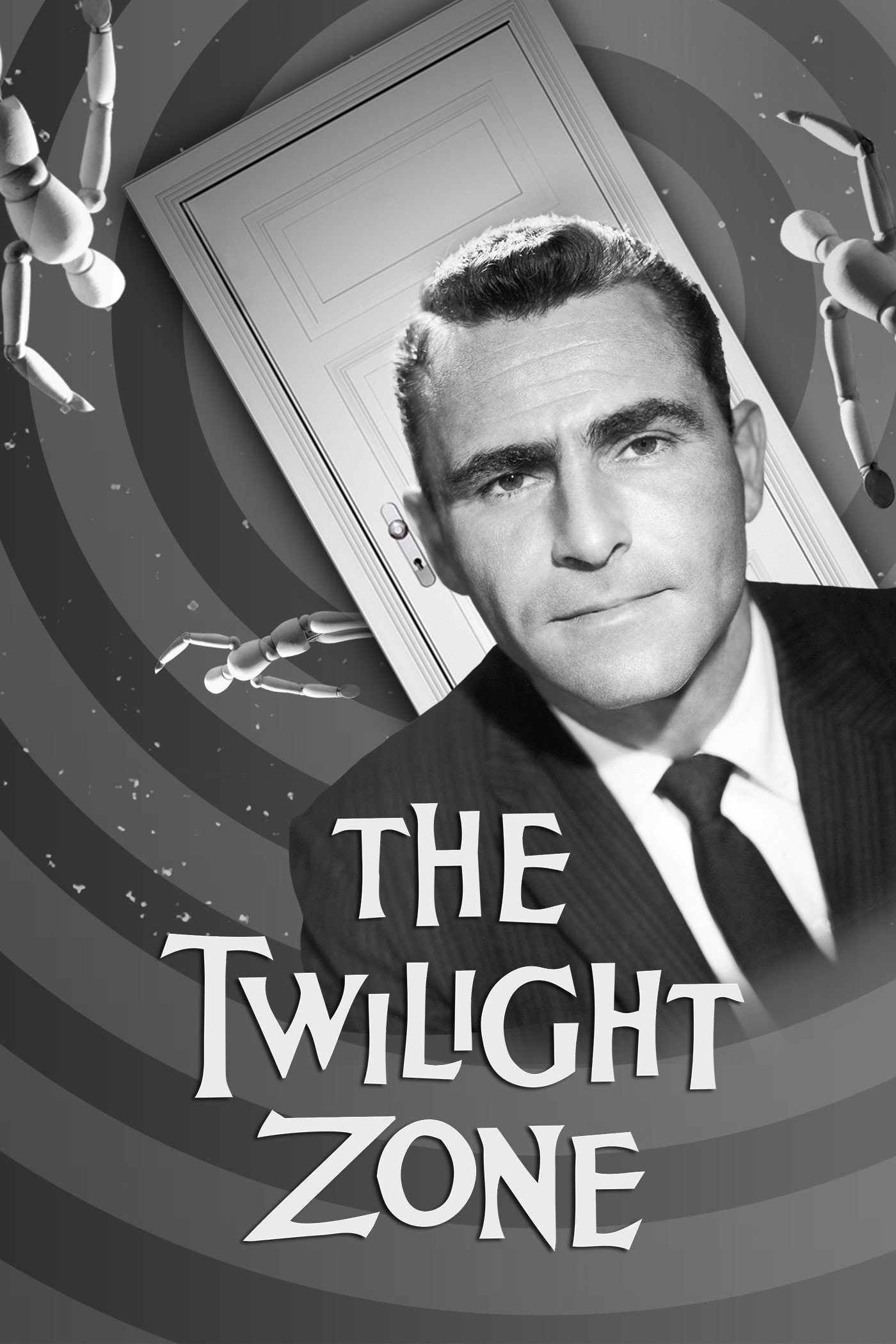
Douglas Heyes liked the supernatural made visible, and his work on The Twilight Zone gives us good reason to value that directness. We would start with his short suspense stories, rather than the later historical miniseries.
Fi1m perspective
When something supernatural turns up, Douglas Heyes tends to want it visible. That is a useful instinct for a suspense director, provided the sight is worth the wait. His nine instalments of The Twilight Zone (1959) are the strongest reason to seek out his work, with Eye of the Beholder (1960) a starting point for his visual storytelling. We like the directness, though showing more will not always make a story more troubling.
We were unsettled by The Twilight Zone, because its strange premises were told with such discipline and care. The series gives us plenty to think about, although its weaker entries promise more than they deliver. Heyes is one contributor to Rod Serling's anthology, and its virtues should not all be credited to him. What distinguishes his approach is the willingness to give supernatural elements a literal screen presence, rather than leave everything to suggestion.
His earlier work as a writer and director included Maverick (1957) and 77 Sunset Strip (1958), with adventure, crime and westerns recurring in his work for producer Roy Huggins. Those are genres that reward clear storytelling and can expose a director who takes too long getting to the point. The mid-1960s brought feature direction, including Kitten with a Whip (1964), which he also scripted. Screenwriting continued with Ice Station Zebra (1968).
From the 1970s, television again became his main work, now including the adaptation of long novels. He wrote and directed Captains and the Kings (1976), from Taylor Caldwell's novel, and developed the twelve-hour North and South (1985) from John Jakes's novel. The difficulty with the latter matters: complex history is reduced to broad popular myths and conventional storytelling. The longer format is not, in itself, a reason to follow him there.
For a first encounter, we would keep the scale small. Start with Eye of the Beholder, then explore his other contributions to the anthology. There is no obligation to begin with twelve hours.
Biography
Douglas Heyes (22 May 1919 – 8 February 1993) was an American writer, director and producer who worked extensively in film and television. He directed nine episodes of the original The Twilight Zone series (1959–1964) and episodes of series including Maverick (1957), McCloud (1970) and Magnum, P.I. (1980). He also wrote and directed several television miniseries, among them Captains and the Kings (1976), Aspen (1977) and North and South (1985).
Heyes wrote the screenplays for the films Ice Station Zebra (1968) and Beau Geste (1966), the latter of which he also directed. He sometimes used the pseudonym Matthew Howard. He was married to Joanna Heyes and was the father of actor Douglas Heyes Jr.