Duncan Wood’s comedy gives an insult time to hurt before offering another laugh. We value his patience with actors, most clearly in Steptoe and Son, even when the repeated quarrelling becomes wearing.
Fi1m perspective
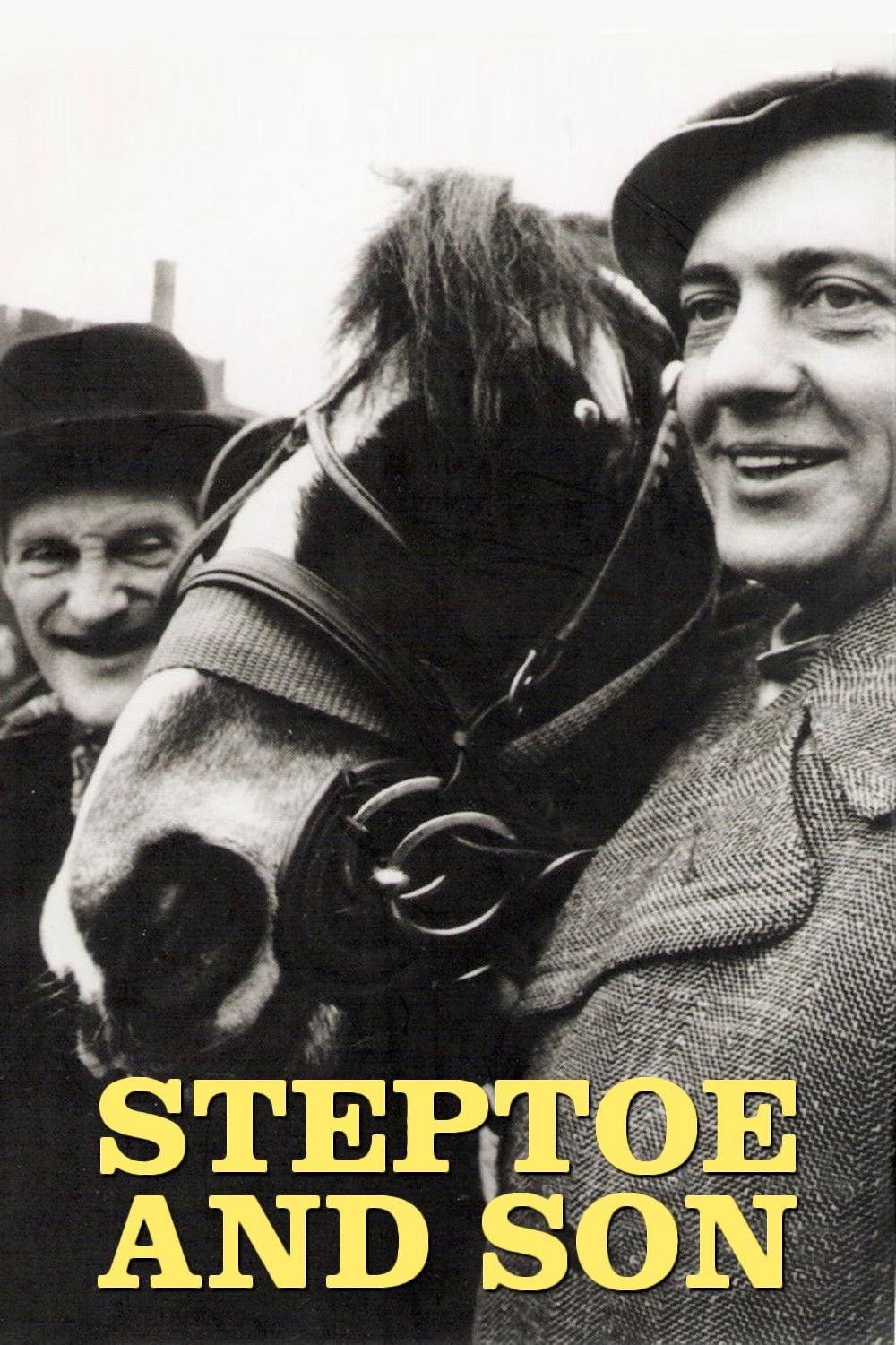
In Steptoe and Son (1962), an insult does not finish when Harry H. Corbett or Wilfrid Brambell stops speaking. The other man has to take it, recover and find a way to answer. That delay is central to the comedy Duncan Wood helped make. We laughed, then felt uncomfortable, because the wait before the next joke lets us see how much the last insult has hurt. We recommend the programme for those performances, and for the directors’ willingness to let an uncomfortable moment last.
His work as producer and director on Hancock’s Half Hour (1956) and Hancock (1961) established a sustained collaboration with Tony Hancock and writers Ray Galton and Alan Simpson. With Steptoe and Son, Galton and Simpson were writing for straight actors, Wood’s preferred choice for leading parts. The distinction matters: the quarrel has to convince us before its timing can make us laugh. Wood treated an approved script as fixed, which makes the attention to reactions all the more important. That approach depends on actors who can make carefully written exchanges sound like things said in anger.
The timing is a shared achievement. John Howard Davies also has directing credits on Steptoe and Son, and its editors include Peter Pierce, Bob Rymer, Geoffrey Botterill and Howard Waters. Their cuts respond to the changing advantage between the performers. Wood helped develop precise multi-camera shooting methods, and this attention to reactions gives that technical work a clear purpose. We have time to look at the person who has just been hurt.
Feature films proved a less successful direction, including The Bargee (1964). The assurance of the television work did not automatically carry into cinemas. His subsequent commissioning of Rising Damp (1974) at Yorkshire Television points instead to another substantial part of his work: choosing comedy and giving other people the chance to make it.
The limitation remains the repetition in Steptoe and Son: even skilful quarrelling can begin to feel like the same quarrel. Corbett and Brambell are worth watching closely, and that becomes harder once we start anticipating the next disagreement. Start with a few episodes rather than an evening of uninterrupted family grievance.
Biography
Duncan Wood was a British television producer, director and writer. He produced and directed all episodes of Tony Hancock's Hancock's Half Hour for the BBC in the late 1950s and early 1960s, and produced and directed the first six series of Steptoe and Son (1962-70).
Wood later served as Head of Comedy at the BBC (1972-73) and as Head of Light Entertainment at Yorkshire Television, where he commissioned Rising Damp. His other credits include The Bed-Sit Girl, Oh Brother! and The World of Beachcomber.