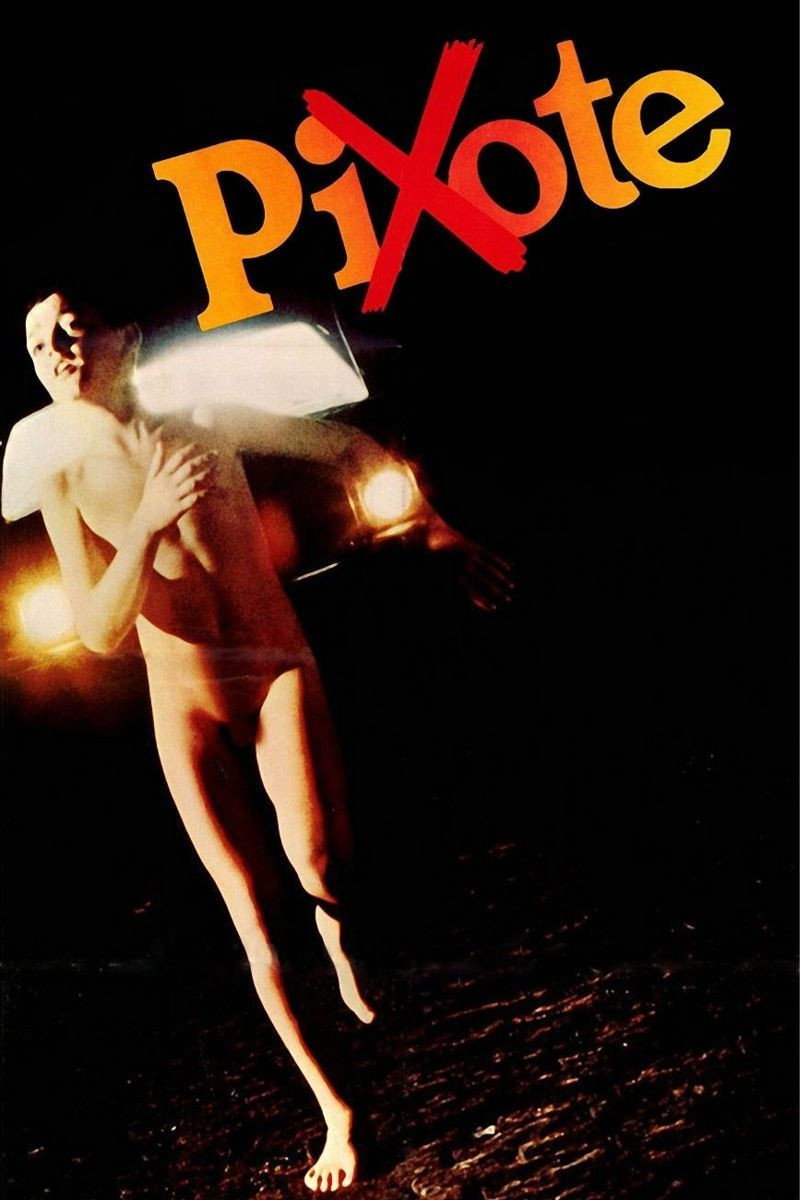
Gilberto Moura gives Dito in Pixote an individuality that keeps him from becoming just another neglected child in a grim story. We value his unpolished work, and the care with which it fits beside Marília Pêra’s more forceful acting.
Fi1m perspective
In Pixote (1980), Gilberto Moura’s Dito leads the other boys without becoming the only child worth watching. Alongside Jorge Julião as Lilica, Moura gives the group enough individuality to keep the children from becoming an anonymous collection of victims. The acting is unpolished, and behaviour does not always arrive neatly explained. We were moved by that awkwardness: Moura and Julião make the children seem like people we have to take time to understand.
His first screen role, as Ramiro in João Batista de Andrade’s docufiction Wilsinho Galiléia (1978), led to his casting in Pixote. Dito brought him notice, and he went on to play Tuca in Leon Hirszman’s They Don't Wear Black Tie (1981). Those early roles placed him among the street and working-class boys of Brazilian social-realist cinema. Smaller film parts followed, with his last credited screen appearance in the television series Olho por Olho (1988). Our view rests chiefly on Pixote, rather than on guesses about what a longer career might have produced.
Héctor Babenco gets the balance right between Moura and the more forceful Marília Pêra as Sueli. Her assurance does not turn the children into background, nor does their lack of polish make her seem to belong in another film. They share the film without everyone being asked to act in the same way. For Moura, that is important: he can contribute something particular to the group without having to match the adult performance for emphasis.
The reservation belongs chiefly to Pixote’s writing, which sometimes makes the children’s prospects too predictably hopeless. Individuality can only do so much when the script seems certain that things will go badly. We recommend the film nonetheless, and Moura is part of the reason: Dito has enough character to resist being merely an example of suffering. Watch him, but do not neglect the children beside him.