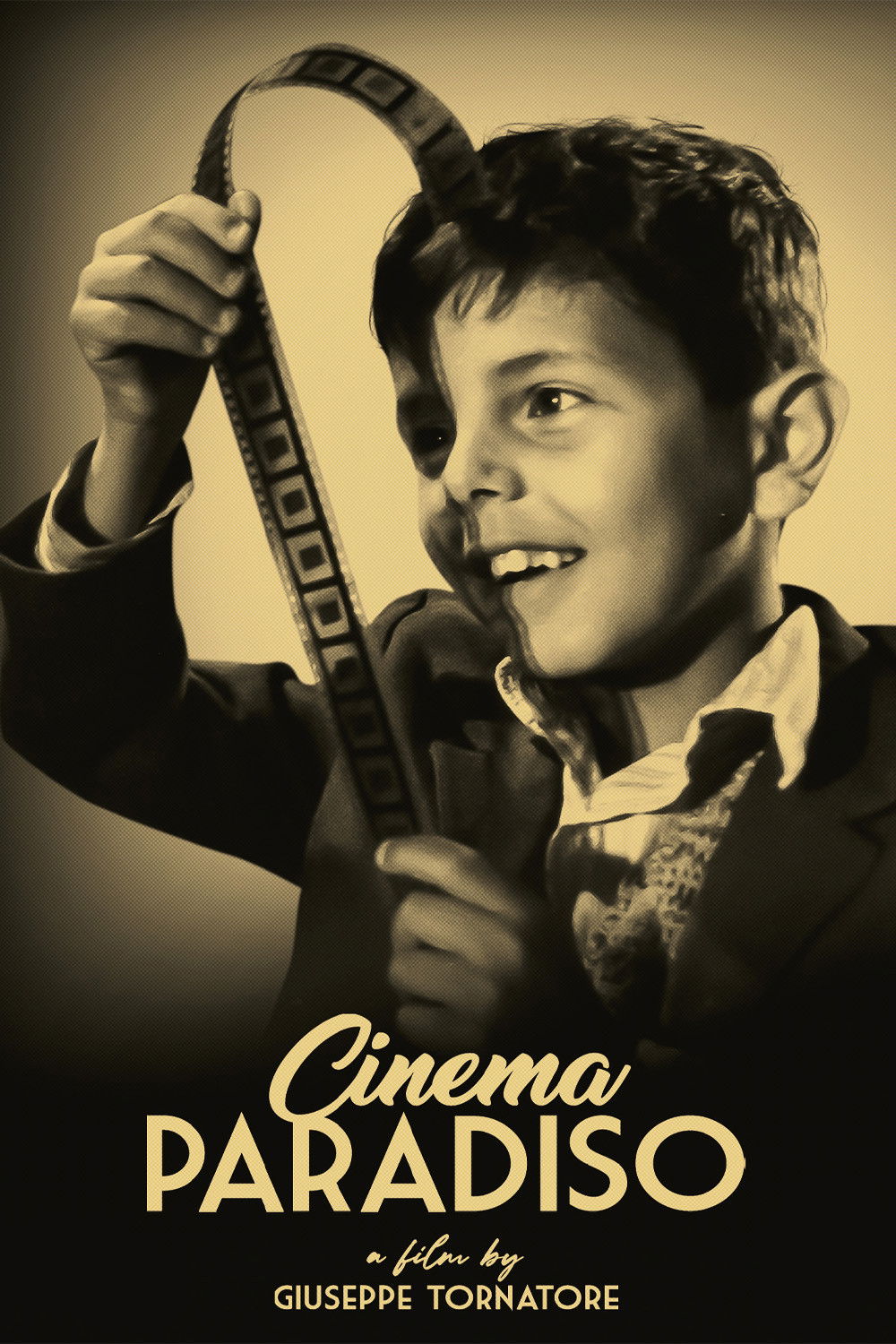
Giuseppe Tornatore is persuasive about the people and places we miss, particularly in Cinema Paradiso. We value his warmth and his work with actors; we are less convinced when the music insists on telling us how much to feel.
Fi1m perspective
A boy’s attachment to a projectionist makes the village cinema in Cinema Paradiso (1988) matter before there is any need to miss it. Tornatore, who also wrote the screenplay, takes care to show the place serving a whole community. Salvatore Cascio and Philippe Noiret make the central friendship persuasive enough to withstand some determined encouragement towards tears. We were moved by that friendship because the affection between the boy and the older man feels sufficient without any help from nostalgia. This is Tornatore’s warmth at its most convincing.
Cinema Paradiso was his breakthrough, following his first feature, Il camorrista (1986), and remembered lives remained an important part of his work. Malena (2000) sets its coming-of-age story in Sicily during the Second World War; Baaria (2009) draws on his hometown and stretches across decades. But the English-language psychological drama The Best Offer (2013) is a useful reminder that his interests extend beyond recalling Sicily. That breadth matters, even if the village cinema remains our clearest reason to recommend him.
Ennio Morricone contributes much of the pleasure of Cinema Paradiso, as well as some of its excess. His romantic score suits the film’s affection, but it sometimes continues urging a response after Cascio and Noiret have already secured it. We wanted the music to leave them alone on those occasions; the actors need no further assistance. Morricone scored thirteen Tornatore features from 1988 onwards, and became the subject of the director’s documentary Ennio (2022).
We would not ask Tornatore to become a colder director. Cinema Paradiso is funny and tender because he takes a child’s attachment seriously, and his handling of Cascio is as important to its effect as the remembered setting. Start there, with a little tolerance for a director reluctant to let a tender moment pass quietly.
Biography
Giuseppe Tornatore is an Italian film director and screenwriter. Born on 27 May 1956 in Bagheria, Sicily, he began his career as a freelance photographer before moving into documentary filmmaking. His first feature, Il Camorrista (1986), received the Nastro d'Argento for best new director.
Tornatore achieved international recognition with Cinema Paradiso (1988), which he wrote and directed. The film won the Academy Award for Best Foreign Language Film. He has maintained a long collaboration with composer Ennio Morricone on multiple projects.
His other notable films include A Pure Formality (1994), The Legend of 1900 (1998), Malena (2000), The Unknown Woman (2006), Baaria (2009) and The Best Offer (2013). In 2007 he received the Silver George for Best Director at the Moscow International Film Festival for The Unknown Woman.