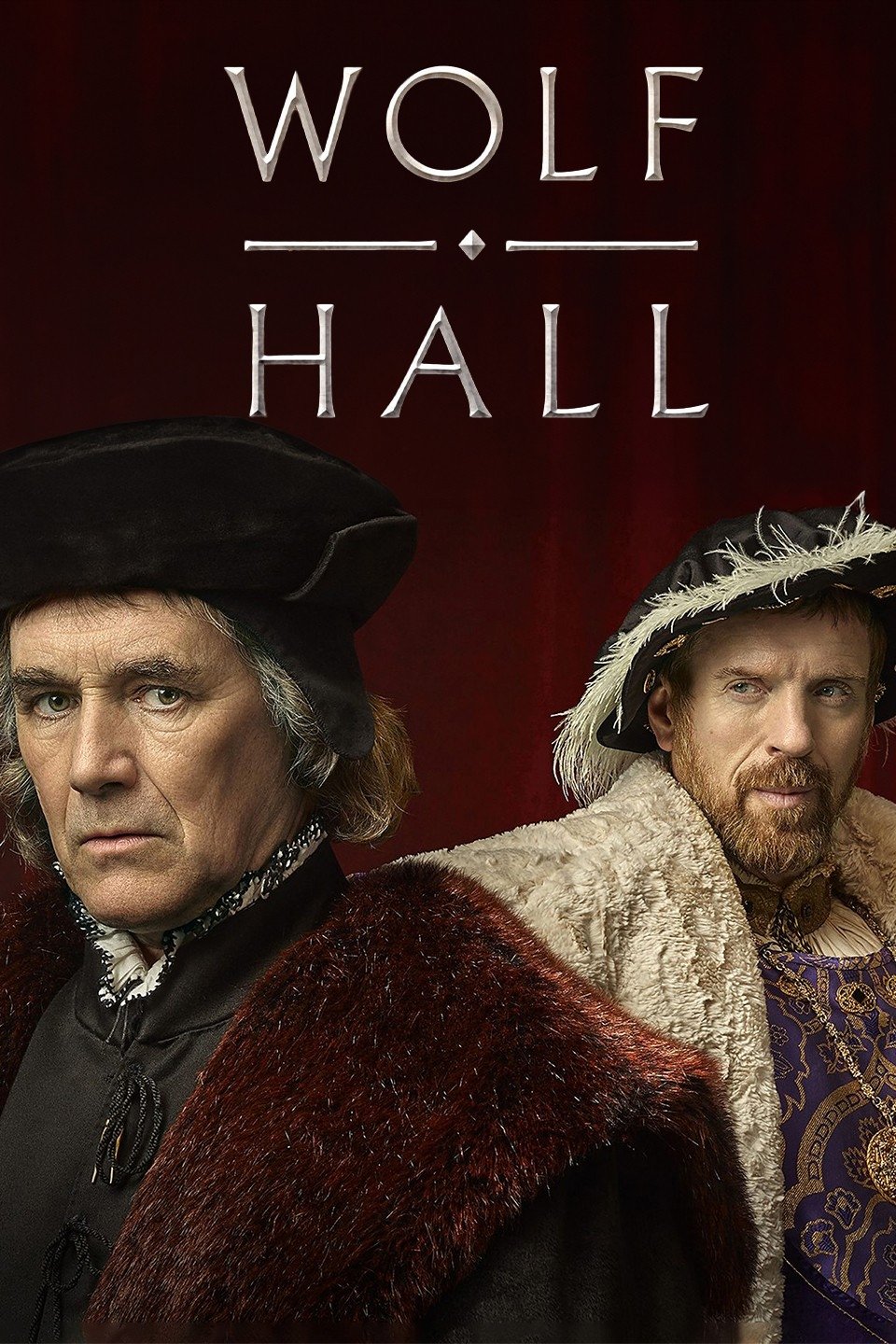
Hilary Mantel wrote the Tudor court as if it were happening now, in the present tense, from the corner where Thomas Cromwell stands saying nothing. On screen, in Peter Kosminsky's Wolf Hall, that habit became the method, and it holds.
Fi1m perspective
In Wolf Hall (2015) the interesting person in any room is the one in the corner saying nothing. That is Mantel's idea before it is Kosminsky's or Mark Rylance's. Her novels put the reader behind Cromwell's eyes and keep them there, in the present tense, so we know what he sees and hardly ever what he means to do about it. Peter Straughan cut two long books, Wolf Hall and Bring Up the Bodies, into six hours, and what survived the cutting was that stance: watch, wait, say little. We scored the series 86, and most of what we admired in it began on her page.
She was not a young novelist and Cromwell was not her first piece of history. She began publishing in 1985 with contemporary fiction, wrote a French Revolution novel, A Place of Greater Safety, in 1979 and could not get it printed until 1992, and had Beyond Black (2005) and the memoir Giving Up the Ghost (2003) behind her before Wolf Hall (2009) made her famous. Bring Up the Bodies followed in 2012 and The Mirror & the Light finished the trilogy in 2020. Of starting the first book she said: "I hesitated for such a long time before beginning to write this book, actually for about 20 years." Nothing in the novels feels hurried, and nothing in the series does either.
Her method is research worn lightly and memory worn heavily. The past, in her hands, is something a man recalls in the wrong order rather than a sequence of dates, and Kosminsky directs as if nobody were in a hurry because that is the only way to film it. The result is austere. There is almost no sex, and the violence that matters happens off the edge of the frame or in a look. We watched Rylance's Cromwell take in the ruin of his master, Cardinal Wolsey, without a flicker, and realised with some discomfort that we were being asked to think like him and had already started. That is Mantel's trick, and it worked on us.
It has a cost. The Cromwell she built, the villain of A Man for All Seasons recast as the one reasonable man in England, has been argued with by historians, and the series does not argue back. It assumes he is right. That is the one lazy habit we found in six hours, and it is hers before it is the programme's. The middle episodes stall too, which is what happens when a writer trusts stillness and an adaptation trusts the writer.
Start with the series, since it does the patient work of the books in six evenings rather than several weeks. Then read them if you want to know what he was thinking. The screen can only tell you what he saw, which, with Mantel, turns out to be most of the point.
Biography
Hilary Mantel was an English writer born on 6 July 1952 in Glossop, Derbyshire. She studied law at the London School of Economics and the University of Sheffield before working in social services and retail. After time spent in Botswana and Saudi Arabia, she returned to Britain and published her first novel, Every Day Is Mother’s Day, in 1985.
Mantel is best known for her Thomas Cromwell trilogy: Wolf Hall (2009), Bring Up the Bodies (2012) and The Mirror and the Light (2020). The first two volumes each won the Booker Prize. The novels were adapted into the BBC television series Wolf Hall (2015), for which she is credited as creator and novelist, as well as stage productions. She was appointed CBE in 2006 and DBE in 2014. Mantel died on 22 September 2022 in Exeter.