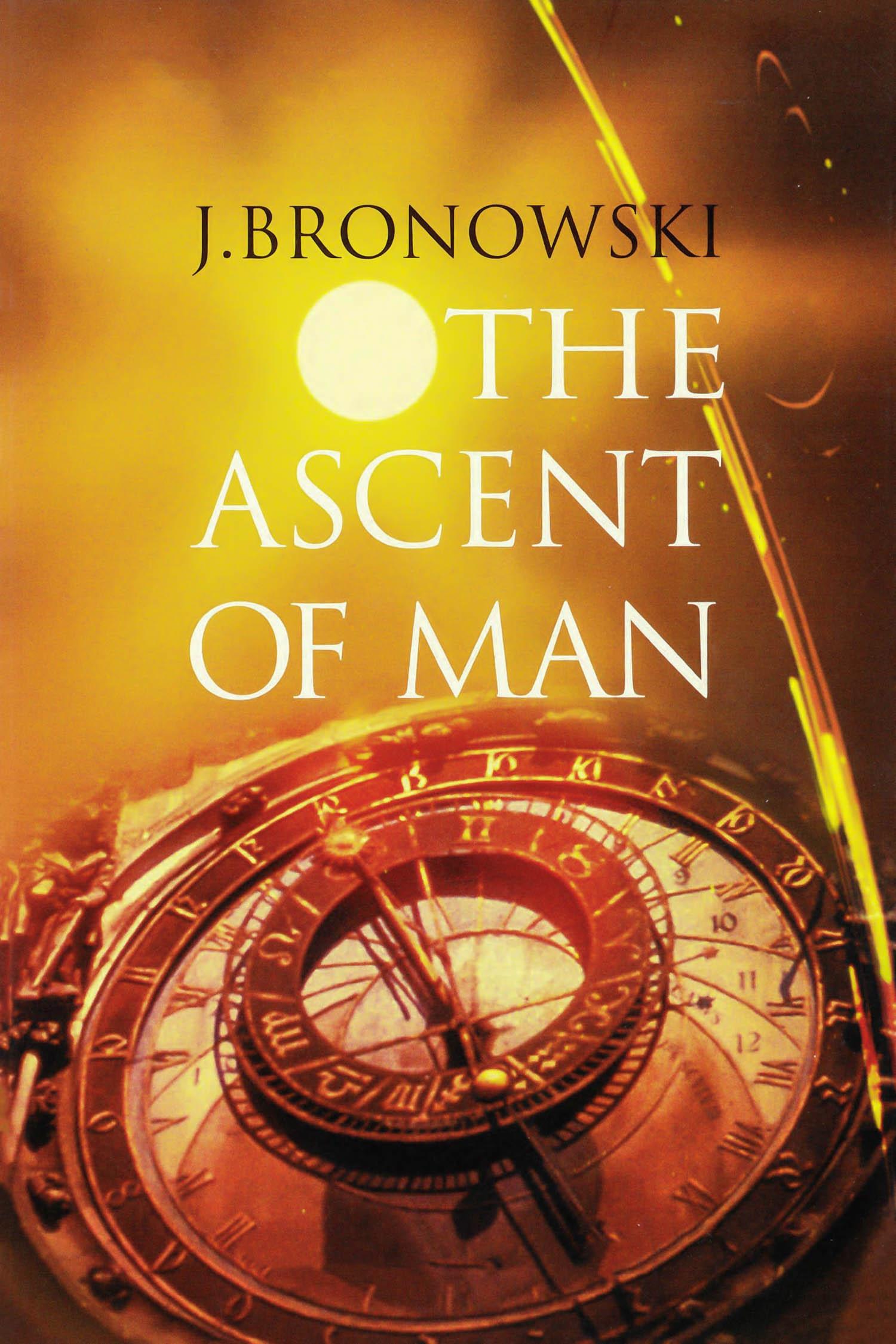
Jacob Bronowski explains science with clarity and an enthusiasm that makes us care about discovery. The Ascent of Man remains a rewarding introduction, provided its account of scientific knowledge is checked against later work.
Fi1m perspective
Bronowski stands on location and talks at length, trusting that an explanation can hold our attention. In The Ascent of Man (1973), concrete objects and examples give those long monologues something to work from, while his clear sentences let us follow the thinking. We were moved by his enthusiasm for how people learn; he makes the effort of understanding seem worth taking seriously. It is rewarding television, and much of the pleasure comes from being addressed as someone capable of understanding a difficult subject.
The television work develops an interest already laid out in his books. The Common Sense of Science (1951) treats science and the arts as compatible expressions of human imagination, while Science and Human Values (1956) examines the ethical and imaginative dimensions of scientific work. Appearances on Brains Trust helped establish him as a broadcaster before the thirteen-part The Ascent of Man. That series gives the earlier thinking a form suited to his strengths: patient speech, examples we can look at, and connections between scientific discovery and the arts.
The collaborators include commissioner David Attenborough, producer Adrian Malone and director Dick Gilling. Location filming keeps this wide account of cultural and scientific development attached to things and places. Bronowski's use of poetry and the visual arts gives us several ways into his subject, rather than assuming that everyone watching already has an interest in science. The long monologues ask for concentration, but his lucid explanations make that a fair request.
There are limits to how much authority we should grant him. Some historians have found his account of Britain's atomic research vague or evasive, a useful warning against mistaking a confident explanation for a complete one. More broadly, the information in a programme from 1973 needs checking against later work. Neither reservation spoils the pleasure of following his curiosity, though both matter when deciding what to take away. Give The Ascent of Man the time its explanations need, with a more recent reference to hand.
Biography
Jacob Bronowski was a Polish-British mathematician, philosopher and historian of science. He is best known as the writer and presenter of the 13-part BBC television series The Ascent of Man (1973), which he also created; a book of the same name was published the same year.
Born in Łódź in 1908, Bronowski moved to Britain as a child and was educated at Jesus College, Cambridge, where he became senior wrangler. He worked in mathematics, operations research and biology before turning increasingly to broadcasting and the history of science. He died in 1974.