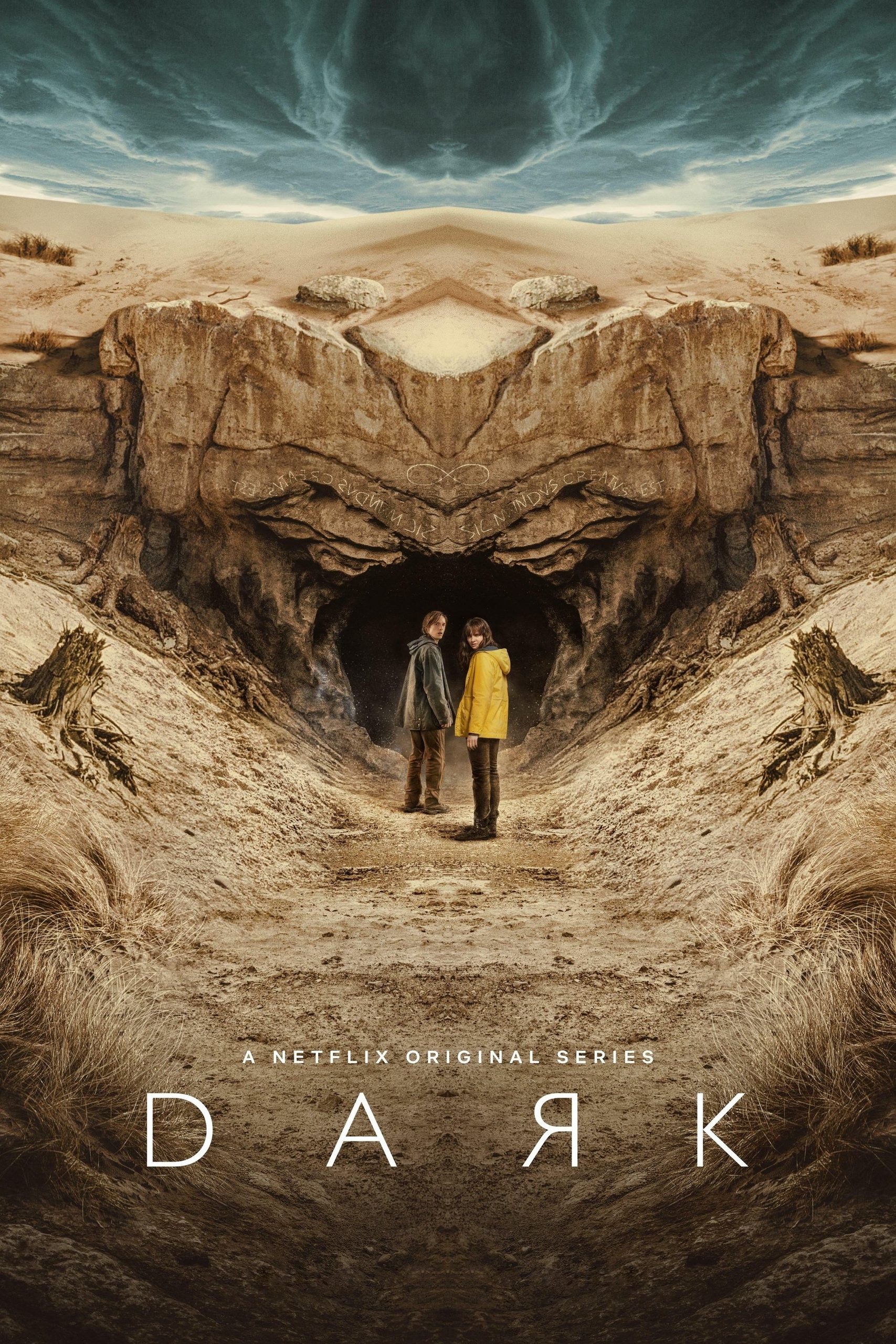
Friese builds mystery series from the ending backwards, and it shows in the best way and the worst. Dark keeps every promise it makes across three seasons, and nobody in it is allowed to be funny, vague or wrong about anything.
Fi1m perspective
Somebody in Winden is standing in a corridor, saying something low and grave about time, and the light is grey. It could be any of the town's three decades and almost any episode. This is the world Jantje Friese wrote, with Baran bo Odar directing, and its first rule is that nothing on screen is there by accident. Friese has said she needs to know where a story ends before she starts it, and Dark (2017) is what that looks like when it is done properly: three seasons, 26 episodes, a missing child, a forest, a cave, a nuclear power plant, and a mystery that hands over its answer.
She came to writing sideways. She trained in production and media management in Munich, produced The Silence (2010) for bo Odar, then wrote Who Am I (2014) with him, a techno-thriller. Dark followed, and then 1899 (2022), a multilingual mystery set on a migrant steamer, cancelled after a single season. She has worked with nobody else, and it is hard to say where the writer stops and the director begins; they appear to plan the machine together and divide the building.
What works is the plotting. Friese and her writers built Winden as a diagram and then filled in every line of it, which most puzzle serials only pretend to do. She has said she read "probably one hundred books or so" over the three seasons, on the science and the philosophy behind it, and the reading shows, not as lectures but as a story that never once cheats. We will admit to a moment late in the third season when the last piece went in and we felt something we almost never feel at the end of a mystery serial, which was gratitude. We had spent 26 episodes being asked to trust her, and she had meant it.
What does not work is the people. Every character is a cog, and a cog does not get to be funny, or vague, or wrong about anything that does not matter. Nobody in Winden laughs. Everyone speaks in the same low voice about fate, and by the third season we could finish their lines for them. Some critics complained that there was nobody to care about, and for the first season they were half right: it was the plot we cared about, and the plot looked after us. Friese says her interest is the psychology of her characters, and we believe she means it, but on screen that psychology is mostly one thing, which is dread.
1899 shows the risk in the method. A series built from its ending backwards is only as good as that ending, and this one was never allowed to reach it. Start with Dark, in German, on winter evenings, with a notebook if you are that sort of viewer. Do not expect anyone to smile.
Biography
Jantje Friese is a German screenwriter and producer. She studied production and media management at the University of Television and Film Munich. After graduating, she worked as a producer for Made in Munich Film Production and Neue Sentimental Film Berlin.
With her partner Baran bo Odar, she wrote the screenplay for the film Who Am I – No System Is Safe (2014). Friese and Odar co-created the Netflix series Dark (2017–2020), on which she is credited as writer and showrunner. In 2018 she received a Grimme-Preis for her writing on the first season. They later created the series 1899 (2022).