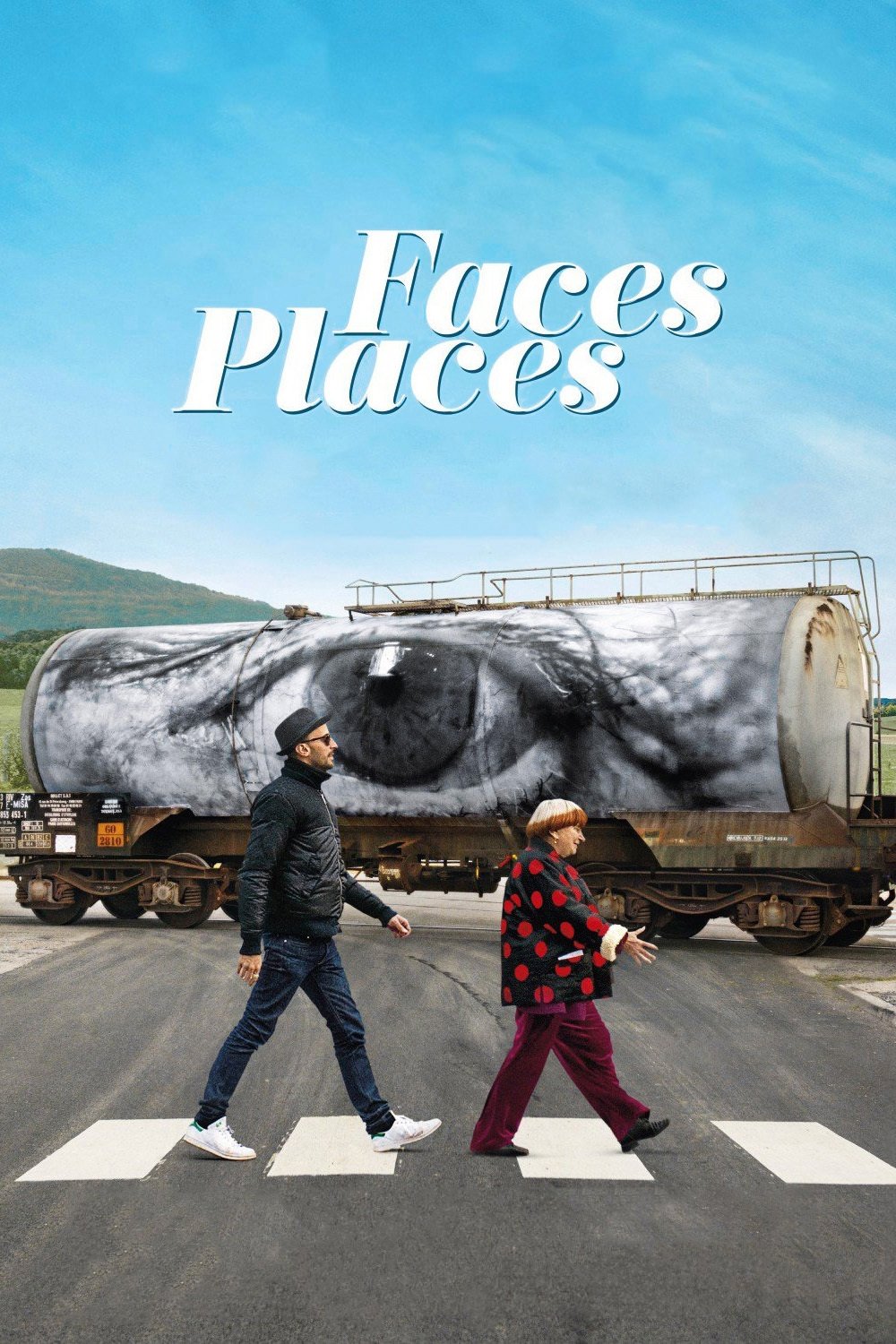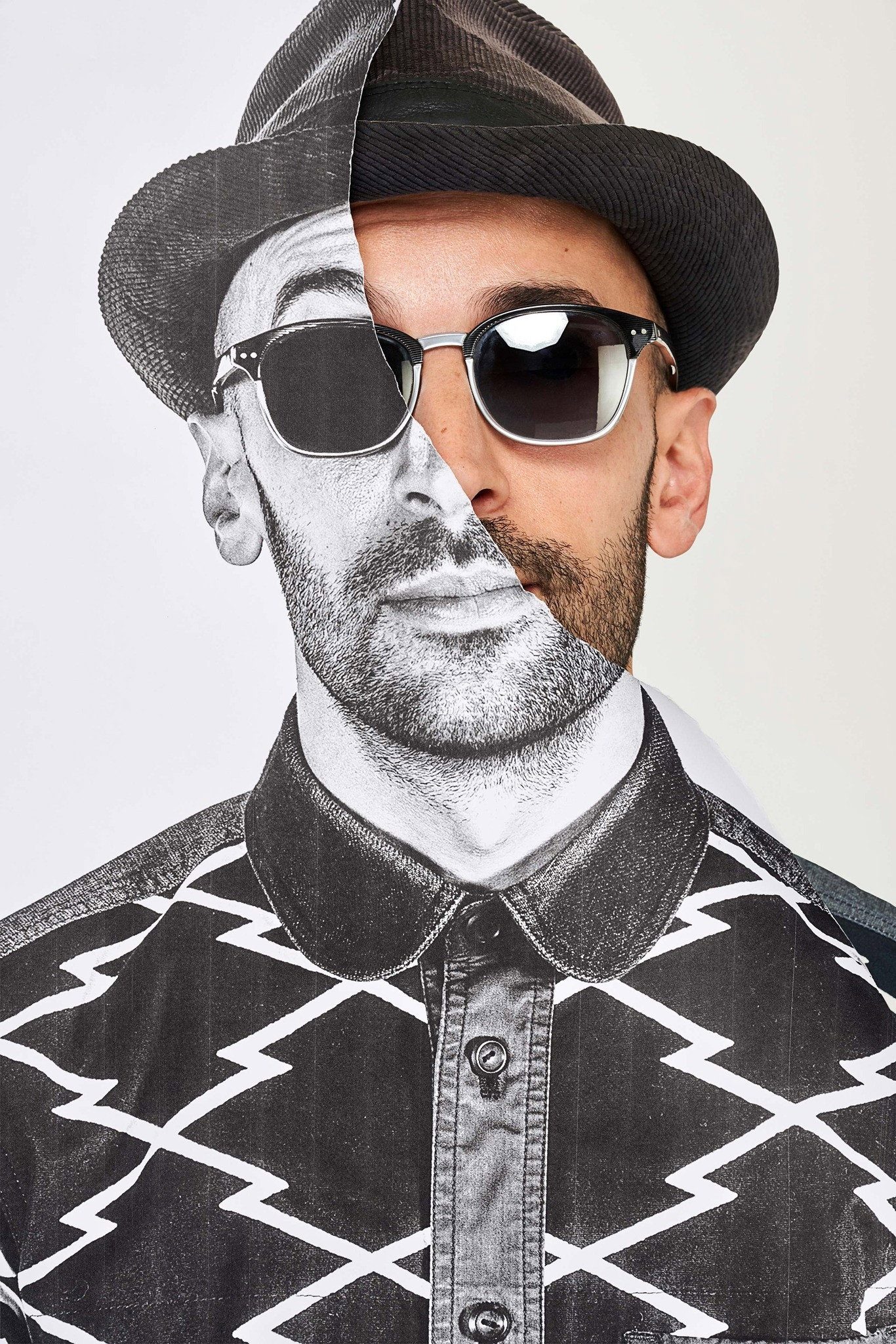
JR has made one feature, with Agnès Varda, and it is his street art in a van: photograph someone ordinary, print them several storeys high, paste them on the wall they live behind. The size does most of the work, and usually that is enough.
Fi1m perspective
A woman comes out of her house in a coal town in northern France and finds her own face across the front of it, the full height of the brick. She has lived there a long time and nobody has photographed her in years. She cannot speak. That is the JR method in one shot, and Faces Places (2017) repeats it a dozen times: a van with a giant camera built in, a print large enough to cover a wall, a ladder, some paste.
He did not start in cinema and it shows, mostly to his credit. He began as a graffiti artist in the Paris suburbs in the late 1990s, found a camera in 2001 and started pasting small prints of his friends in public. From 2004 the prints got bigger, with Portraits d'une génération in Clichy-Montfermeil, and from 2011 Inside Out let thousands of other people paste their own portraits wherever they lived. He works unsigned, and the subjects are never famous. The short Ellis (2015), shot in the abandoned Ellis Island hospital with Robert De Niro, is the one time he has gone to film without a wall to paste. Then Varda, a couple of generations older, got in the van.
What works is the size and the people. A farmer who runs a huge acreage alone from a tractor cab with a screen in it. A goat keeper who will not burn off her animals' horns and gets a horned goat on her barn for her trouble. Women from the docks pasted full length onto a wall of shipping containers. The portraits are black and white and the France around them is in colour, so the faces look as though they were there before the buildings. We did not expect to be got at by a man with a ladder, and when Jeannine Carpentier stood in front of her own house and said nothing, neither, for a moment, could we.
What does not work is JR the performer. The bickering with Varda, in cemeteries, on beaches, in the van, is set up and looks it; the jokes land once and are still being made at the end, and the film keeps cutting away from a farmer explaining why he no longer employs anyone to get back to the pair of them. There is a standing complaint about his work that it is activism or street intervention rather than fine art. He has said, "I want to show their dignity," which rather concedes the point, and we do not think it hurts him. It is a good idea, done at scale, in front of the people it is about.
Whether he is a filmmaker at all is an open question. One feature, half of it Varda's; one short. The camera he trusts is the one in the van, and Faces Places is best when the other camera stands back and lets the pasting happen. If he makes another, the thing to watch is whether he can resist being in it.
Biography
JR, also credited as Jean René, is a French photographer, street artist and film director. He is known for large-scale public photographic installations pasted onto buildings and other structures.
In 2017 he co-directed and co-wrote the documentary Faces Places (original title Visages Villages) with Agnès Varda, in which he also appears. He directed the short film Ellis in 2015.
JR was born on 22 February 1983.