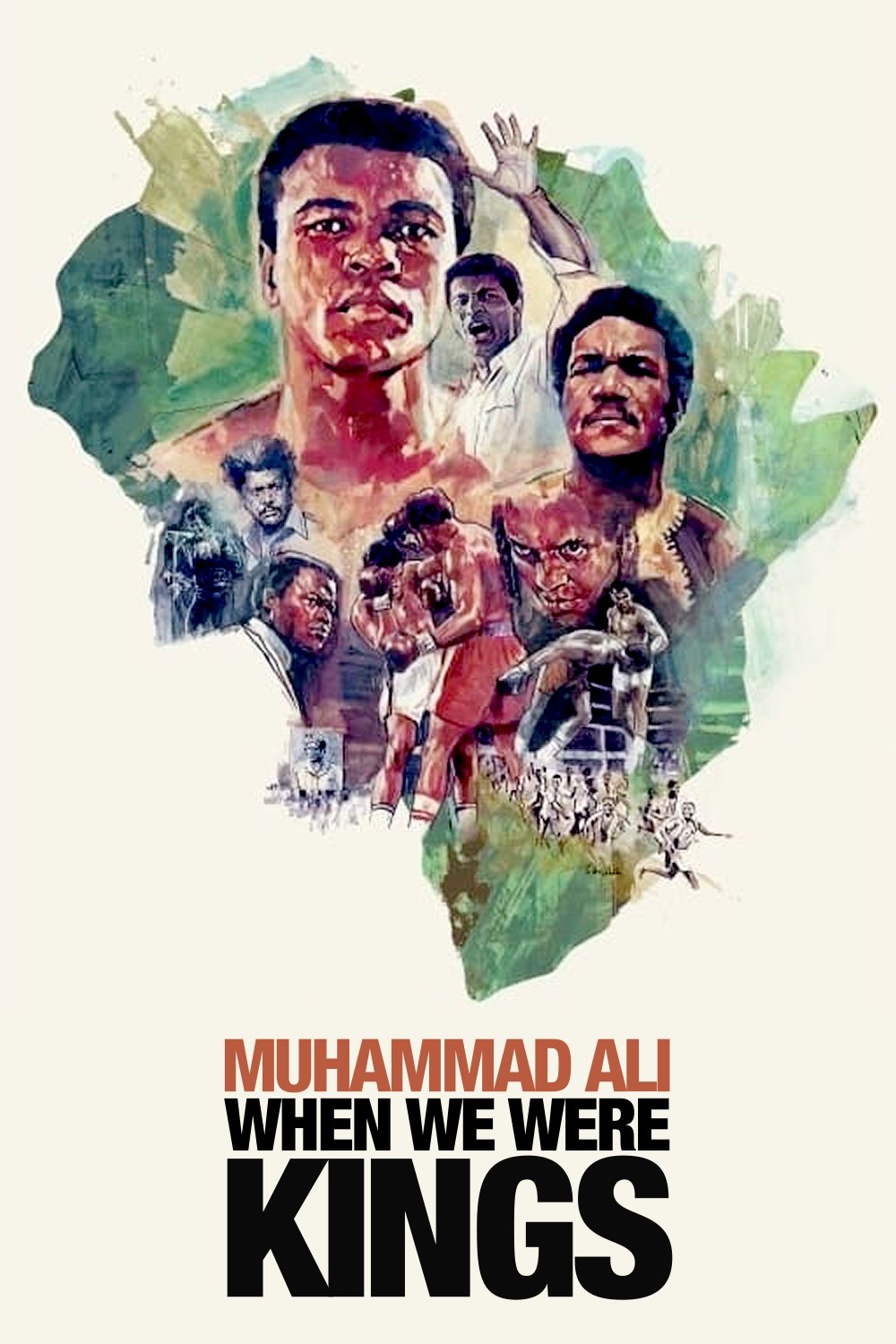
Leon Gast went to Kinshasa in 1974 for a music festival and came home with the best footage of Muhammad Ali there is. It took him twenty-two years to finish, and that one film is his cinema: keep the camera running and the commentary short.
Fi1m perspective
Somewhere outside Kinshasa, before dawn, Muhammad Ali is running along a road with the sun coming up behind him. Gast later admitted the shot was not his idea: "Ali was totally aware of the camera. There were times when Ali would say things like, 'If you want to get a great scene, you can set up your camera so that when I'm running at 5:30 in the morning, the sun is coming up behind me.'" He found a man who could not stop performing, pointed the camera at him, and did what he was told.
He had been a stills photographer for Vogue, Esquire and Harper's Bazaar, and his first films were about music: Our Latin Thing (1972) followed the Fania All-Stars through New York's salsa scene. He went to Zaire in 1974 to film a festival, and when the fight was put back he turned his cameras on Ali instead. He could not finish the film, and When We Were Kings did not appear until 1996. Afterwards came Smash His Camera (2010), about the paparazzo Ron Galella, and Manny (2014), about the boxer Manny Pacquiao, co-directed with Ryan Moore. Each time he set out for the music or the crowd and ended up with one man.
What he did with the footage is the case for him. Ali at press conferences, at training camp, on the road, talking to anyone holding a lens; James Brown on the stadium stage, drenched and shouting; B.B. King sitting down to play while the crowd goes quiet for him. Gast and his editors, Keith Robinson, Taylor Hackford and Jeffrey Kusama-Hinte, cut the songs against the training so the whole thing moves like a set list, and for most of its 89 minutes the film gets out of Ali's way. It is the best film about Ali we know of. We sat up every time it went back to Kinshasa.
The interruptions are the trouble. Two decades on, Gast filmed Norman Mailer, George Plimpton and Spike Lee and cut them in to explain what the footage already showed. Every time the film leaves Zaire for a man in a chair the temperature drops, and we counted the seconds until it returned. Mobutu's dictatorship and Don King's part in the business are shown, named and then set aside, and that softness came back in Manny, which was widely thought too fond of its subject. Gast's instinct was to admire the man in front of him. With Ali it looked like good judgement. With lesser men it looked like deference.
He died in 2021 with one film anyone needs to see. Watch When We Were Kings for Ali, for Brown and for the road at dawn, and forgive the men in chairs. Gast had the sense to stand aside for a man who never stopped talking; he only occasionally forgot to stay there.
Biography
Leon Gast (1936–2021) was an American documentary filmmaker who worked as a director, producer, cinematographer and editor. A native of Jersey City, New Jersey, he studied dramatic arts at Columbia University.
Gast is best known for When We Were Kings (1996), which he directed, produced, wrote and edited. The film documents the 1974 Rumble in the Jungle heavyweight boxing match between Muhammad Ali and George Foreman in Zaire and won the Academy Award for Best Documentary Feature. He also co-directed The Grateful Dead Movie (1977) with Jerry Garcia and Hells Angels Forever (1983). His later films include Smash His Camera (2010), which won the directing award at Sundance, and Manny (2014).