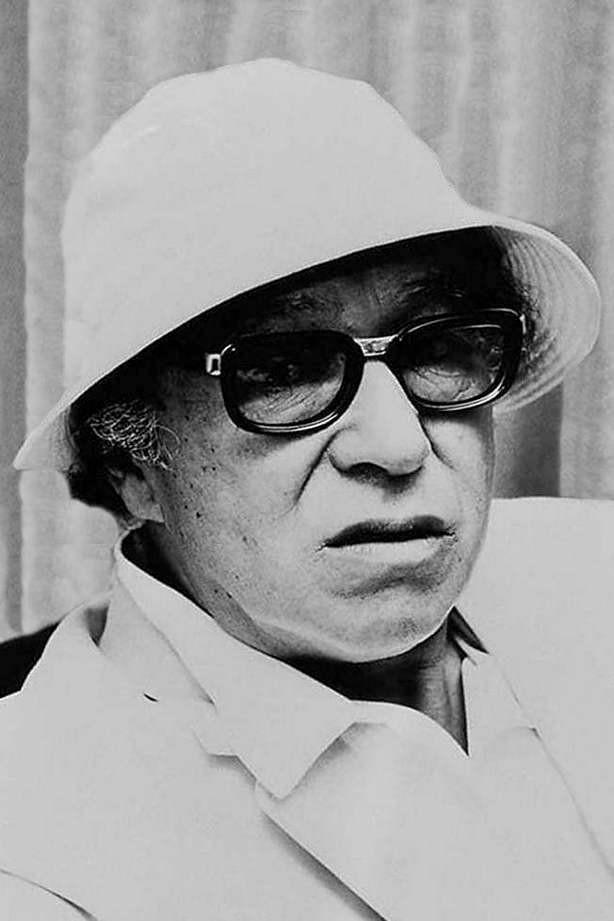
Masaki Kobayashi makes the cruelty of rigid social codes hard to look away from. We rate his exacting cinema highly: its anger is persuasive, its staging precise, though he sometimes keeps pressing a point we have already understood.
Fi1m perspective
In Harakiri (1962), the arrangement of people across the wide frame tells us who expects to be obeyed. Masaki Kobayashi lets those defending the code of honour look comfortable with their authority, and gives us time to find that confidence disturbing. Yoshio Miyajima’s cinematography makes their command of the space visible without anyone needing to explain it. The film is harrowing, and its severity is earned.
That concern with the person expected to submit runs through a career that began with films about social problems. The nine-and-a-half-hour The Human Condition trilogy (1959–1961) was the breakthrough, before the turn towards period films in Harakiri, Kwaidan (1964) and Samurai Rebellion (1967). The stylised colour ghost stories of Kwaidan make an intriguing departure within that sequence. Samurai Rebellion, starring Toshirō Mifune, returns to the individual resisting an oppressive code.
His strongest ally in Harakiri is Tatsuya Nakadai, a collaborator across nine films, beginning with Black River (1957). As the ronin Hanshiro Tsugumo, he holds his feelings beneath a controlled manner, making the formal exchanges tense enough to sustain our attention. Kobayashi trusts him to carry passages that could otherwise become forbidding. Shinobu Hashimoto’s screenplay keeps the challenge to the code of honour tied to the people it hurts.
Hisashi Sagara’s editing sets ceremonial order beside flashbacks of suffering. Tōru Takemitsu’s music adds unease without making the pain seem grand. We were horrified by Harakiri because the people observing its rules are so willing to accept the suffering those rules cause.
His patience is not always rewarded: Harakiri occasionally takes longer than it needs. The tendency to press a point leaves less room for tenderness, a limitation worth acknowledging in work we admire this much. Start with Harakiri, even if a prolonged argument over a samurai code sounds like the last thing the evening needs.
Biography
Masaki Kobayashi was a Japanese film director and screenwriter. He was born on 14 February 1916 in Otaru, Hokkaido, and died on 4 October 1996 in Tokyo. He studied at Waseda University and began working in film as an assistant director at Shochiku Studios in 1941.
Kobayashi is known for directing The Human Condition trilogy (1959–1961), Harakiri (1962), Kwaidan (1964) and Samurai Rebellion (1967). He also directed The Inheritance (1962), Hymn to a Tired Man (1968), Inn of Evil (1971), The Fossil (1975), Tokyo Trial (1983) and The Empty Table (1985).
He was married to Chiyoko Fumiya from 1952 and was a second cousin of actress Kinuyo Tanaka.