Olatunde Osunsanmi is a capable organiser of complicated genre television, with a useful feel for changes of tone. We favour the warmth of Star Trek: Starfleet Academy, while wishing its effects and ensemble storytelling were more consistent.
Fi1m perspective
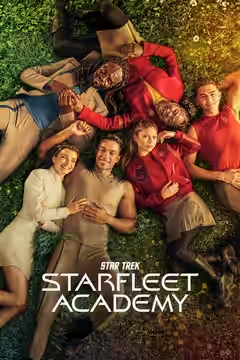
In Star Trek: Starfleet Academy (2026), teenage troubles sit beside diplomacy, and the combination mostly works. We warmed to the series because its adolescent concerns earn their place rather than merely interrupting the science fiction. Holly Hunter provides a steady presence through the awkward passages, though the young ensemble deserves more equal attention. Osunsanmi is a director and executive producer here, and the result makes a fair case for his ability to accommodate different tones, with some reservations.
His early features included the horror The Cavern (2005), which he also wrote, before the wider recognition of The Fourth Kind (2009). That film mixed re-enactments with purportedly real footage in an alien-abduction story. Its insistence on authenticity attracted criticism for being clumsy and undermining the effect. His move into television in the mid-2010s brought a different set of demands: maintaining consistency across episodes and handling complex productions involving substantial visual effects.
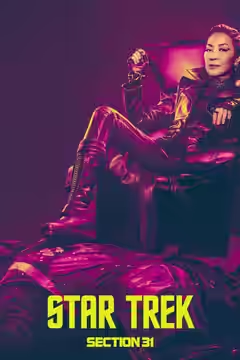
Star Trek: Discovery (2017–2024) became a substantial commitment: he directed 14 episodes and served as executive producer. His collaborators across his Star Trek work include executive producer and writer Alex Kurtzman, within a franchise that calls for drama, comedy, action and effects. Star Trek: Section 31 (2025), the spy-adventure spin-off starring Michelle Yeoh, extended that work into a feature. The question for a director handling so much is how much attention remains for individual characters.
Starfleet Academy supplies both encouragement and a caveat. The warmth and familiar adolescent difficulties largely work, but the uneven attention to its young cast matters more than the visual effects that need improvement. A producing director cannot receive sole credit for an actor's assurance, or sole blame for every technical shortcoming, though both belong in an assessment of the finished programme. We would like more of the ensemble to receive the care that makes the series welcoming in the first place. Start here for the school drama and the diplomacy, with some patience for the awkward passages.
Biography
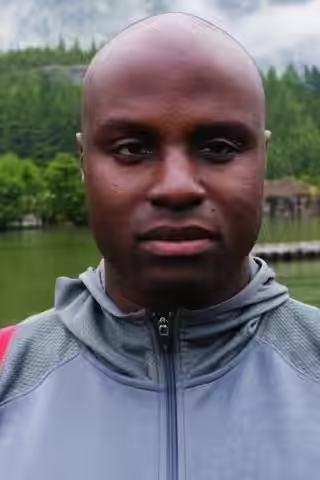
Olatunde Osunsanmi is an American film and television director and producer. Born on 23 October 1977 in the United States to Nigerian immigrant parents, he graduated with an MFA from Chapman University's Dodge College of Film and Media Arts.
He directed and co-wrote the low-budget horror film The Cavern (2005) and the Universal sci-fi thriller The Fourth Kind (2009). He later moved into episodic television, directing episodes of series including Falling Skies, Under the Dome, Gotham, Blindspot and Bates Motel.
Osunsanmi has directed multiple episodes of Star Trek: Discovery (2017–2024) and served as a producer on the series. He is executive producer and has directed an episode of Star Trek: Starfleet Academy (2026).