Holly Hunter steadies a warm, occasionally awkward Star Trek school drama whose young ensemble deserves more equal attention. The familiar adolescent troubles mostly earn their place beside the diplomacy, though some visual effects need work.
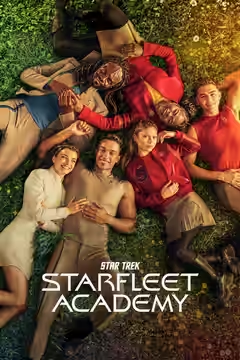
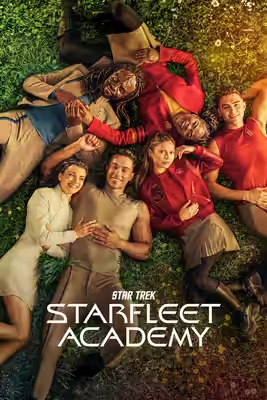
Star Trek: Starfleet Academy makes a sensible bet: people learning how to behave might be worth following before anyone trusts them with a command. We think it largely pays off, with a warm, sometimes clumsy coming-of-age series that makes room for embarrassment alongside interstellar diplomacy. The academy setting gives the ethical questions a practical use, because these cadets are still working out how to treat one another. The trouble is how often the programme favours one young lead when it has a whole intake to explore.
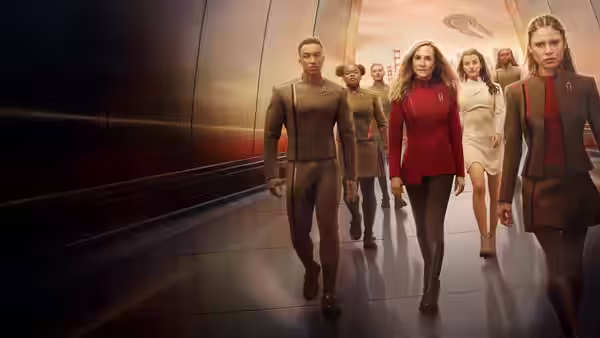
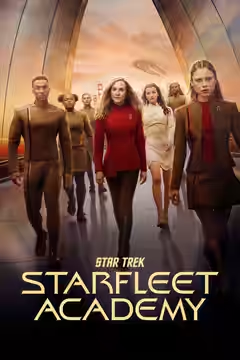
Holly Hunter’s Nahla Ake is the strongest reason to persist through the more familiar school-drama business. Her free-spirited chancellor can take charge without behaving as though enjoying herself would undermine her position. Hunter makes the cadets’ boundary-testing feel like something an experienced adult could handle, which helps keep the adolescent drama in proportion. It is an assured performance in a part that could easily have become the person who appears whenever the younger cast needs a lecture.
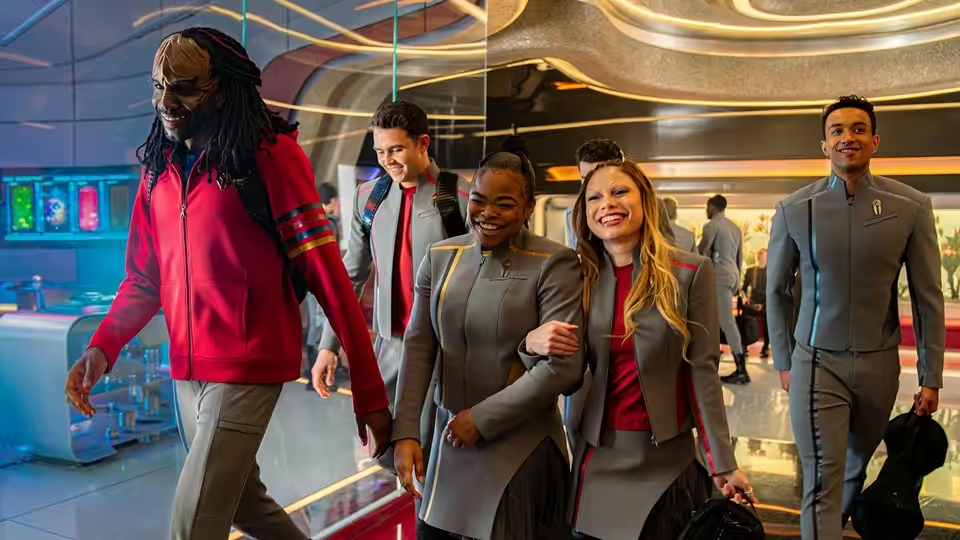
Sandro Rosta plays Caleb Mir, alongside Karim Diane as Jay-Den Kraag and Kerrice Brooks as Sam. The opening spends too much time on a single, not especially sympathetic lead, leaving the broader ensemble with less room than it needs. That is a significant weakness in a series whose setting promises different kinds of people learning to live and work together. We want more time with the group, and more sense of how the academy itself operates.
Kirsten Beyer and Tawny Newsome are among the writers, and the material is strongest when it puts the cadets to work together. We were more touched than we expected by their attempts at teamwork, because their willingness to help one another makes the programme’s optimism credible. Adolescent awkwardness is a useful complication for stories about diplomacy and ethical judgement: these are people who still have trouble managing their own feelings. The familiar coming-of-age plotting is easier to forgive when cooperation becomes something the characters have to practise.
The comedy gives the earnestness some breathing room, and the romantic subplots belong in a series about young people discovering themselves. There is something appealing about science fiction prepared to take youthful affection seriously, even when it risks being cheesy. The familiar Star Trek references are there, but recognising them need not be the main entertainment. A mixture of self-contained stories and continuing relationships gives the students problems to address without demanding that they grow up all at once.
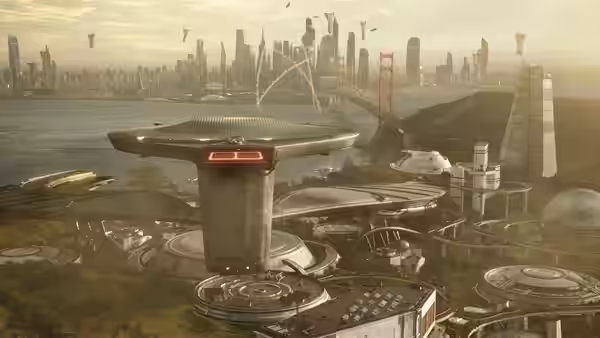
The directors, including Alex Kurtzman, have a promising setting to explore, though the visual effects do not always persuade us. Some of the computer-generated imagery is unconvincing, an irritation in science fiction that asks us to accept an unfamiliar place. The cast gives us enough to watch when the spectacle falters, so the weakness rarely spoils a scene altogether. Giving the students more equal attention would do more for the programme than polishing every effect.
We recommend it to anyone who likes hopeful science fiction and has patience for familiar school-drama plotting. Expect an uneven introduction to the ensemble, and do not expect Hunter’s assurance from every part of the programme. Anyone allergic to adolescent awkwardness should take the academy in the title seriously.