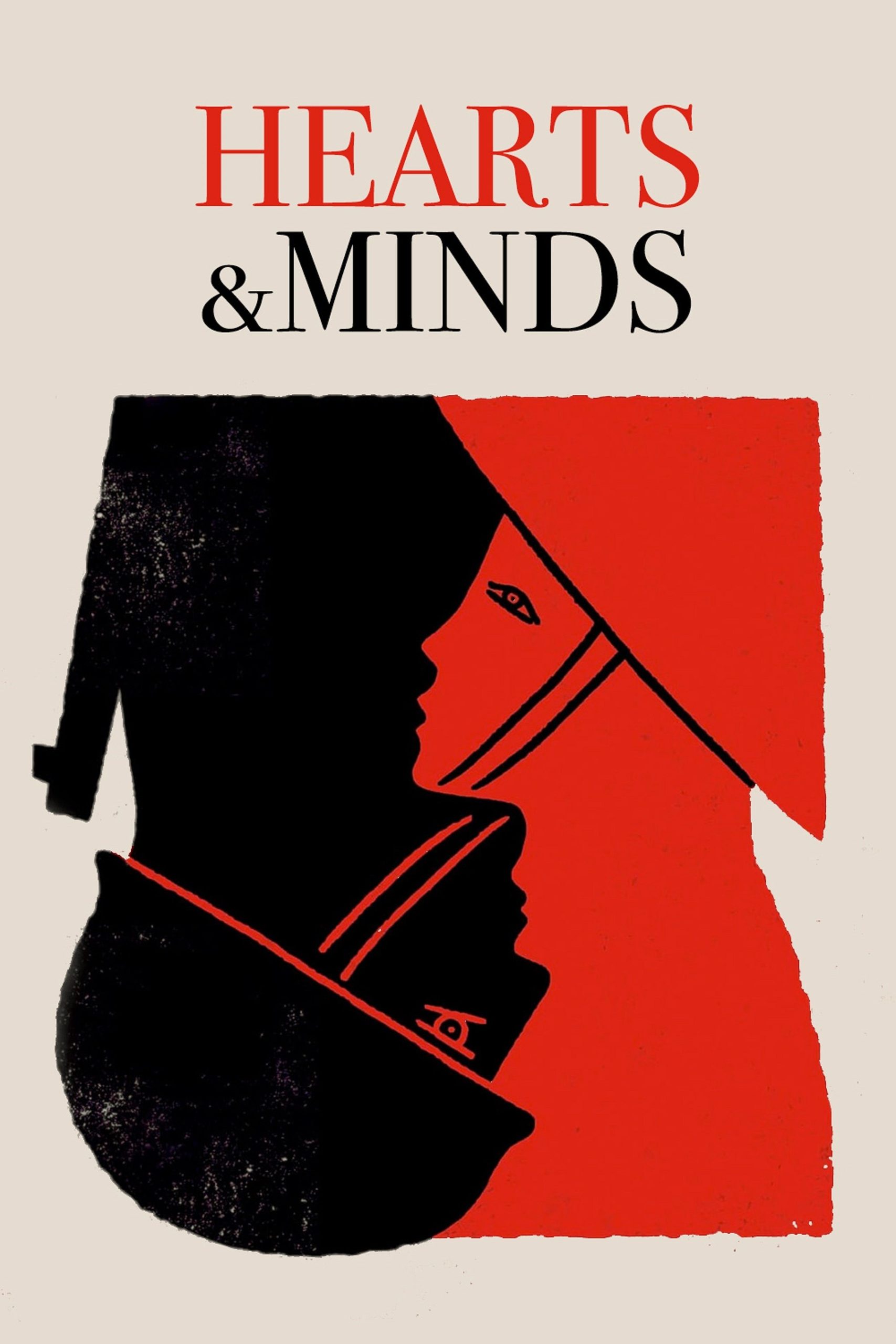
Peter Davis makes documentaries that argue without a narrator, cutting official speech against the people who had to live with it. In Hearts and Minds the method is furious and largely right, and the anger has outlasted nearly everything it inspired.
Fi1m perspective
Nobody tells you what to think in a Peter Davis film, and that is the first thing you notice. In Hearts and Minds (1974) five American presidents, from Harry S. Truman to Richard Nixon, explain why the country is in Vietnam, and the men who carried the explanation out are interviewed about what it cost them. The two are cut against each other for 112 minutes and the argument happens in the join. Davis never appears and never speaks. He does not need to.
He learned the trade in television. He joined CBS News in 1965 and made investigative documentaries about poverty, racism and the military's public relations, and The Selling of the Pentagon (1971) is the one people remember: a film about how the armed forces sold themselves to the public, built on the same trick of letting officials talk until they had said too much. Its editing was attacked as unfair and the argument reached Congress. He left CBS in 1972, and Hearts and Minds, produced by Bert Schneider and shot by Richard Pearce, is what he did with the freedom. After it came South Africa: The White Laager (1977), on apartheid, and Middletown (1982), a series about ordinary life in Muncie, Indiana, and after that mostly books and journalism.
The method has an obvious strength: the archive is always there to be answered, and a president in his own words is hard to dismiss. It has an obvious weakness too. The film knows the answer before the witnesses open their mouths, and a viewer who disagrees will feel steered. Some critics called Hearts and Minds propaganda. We would not, but we said in our review that it does not play fair and knows it, and we stand by both halves. Davis has said he wanted a film that was "not explanatory but experiential", and that is exactly what he made, for better and worse.
We were horrified by Hearts and Minds, and it was not the napalm that did it. It was Vietnamese villagers standing in what had been their houses, explaining to the camera without raised voices, and a woman at a graveside who has to be held back from the coffin. Davis gives these people time. In a film that otherwise cuts hard, it is the only place he is patient, and the patience does more than any of the montage.
Every polemical documentary since has borrowed the method, Michael Moore's included, and most borrowed the cutting without the silence. Davis stays out of the frame and he does not joke. Start with Hearts and Minds; if its anger is the kind you can sit with, the television work is where he learned to aim it.
Biography
Peter Davis, also credited as Peter Frank Davis, is an American documentary filmmaker, journalist and author. Born in Santa Monica, California, he is the son of screenwriters Frank Davis and Tess Slesinger. He graduated magna cum laude from Harvard University in 1957.
Davis began his career in journalism and television documentary production. He worked at CBS News in the 1960s and early 1970s, producing and directing investigative films including The Selling of the Pentagon (1971). He directed and co-produced Hearts and Minds (1974), which won the Academy Award for Best Documentary Feature.
Later work includes the Middletown series for PBS and the Emmy-winning film JACK (1993), produced with his son Nick Davis. Davis has also written several nonfiction books.