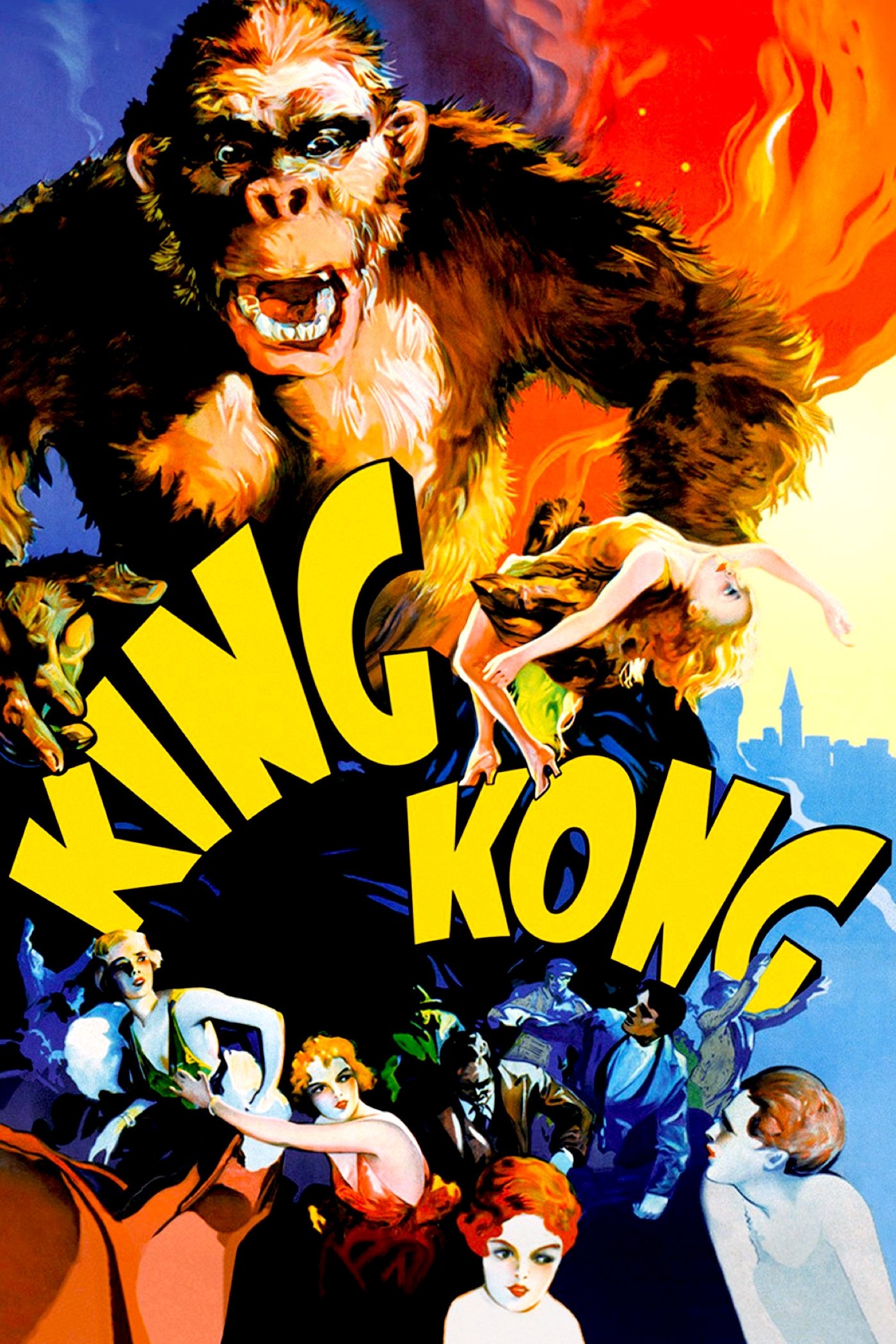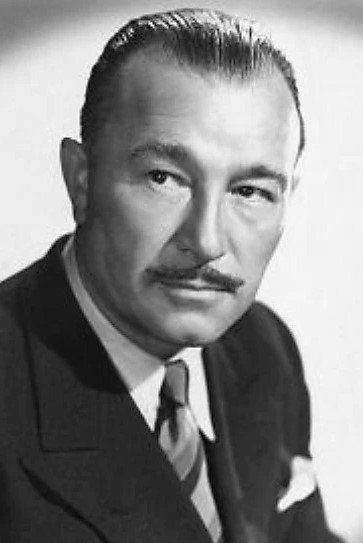
Robert Armstrong talked fast, sold hard and expected everyone to go along with him, and in King Kong (1933) everyone did. He played the showman so well that the pictures kept asking him to play it again, and he did that too.
Fi1m perspective
Carl Denham stands on the deck of a ship explaining, to a crew who have not asked, why they are sailing to an island nobody can find. Armstrong plays him as a man who has never once considered that his enthusiasm might not be shared. He talks in a hurry, leans in, and treats every objection as a detail to be settled later. King Kong needs us to go along with him at least as far as the island, and we did; what unsettled us, watching again, was how long we kept nodding after the point at which we should have stopped. His confidence goes on working even when we no longer trust it, and that is the performance.
He had been at it for a long while before anyone noticed. Stage work from 1915, a Broadway success in Is Zat So? in 1925 and 1926, then silent pictures for Pathé from 1927, nine of them in 1928 alone. The year before Kong he was Martin Trowbridge in The Most Dangerous Game (1932), shot on the same sets with Fay Wray, for the same pair of directors. Merian C. Cooper and Ernest B. Schoedsack cast him as Denham partly because he looked like Cooper, so the man selling a jungle picture to a doubtful crew was played by a man who resembled the one who had sold it to a doubtful studio. He played Denham again in Son of Kong the same year, and sixteen years later he was Max O'Hara, another promoter with another ape, in Mighty Joe Young (1949), made by the same team.
The quick, assertive delivery that makes Denham work also made Armstrong useful as policemen and detectives, and he was a sound Jeff McCord in G Men (1935). The cost was that after 1933 the studios saw one thing when they looked at him. He worked steadily in supporting parts through the 1940s and 1950s, then on television, including Perry Mason and the Hitchcock series, until a last film in 1964. Our review of King Kong notes that its people speak too emphatically to sound like conversation, and Armstrong is not exempt: his Denham addresses rather than talks. But a showman is always addressing somebody, so the fault the film hands its other actors becomes, in his case, character.
Denham finds something remarkable, ships it home, puts it under the lights and is puzzled when it will not do anything else. Hollywood did much the same with Armstrong. He took it with better grace than the ape did, and King Kong is still the place to meet him: if the man on the deck talks you onto the boat, you will know exactly what the rest of the career was for.
Biography
Robert Armstrong was an American film and television actor. He studied law at the University of Washington before turning to the stage, appearing in productions including the Broadway hit Is Zat So? (1925–1926). His screen career began in 1927 with the silent film The Main Event, and he went on to appear in more than 120 films.
Armstrong is best known for playing the film-maker Carl Denham in King Kong (1933) and its sequel Son of Kong (1933). He also appeared in The Most Dangerous Game (1932), 'G' Men (1935), Mighty Joe Young (1949) and numerous other films, often in fast-talking character roles. In the late 1950s he played Sheriff Andy Anderson in the television series State Trooper. He was the nephew of playwright Paul Armstrong.