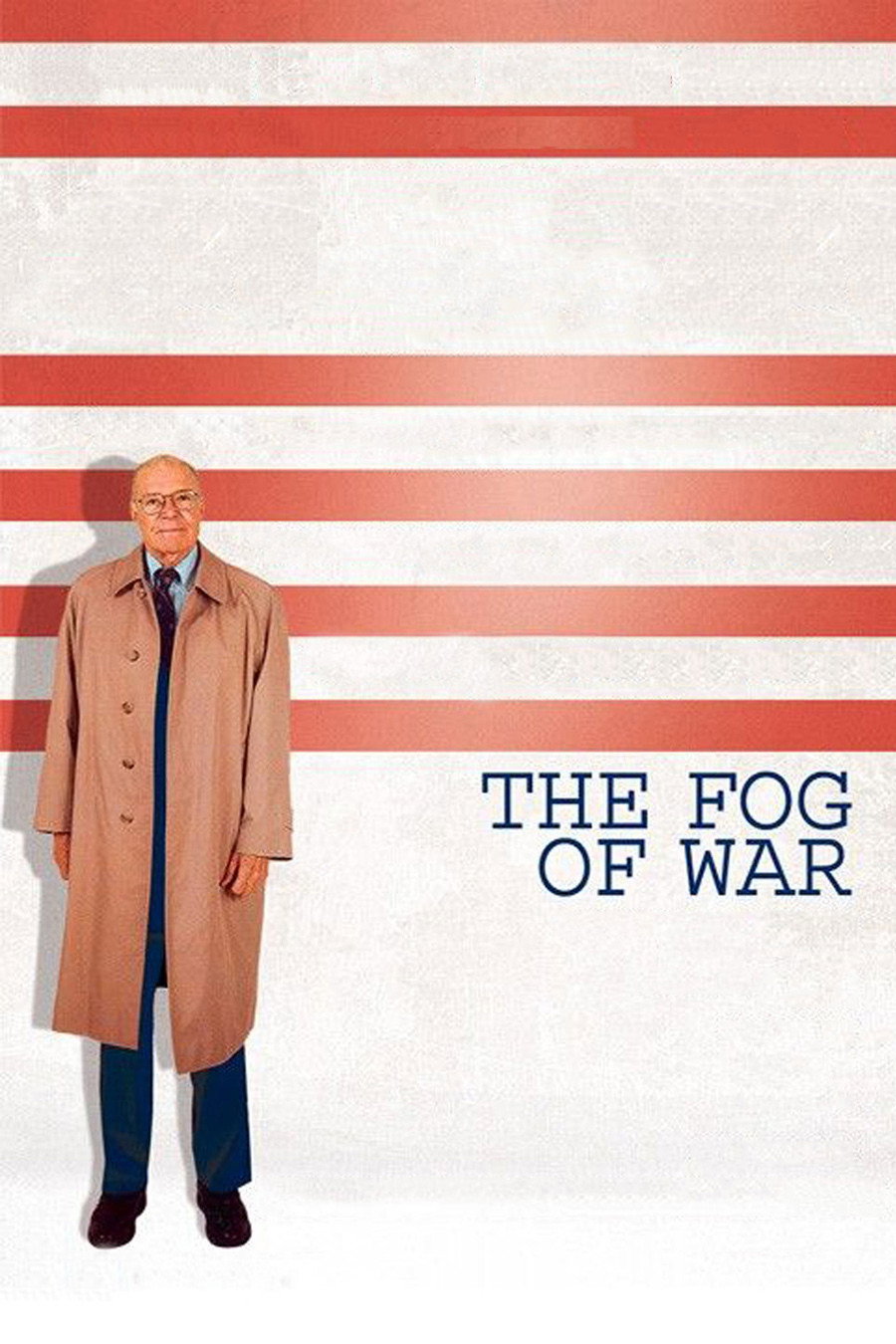
Robert McNamara's directness makes him an absorbing documentary subject, but his fluency can make difficult questions easier to forget. We recommend The Fog of War with a firm reservation about how much control it gives him.
Fi1m perspective
Robert McNamara looks straight into the camera in The Fog of War (2003), giving us time to study him as well as follow his account. Cinematographers Peter Donahue and Robert Chappell keep that encounter absorbing, with little relief from his direct address. Steve Hardy and Ted Bafaloukos keep the production design unobtrusive; there is nothing much to distract us from the man explaining himself. The attention is warranted, though being given a good view of a speaker does not settle how much we should trust him.
His principal film appearance came late, when Errol Morris filmed roughly twenty hours of conversations with him in his mid-eighties. That extended attention suits someone who can make a complicated recollection intelligible and keep us listening. Morris arranges the material into eleven lessons, a structure that gives McNamara considerable room to explain his thinking. We find him compelling, but the film sometimes gives an eloquent explanation more credit than it has earned. The weakness is in the encounter itself: he has considerable control over how his account reaches us.
The most useful collaborators are editors Doug Abel, Chyld King and Karen Schmeer, who move between the interview, archive footage and recorded conversations without making the film feel like an illustrated lecture. They let us hear other voices alongside the recollections, interrupting McNamara's opportunity to explain everything himself. We were unsettled by those recordings because hearing the people involved speak made the decisions under discussion feel less safely remote. This is where the film gives us most reason to listen beyond its principal speaker.
Philip Glass's solemn score sustains that unease, though it sometimes adds more gravity than the material needs. The music works best when it leaves room to listen; McNamara's explanation is already enough to keep us occupied. His ability to hold our attention is the reason to watch, and also the reason Morris needs those interruptions from the archive. See The Fog of War for the sustained encounter with an articulate man, and keep asking the questions his fluency can make us forget.
Biography
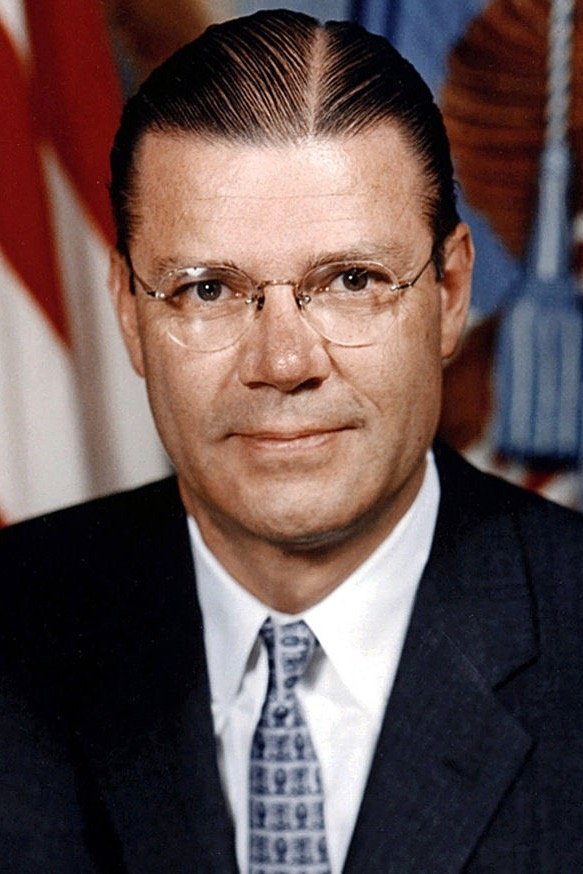
Robert Strange McNamara was an American business executive and government official. He served as the eighth United States Secretary of Defense from 1961 to 1968 under presidents John F. Kennedy and Lyndon B. Johnson.
He appears as himself in the 2003 documentary The Fog of War, directed by Errol Morris, which draws on interviews with McNamara reflecting on his career and the nature of war. Archive footage of him features in later productions including The Vietnam War (2017) and The Most Dangerous Man in America (2009).