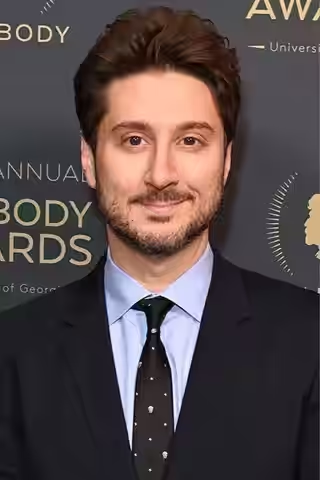
Terry Matalas makes science fiction for people who already know the ship. He keeps the time travel tidy and the old crew in frame, and his third season of Star Trek: Picard is fond, well made and the least ambitious of the three.
Fi1m perspective
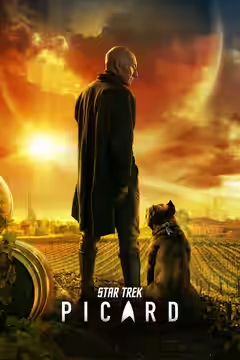
In the third season of Star Trek: Picard (2023), Jeri Ryan's Seven of Nine finally gets a Starfleet uniform and a chair on the bridge, Ed Speleers walks aboard as Jack Crusher, and Stephen Barton's score leans hard on the old Goldsmith theme. That is Terry Matalas's method in a single sequence. He works out what people who have watched a thing for decades have been waiting for, and he hands it to them, tidily, with the lights on.
He came up through the franchise, in production jobs on Voyager and Enterprise and then story credits on Enterprise's third season (2003), before writing for Terra Nova (2011) and Nikita (2012–13). The show that made his name was 12 Monkeys (2015–18), which he co-created and ran with Travis Fickett and also directed, turning a 1995 film into four seasons of time travel that held together. His rule for the writers' room was that if a plot needed a timeline drawn on a whiteboard it was out, and it shows: he keeps the mechanics simple so the feeling can carry the weight. A season of MacGyver (2020) followed, then Picard, as co-showrunner for the second season (2022) and sole showrunner for the third, on which he wrote and directed the finale.
That third season is the one most critics prefer, and we liked it too. It is fond and well made, and we liked it; Ryan had been the best thing in the series after Stewart for two years, and it was a relief to see her at last given a uniform and a chair. But it is also the least ambitious of the three seasons. The first asked what a synthetic person is owed and what Starfleet had turned into; Matalas's season flies a familiar ship down familiar corridors and says nothing further about either question.
The reservation about 12 Monkeys in its early going was that the people were thin and the dialogue too earnest, and it is a reservation we would carry over. Matalas is a builder of plots that close and reunions that land. He is less interested in characters who do not already have a history to honour, and the history, so far, has always been someone else's.
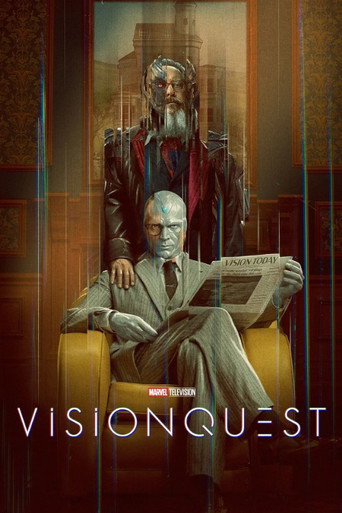
Next is VisionQuest (2026) for Marvel, which he has created and will write and direct, and which concludes a trilogy connected to WandaVision. So: another set of characters the audience already loves, another ending to be got right. He will get it right. We would like, once, to see what he does with a ship nobody has heard of.
Biography
Terry Matalas is an American television writer, director and producer. He attended Emerson College, where he met frequent collaborator Travis Fickett. He began his career as a production associate on Star Trek: Voyager and Star Trek: Enterprise, for which he also wrote stories.
Matalas co-created and showran the series 12 Monkeys (2015–18). He was showrunner on the fourth season of MacGyver (2020) and on the second and third seasons of Star Trek: Picard (2022–23), writing and directing episodes of the latter. He is creator, writer and director of the series VisionQuest (2026).