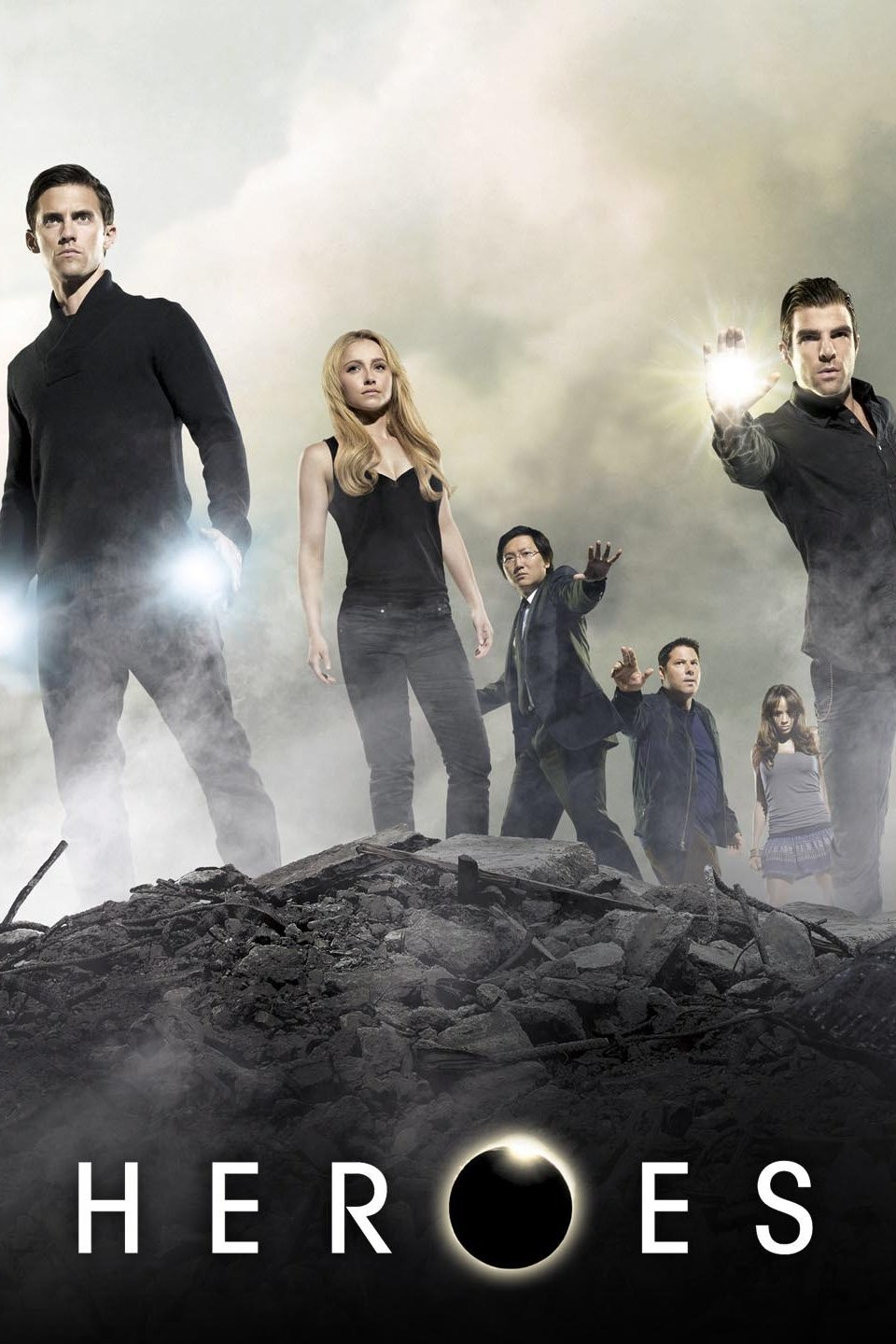
Tim Kring's television is about ordinary people discovering they can do the impossible, and about strangers acting on each other across the world. He is good at the discovery and less good at what follows; the first series of Heroes is his case for the defence.
Fi1m perspective
The Tim Kring scene is somebody ordinary finding out they can do something impossible, and not yet knowing what it is for. In the first series of Heroes (2006) he gives that moment room. Nobody rushes to explain the abilities; the writing lets its characters be curious, frightened and a little pleased with themselves before the plot arrives with a world to save. It moved us more than a superhero drama has any right to, because the wonder is played straight and because the people are allowed to be interesting before they are useful.
He came to it late and sideways. Kring worked as a grip and a gaffer before selling an episode of Knight Rider in 1985, wrote for Chicago Hope, and created Strange World (1999) and then Crossing Jordan (2001–2007), a procedural that ran six series and taught him how to keep a large cast going for years. Heroes (2006–2010) made his name. What followed, Touch (2012–2013), Dig (2015), the Heroes Reborn miniseries (2015) and Treadstone (2019), kept returning to his one abiding idea, that people on opposite sides of the world are acting on each other without knowing it. "I believe the emerging story of our time is that we are more connected than we thought we were," he said of Touch, and it is the thesis of nearly everything he has made.
The trouble is that connection, on Kring's scale, needs a great deal of plot. Heroes opens with a cast scattered across countries and a mythic shape to gather them into, and for a year the gathering is the pleasure. Then the threads must keep crossing, and the later series grow more complicated without growing richer, which is the criticism that has followed him since and the reason our recommendation stops at the first run. He is better at introducing people than at knowing what to do with them once they have met. Jeph Loeb wrote and produced alongside him on two of his shows, and Touch tried the same idea in a gentler, more procedural key, with a happier ending each week.
Kring has said he never thought of himself as a science fiction writer, and you can see it. The abilities in Heroes are ordinary people's problems first, which is why the opening works. The mythology is where the writing runs out, which is why the rest does not. A new Heroes was announced in 2024. Our advice to him is what we would give anyone who loved the original: stop at the end of the first year, while everyone is still finding out what they can do.
Biography
Tim Kring is an American screenwriter and television producer. He graduated from the University of Southern California School of Cinematic Arts in 1983 and began his writing career with an episode of the series Knight Rider in 1985. He later contributed to series including Chicago Hope and co-wrote the screenplay for the film Teen Wolf Too (1987).
Kring created and served as executive producer on the NBC series Crossing Jordan (2001–2007) and Heroes (2006–2010). He returned as creator for the miniseries Heroes Reborn (2015) and created the Fox series Touch (2012–2013). He has also written for Dig (2015) and developed Treadstone (2019).