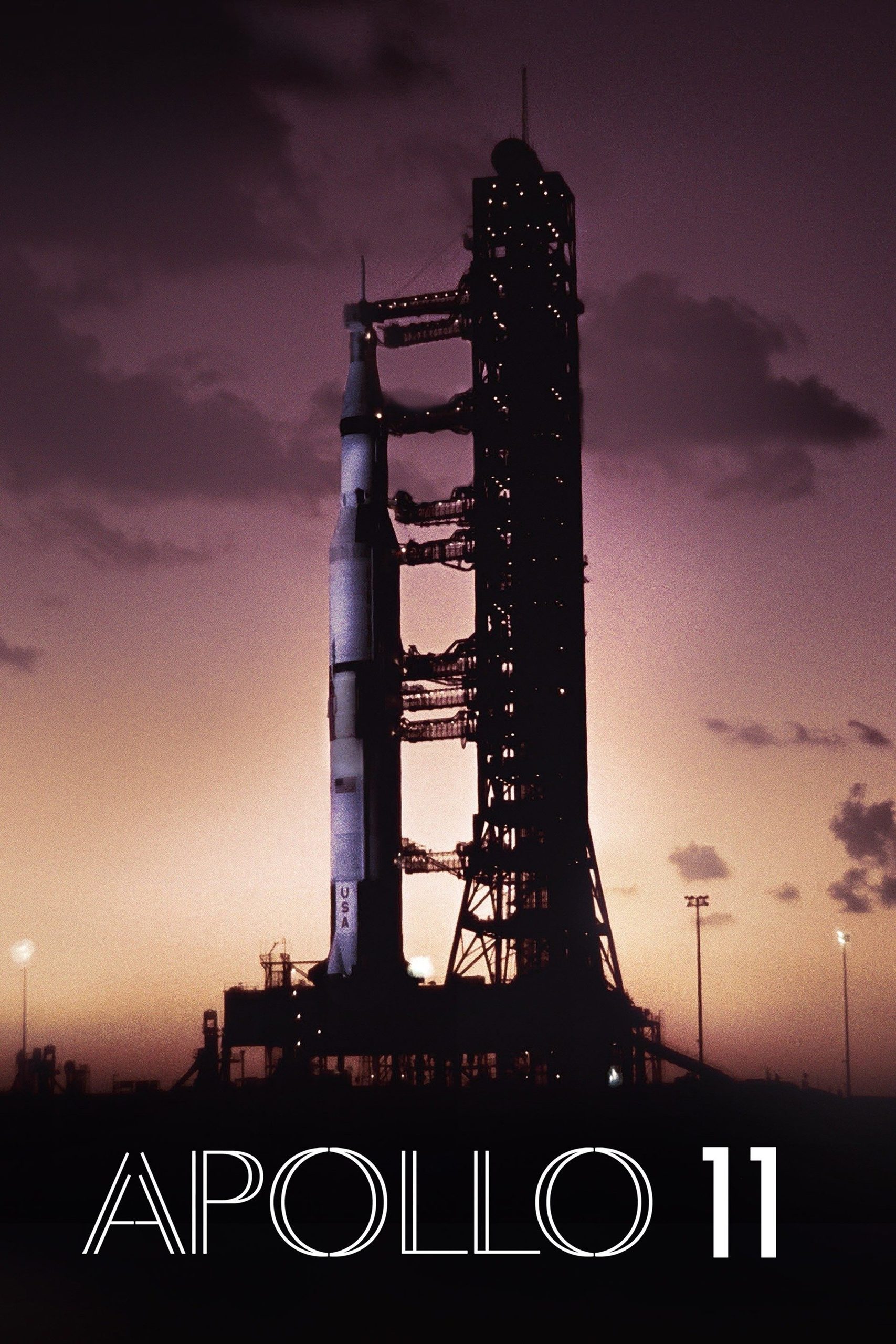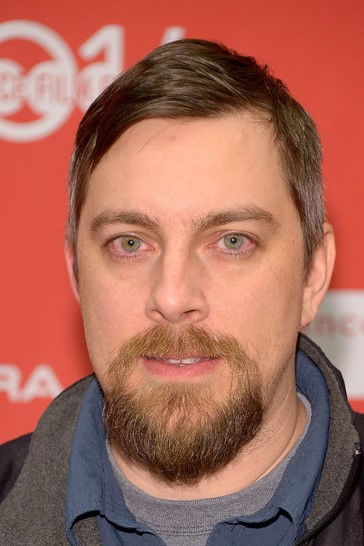
Todd Douglas Miller makes documentaries from other people's footage and adds nothing: no narrator, no interviews, nobody remembering. Given NASA's 65mm, in Apollo 11, the method is close to thrilling; when the archive thins, so does the film.
Fi1m perspective
A boy is asleep on the bonnet of a car on a Florida beach in July 1969, and the colour is so full he might have been filmed last week. Nobody tells us who he is. Nobody tells us anything, because Todd Douglas Miller does not use narrators, historians or old men remembering, and the only voices in Apollo 11 (2019) are the ones recorded at the time. He simply cuts back to the boy, and to the station wagons and folding chairs around him, until we understand that these people are waiting the way we are. That is the whole method, and it is harder than it looks.
He came to it slowly. There were shorts in the early 2000s under the name Todd Miller, among them Gahanna Bill (2001), and then a feature-length documentary, Scaring the Fish (2008). Dinosaur 13 (2014) was the first film of his that people noticed, and it drew a complaint that has not gone away: that it took its protagonists' side and did not give the other one a hearing. Then came the NASA footage, a great deal of it shot on 65mm and left in storage for half a century, and with it Apollo 11, which is the film he had been working towards. A short, Apollo 11: Quarantine (2021), went back to the same material.
What Miller does well, he does better than almost anyone. He is his own editor, and he trusts a sequence to run long. For the launch he puts a countdown clock in the corner, shares the screen between the firing room, the pad and the beach, and lets Matt Morton's synthesiser score climb underneath without once covering a voice. We held our breath from ignition until the first stage fell away, which is an absurd thing to do when you know the ending, and we did it because the camera was a few yards from the flame and the picture shook because the ground did. Stephen Slater, the archivist on two of his films, deserves a share of the credit; much of the work happened before the first cut.
The weakness follows from the method. A director who has sworn off narration has nothing to reach for when the footage runs out, and in the capsule it does: 16mm, grainy, pointed at nothing much. Miller fills the gap with line drawings and mission audio over near-still pictures, and for a quarter of an hour Apollo 11 is a radio play with slides. He has said he wanted to "just let the footage speak for itself", and we believe him, but footage does not choose its own order. Every cut is an opinion, and Dinosaur 13 showed what happens when the opinion goes unexamined.
His next film will depend, as all of them do, on what someone else left in a vault. Not many archives are as good as NASA's, and Miller's method needs them to be. We will watch whatever he finds, on the largest screen we can get to, and hope the vault was full.
Biography
Todd Douglas Miller is an American filmmaker who directs, edits and produces documentaries. He grew up in Columbus, Ohio, and attended the Motion Picture Institute in Detroit and Eastern Michigan University in the 1990s.
Miller is known for Dinosaur 13 (2014), which he directed, edited and produced, and Apollo 11 (2019), on which he served as director, editor and producer. Earlier credits, sometimes under the name Todd Miller, include Gahanna Bill (2001) and Scaring the Fish (2008). He is a member of the Academy of Motion Picture Arts and Sciences.