Val Guest shot science fiction as though it were the evening news, with hand-held cameras, real streets and people talking over one another, and for a few years either side of 1960 it worked. The rest of the career is a long, uneven afterwards.
Fi1m perspective
The thing Val Guest did that most British directors of his day did not was treat science fiction as a job for a news camera. He shot on real locations, let his actors talk over one another and carried the camera by hand, so that the impossible turned up on screen looking like something from the evening paper. It is a plain idea, and it gave Hammer its first big success: The Quatermass Xperiment (1955), taken from Nigel Kneale's television serial and made as though a reporter had happened to be standing there when it began.
He came to it sideways. He was an actor first, then a journalist, then in the mid-1930s a staff writer at Gainsborough turning out comedies for Marcel Varnel and Will Hay, and his own first features in the early 1940s were comedies too. From the mid-1950s he directed fourteen films for Hammer, and around them the run that matters: Quatermass 2 (1957), again from Kneale; Expresso Bongo (1959), a satirical musical with an early part for Cliff Richard; Hell Is a City (1960), a Manchester crime story made on the streets with the police's help; and The Day the Earth Caught Fire (1961), which he wrote as well as directed and which turns the dread of nuclear testing into a story about the end of everything.
The virtue across all of them is conviction. He worked fast, usually with his own script, and he never let a film suspect it was silly. The documentary habits are not decoration; they are the reason a Kneale plot plays as though it might be in tomorrow's paper, and why the Manchester of Hell Is a City is a place and not a set.
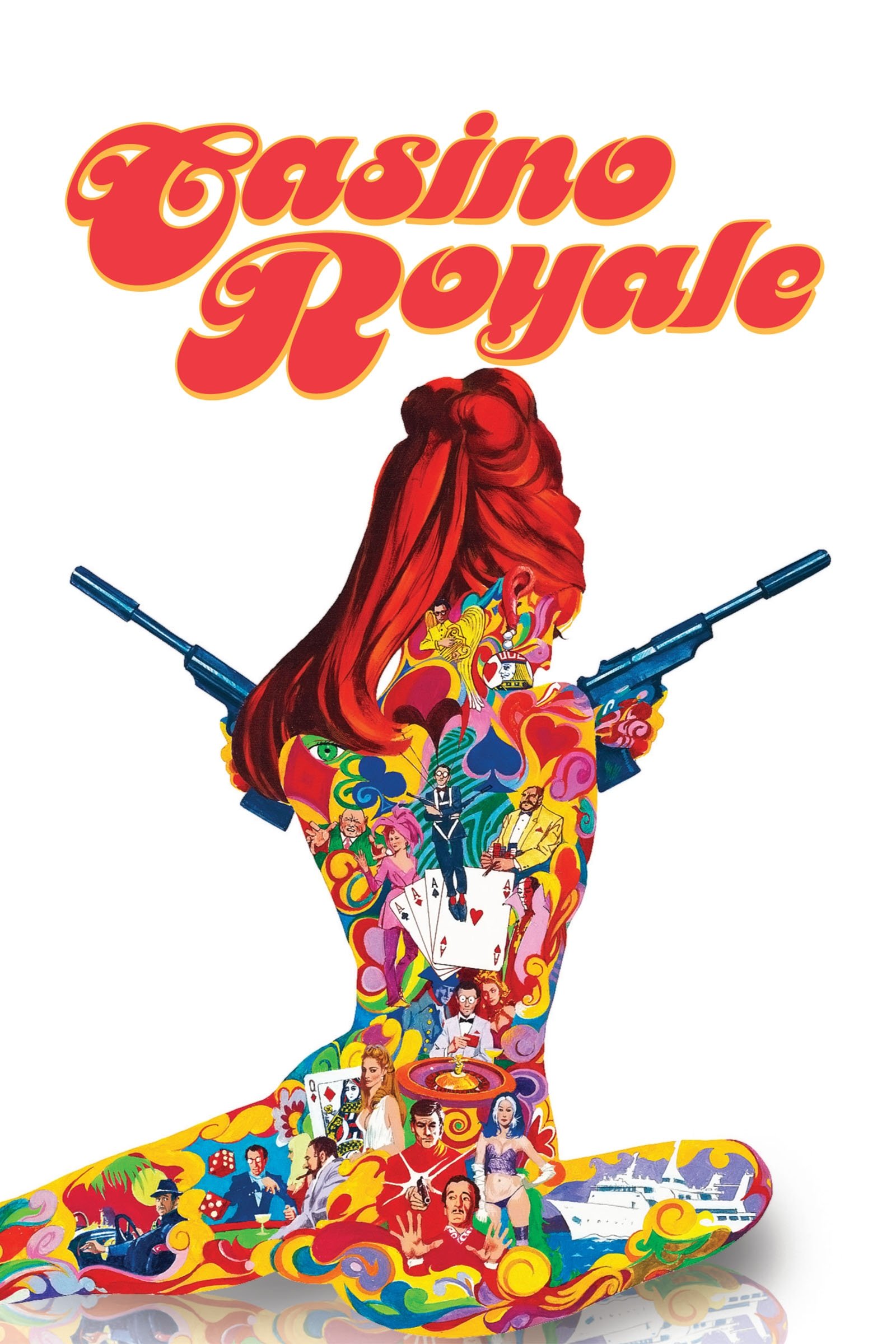
Then comes the long afterwards. Guest is one of five credited directors on Casino Royale (1967), brought in to shoot linking material and hold together a film with nobody in charge, and it defeated him as it defeated everyone else. We were bored well before the halfway point and then irritated, because the noise is so expensive, and because David Niven's dry first half-hour and Burt Bacharach's score show what a steadier hand might have made of it. That a director whose whole method was belief should be hired to glue together a film with none is an irony nobody would have chosen. After it came spy films, sex comedies, Toomorrow (1970), for which almost nobody has a kind word, and The Boys in Blue (1982), a remake of a Will Hay film, which took him back to where he started and not in the way he would have wanted.
If you are going to give him an evening, give it to the Hammer years and the films around them, when he had a Kneale script under one arm and a camera on his shoulder. He never made anything as good after 1961, and he kept working for another twenty years, which is true of a great many careers and does not make the first half of his any less worth your time.
Biography
Val Guest (born Valmond Maurice Grossman) was a British film director and screenwriter. He began his career in the 1930s as a stage actor and journalist before becoming a screenwriter at Gainsborough Studios. He turned to directing in the early 1940s and maintained an active career in film and television until the early 1980s.
Guest directed several science-fiction films for Hammer Film Productions, including The Quatermass Xperiment (1955), Quatermass 2 (1957) and The Abominable Snowman (1957). He also wrote and directed The Day the Earth Caught Fire (1961) and was one of five directors credited on Casino Royale (1967). Other credits include episodes of the television series The Persuaders! (1971) and Space: 1999 (1975).
He was married to actress Yolande Donlan from 1954 until his death.