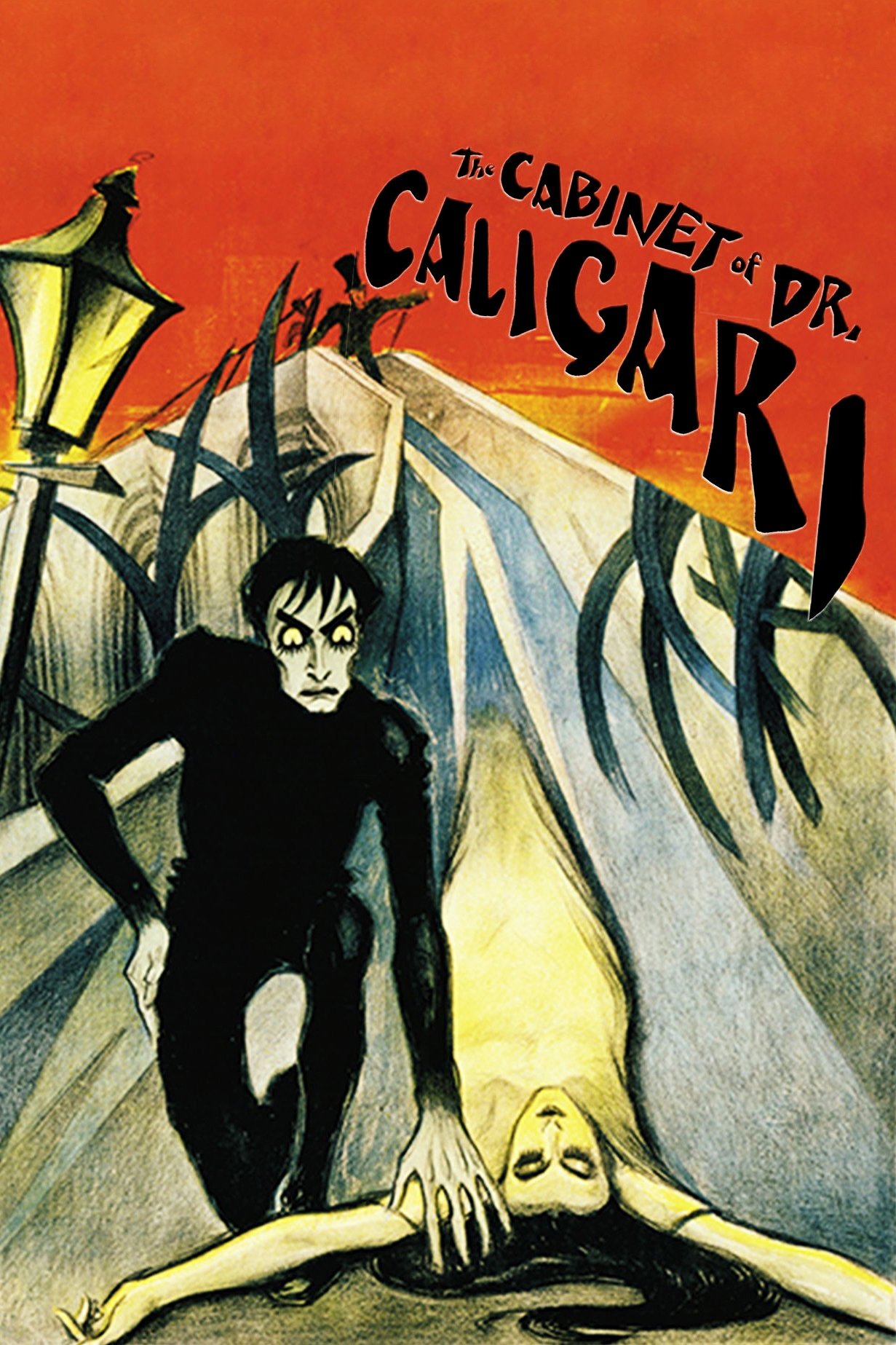
Werner Krauss makes broad, theatrical acting feel at home in the crooked scenery of silent horror. We value his willingness to look excessive, though in The Cabinet of Dr. Caligari Conrad Veidt makes the stronger impression.
Fi1m perspective
In The Cabinet of Dr. Caligari (1920), Werner Krauss belongs among the crooked sets as readily as any actor could. His doctor is a broad presence, and Robert Wiene's film gives that broadness somewhere to work. We enjoyed seeing Krauss fit these improbable surroundings so comfortably; a restrained performance would hardly have been the obvious choice. He is willing to look excessive, which matters in a film where the scenery is already telling us that nothing is quite right.
Caligari was his international breakthrough, and sinister or obsessive figures became a substantial part of his work in 1920s German silent cinema. Waxworks (1924) and his Scapinelli in The Student of Prague (1926) belong to that stretch. Exaggerated mime, gesture and physical presence were useful tools for these parts. But the same period also brought Orgon in F.W. Murnau's Tartuffe (1925), where his theatrical skills transferred to film, and Josef Geiringer in G.W. Pabst's social drama Joyless Street (1925). Those are useful titles to keep in mind before treating the doctor as the whole actor.
Caligari also shows where our enthusiasm needs a qualification. Conrad Veidt's Cesare is the more compelling performance because his exaggerated acting has a precision that makes it unsettling. Krauss's broadness is pleasurable, but Veidt is the actor we find ourselves watching most closely. Friedrich Feher's Francis and Lil Dagover's Jane can make distress feel like an instruction to the audience, a problem when the scenery is already so insistent. Krauss avoids feeling misplaced, though we would not credit him with the film's deepest unease simply because he plays the title character.
The relentless crookedness occasionally grows tiresome, but it would be a mistake to dismiss Krauss's contribution merely because it is theatrical. His performance suits the film, and the pleasure of that fit survives our preference for Veidt's more exact work. Start with Caligari, which we recommend warmly, but watch the two actors together: their different ways of handling exaggeration are worth the evening.
Biography
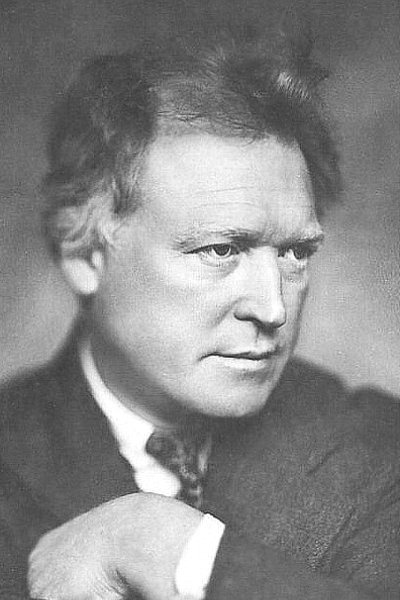
Werner Krauss was a German stage and film actor. Born on 23 June 1884 in Gestungshausen, Sonnefeld, Bavaria, Germany, he died on 20 October 1959 in Vienna, Austria.
He began acting in provincial theatres from 1903 and joined Max Reinhardt’s Deutsches Theater in Berlin in 1913. His first film role was in 1916. Krauss became known for his performances in silent films, including the title role in The Cabinet of Dr. Caligari (1920), roles in Waxworks (1924), Tartuffe (1926), Joyless Street (1925) and Nana (1926).
He appeared as Rabbi Loew in Süss, the Jew (1940). His work in Nazi-era productions led to post-war conviction as a minor war criminal; he was later rehabilitated and received awards including the Iffland-Ring in 1954.