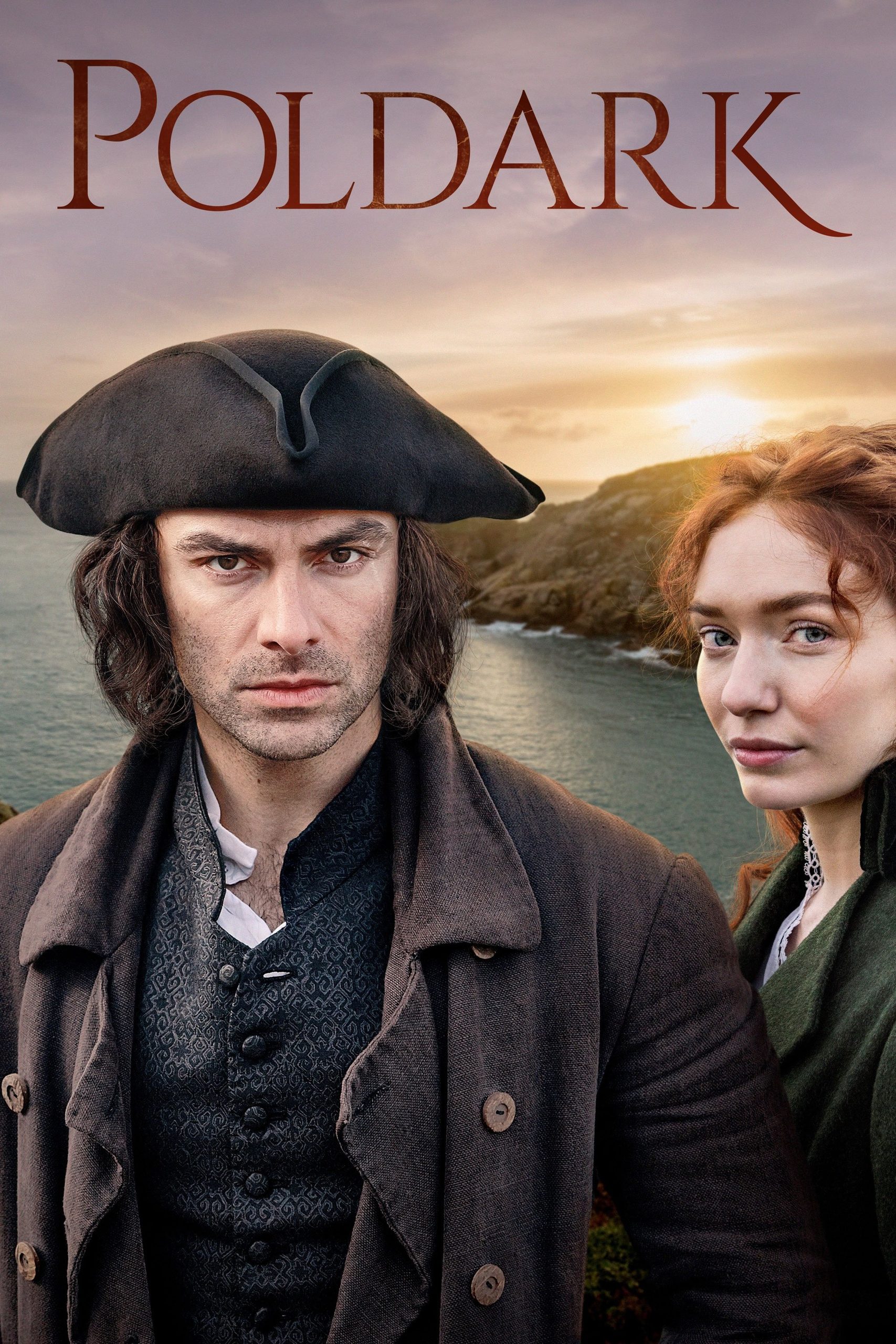
Winston Graham gives television a useful combination of romantic urgency and social conscience. Poldark is good evidence of how well that works, with reservations about an adaptation that grants its handsome hero more patience than his opponents.
Fi1m perspective
In Poldark (2015), Ross looks troubled against the Cornish coast, with some justification. The adaptation of Winston Graham's novels gives him romantic desires and a social conscience, and keeps both busy. It is good, brisk television, occasionally overfond of its handsome lead. We warmed to Ross because his concern for others gives us a reason to stay beyond the romance. His conviction makes a persuasive case for Graham's ability to supply a leading character worth following.
The Cornish sequence began with Ross Poldark (1945), the first of twelve novels drawing on local history, mining and landscape. Four books were written by 1953, before Graham returned to the sequence with The Black Moon (1973) and carried it through to Bella Poldark (2002). The long span matters because he follows Cornish communities across generations, giving the setting more to do than provide scenery. He researched period sources and chose details relevant to the fiction. That is a useful discipline for television, where historical explanation can easily hold up the people we came to watch.
Suspense was another substantial part of Graham's work, with Marnie (1961), later filmed by Alfred Hitchcock, its best-known example. His thrillers put ordinary people under moral or psychological pressure, often involving events in the past that they have repressed. He brought suspenseful plotting to the historical novels too, which helps explain why Poldark can be busy without becoming a chore. The adaptation gives the romantic drama room to move, and the series seldom seems embarrassed to be enjoyable.
The qualification is that Poldark gives some of its villains less care, especially the bankers. Ross is allowed the appeal of desire and conviction; his opponents do not always receive equivalent patience. It would be unfair to assign every such simplification to Graham when we are watching an adaptation. But the social drama would be stronger if the opposition felt less conveniently drawn. Start with Poldark for the forceful lead and the busy romance, with no expectation that every banker will be granted a fair hearing.
Biography
Winston Mawdsley Graham was an English novelist. He was born Winston Grime on 30 June 1908 in Victoria Park, Manchester, and died on 10 July 2003 in Buxted, East Sussex. He changed his name by deed poll in 1947.
Graham is best known for the twelve Poldark historical novels set in Cornwall, published between 1945 and 2002. The books were adapted into a BBC television series in the 1970s and again in 2015. He also wrote numerous thrillers and other works, including the novel Marnie (1961), which was filmed by Alfred Hitchcock in 1964.
He received an OBE in 1983 and was a Fellow of the Royal Society of Literature. Graham lived for many years in Perranporth, Cornwall, which provided the setting and inspiration for much of his writing.