A clip show that took more care over its clips than most comedies take over their scripts. Hill is daft, exact and oddly generous to what he mocks, and the thing is still funny; it is also a joke about a week of television that ended twenty years ago.
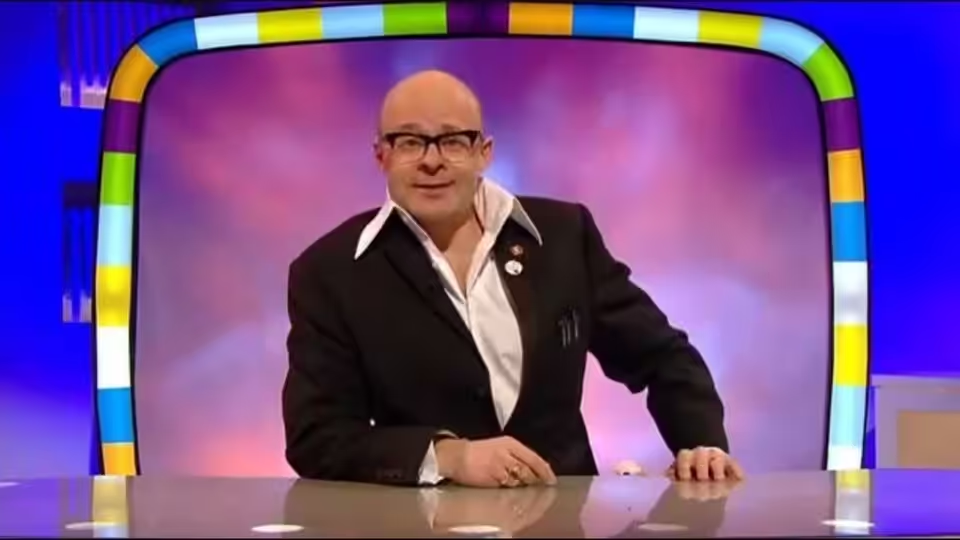
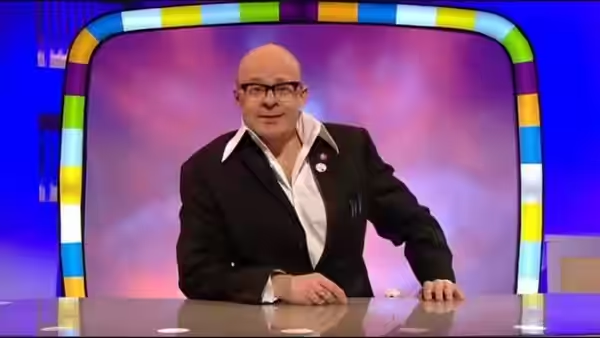
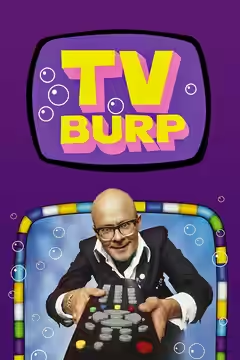
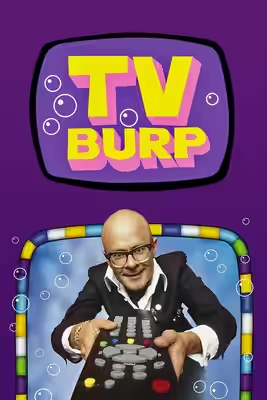
The idea is small and it is the whole show. Harry Hill watches a week of British television, mostly the soaps, and comes back to tell you what he saw. Twenty-three minutes, a studio audience, a man in a collar, and the clips. That was the format from 14 November 2002, and it was still the format when Series 14 began on 4 February 2012. It is one of the best comedies British television made in those ten years, and we say that with one caveat: it was built to be thrown away on the night and now needs a footnote every ninety seconds.
The method is repetition. A soap actor says something slightly wrong, a line that was fine in context and strange out of it, and Hill plays it. Then he plays it again. Then he reacts, then plays it a third time, and by the fourth the audience is laughing before the clip starts. The trick is not the point; the choosing is. The writers, Dave Thompson, Daniel Maier, Paul Hawksbee, John Moloney, Magda Archer, Chris Addison and Hill himself, watched everything, and the hit rate suggests they watched it twice. The best clips are not the obvious howlers but the small ones: a reaction shot held a beat too long, a character who seems to have been standing in the same kitchen for a decade.
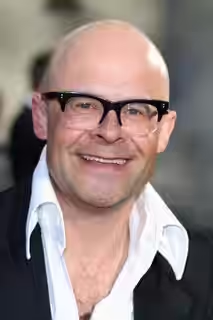
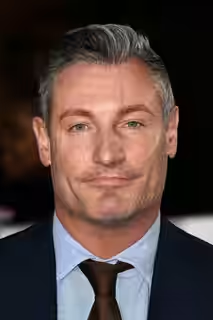
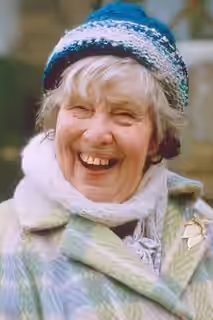
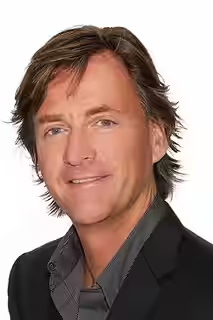
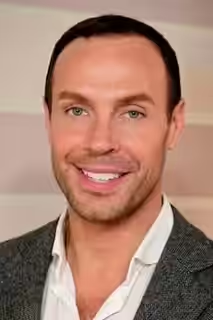
Peter Orton directs it like a live show. Hill in a wide shot, cut to the clip, cut back for the face. The craft is in the clips themselves, which are cut to the frame so that a pause falls exactly where Hill needs it, and in Hill’s face when we get back to him. He is not sneering. He plainly watches these programmes, with something close to affection, and the mockery lands harder for that. The names in the credits are a roll call of the schedules of the time: Richard Madeley, Anthea Turner, Leslie Ash, Anna Wing, Michael Le Vell. Dean Gaffney appears as a special guest, as himself.
We laughed until we had to stop the episode, at a single line from a soap played four times with a different face from Hill in between, and we felt faintly ashamed afterwards, because the actor had only been doing his job on a Tuesday. That effect works on people who have never seen the programme being mocked. You do not need to know who the character is. You need to know that somebody, somewhere, wrote that line down and thought it was fine.
Around the clips there is a second show, and it is the one people quoted. Steve Benham is billed above Hill, which tells you how much the costumed interruptions mattered. The fight at the end of each episode, two unrelated items from the week put in a ring to settle which is better, was the bit that went round playgrounds. It was funnier in the early series than the late ones, and by the end you could see it coming from the first minute.
The flaws are the flaws of a programme made weekly for a decade. The soaps take up more of each episode than anything else, so the show lives or dies by whether the soaps had a bad week. The later series grew: Series 8 and Series 9, from 18 October 2008 and 10 October 2009, run to 25 episodes each, and the strain shows, with the same gag returning three times a series. And it dates by the week. Watched now, half of any episode is about a conversation the country was having that you were not part of, and Hill’s reaction is the only thing on screen that has not aged.
Clip shows are the laziest form on television, and this was the exception, because it treated the clips as the script. Hill created it and fronted it and wrote on it, and nobody else has done the same job as well since.
Watch one from the middle years, with somebody old enough to remember the programmes being laughed at. On your own, with no memory of the week in question, it is still a good joke, but you will be aware of being told it second-hand.