Rachel Sennott’s comedy about ambition and friendship in Los Angeles starts too loud and too busy, then settles into something sharp and unexpectedly kind. The satire is thin but the company is good, and Odessa A’zion is a find.
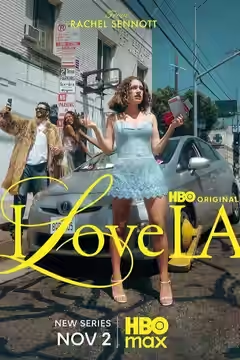
Rachel Sennott, who starred in Shiva Baby (2020) and co-wrote and starred in Bottoms (2023), has made an eight-episode comedy about a woman trying to get somewhere in Los Angeles and finding the city full of people who got there without doing anything. Maia (Sennott) wants a career in PR. Her friend Tallulah (Odessa A’zion) is the kind of famous that is measured in followers, and the series is about what happens when the people you drink with are also the people you need something from. It is funny more often than not. It is also, for its first two episodes, exhausting.
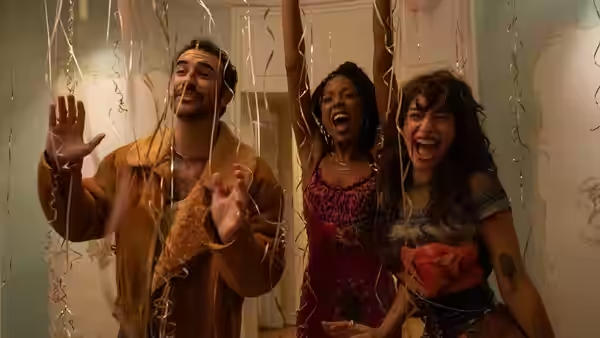
The pilot tries to do everything at once: five friends, a job, a house, a party, a hangover and a decade of history, all at the volume of a phone notification. The dialogue comes in the clipped, ironic register of people who talk in captions, and for two episodes we were not sure we could stand another six. Then the series relaxes. By the third, the writers have stopped proving how well they know these people and started letting them be quiet, and the quiet is where the comedy is.
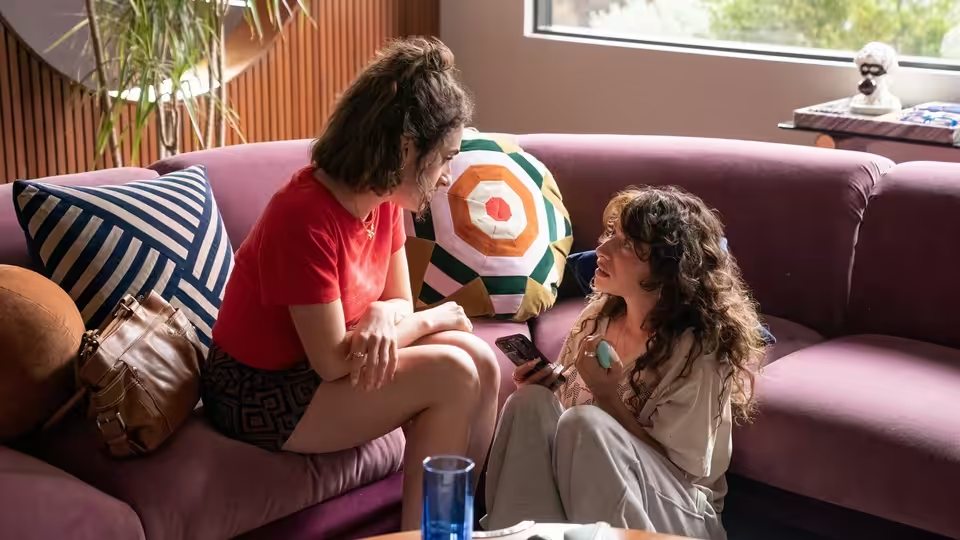
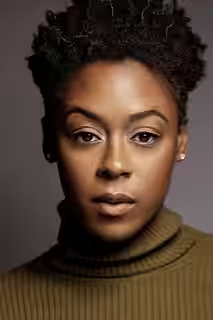
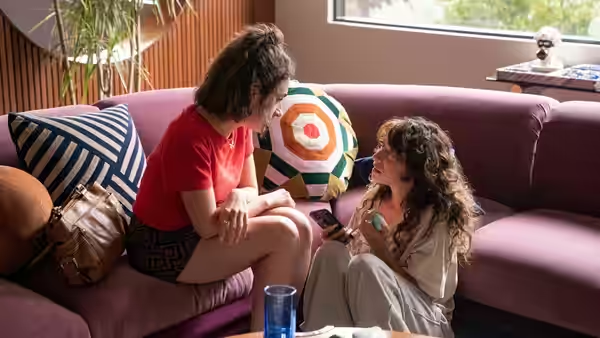
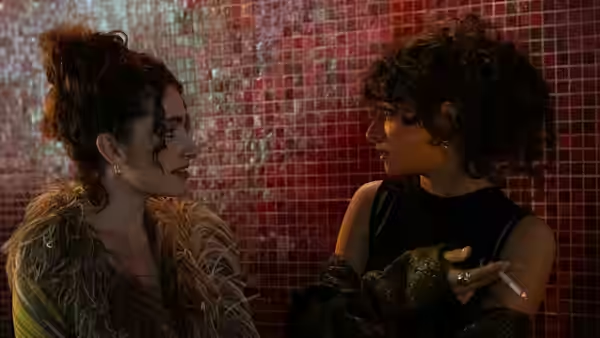
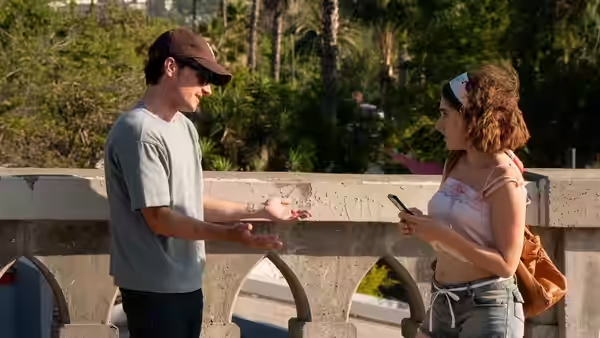
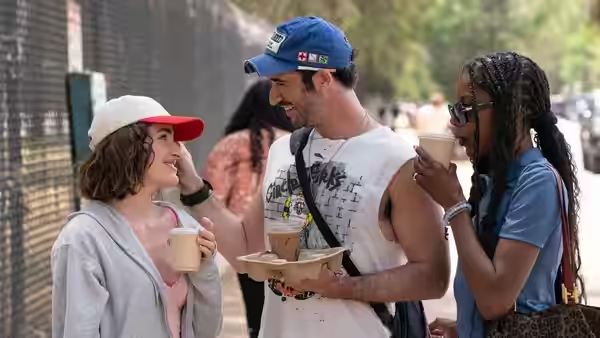
Sennott plays Maia with the face of someone doing arithmetic. She is warm to the people who can help her and warmer to the people she needs to help, and never lets us forget the difference is a calculation. A’zion is the surprise. Tallulah could have been a joke about influencers and is instead a person who happens to be one: scrappy, needy, funnier than everyone around her and aware that none of it will last. When she and Sennott share a room the series stops being a satire and becomes a friendship, and it is better for it. True Whitaker’s Alani and Jordan Firstman’s Charlie get the lines the leads cannot afford to say, and Firstman delivers his as if they cost nothing. Josh Hutcherson’s Dylan is the one person on screen who seems to have somewhere to be in the morning.
Andy Rydzewski and Adam Silver shoot the city in flat, hard daylight, so the pool parties look slightly overexposed and nobody’s skin is quite the colour they intended. Christina Flannery and Natasha Newman-Thomas dress the cast in clothes that look as though they were sent free, and the costumes do more class work than most of the script; you can tell who is paying rent by the shoes. Kenny Beats’ music is a low, restless pulse under the parties that stops dead for the conversations afterwards. Mark Sadlek and Kayla Emter cut the group scenes fast and the two-handers slow, and that difference is where the series finds its shape.
We laughed most at Tallulah, and hardest at a scene where Maia says something supportive to a friend and we watched her decide, halfway through the sentence, that it was also an opportunity. Then we felt a little ashamed, because we had been doing the same arithmetic she had. Lorene Scafaria, who directs alongside Bill Benz, Kevin Bray and Sennott herself, is the one most willing to hold on a face after the joke, and her episodes are the ones we remember.
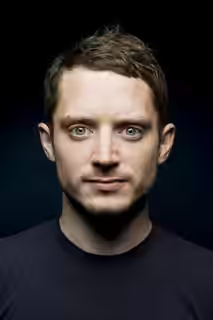
What does not work is the point it is trying to make. The series wants to say something about a generation that has confused being seen with being known, and it says it in the first episode and then keeps saying it, usually through a cameo. Ayo Edebiri, Moses Ingram, Leighton Meester and Elijah Wood (playing Elijah Wood) drop in, each welcome and each a reminder that the series would rather point at Los Angeles than look at it. Most critics have found more satire here than we did. We found a good hang with a thin thesis.
Girls (2012) did this earlier and was crueller; Fleabag (2016) did it with one woman and more nerve. I Love LA is softer than both and knows it. Its eight episodes first aired on 2 November 2025. Watch two before deciding. The first is the worst of the run, and the ones after it are good company, which in this city is rarer than a following.