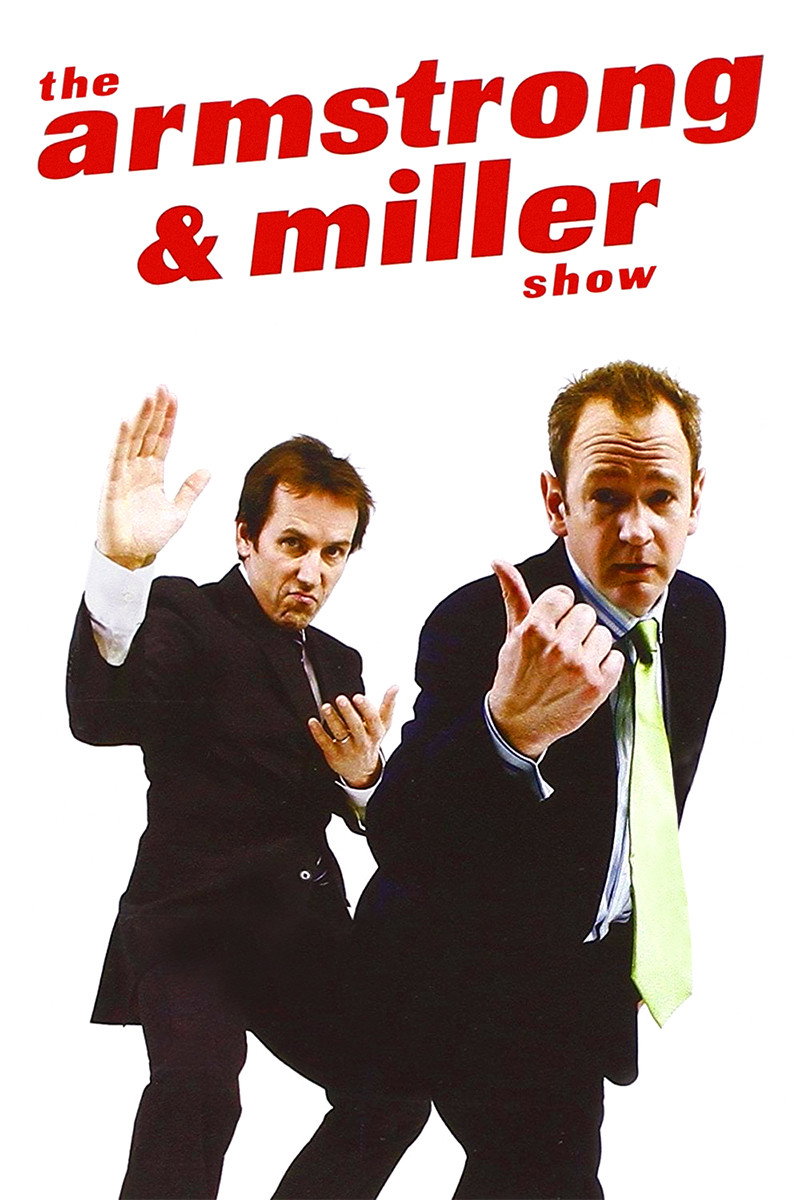
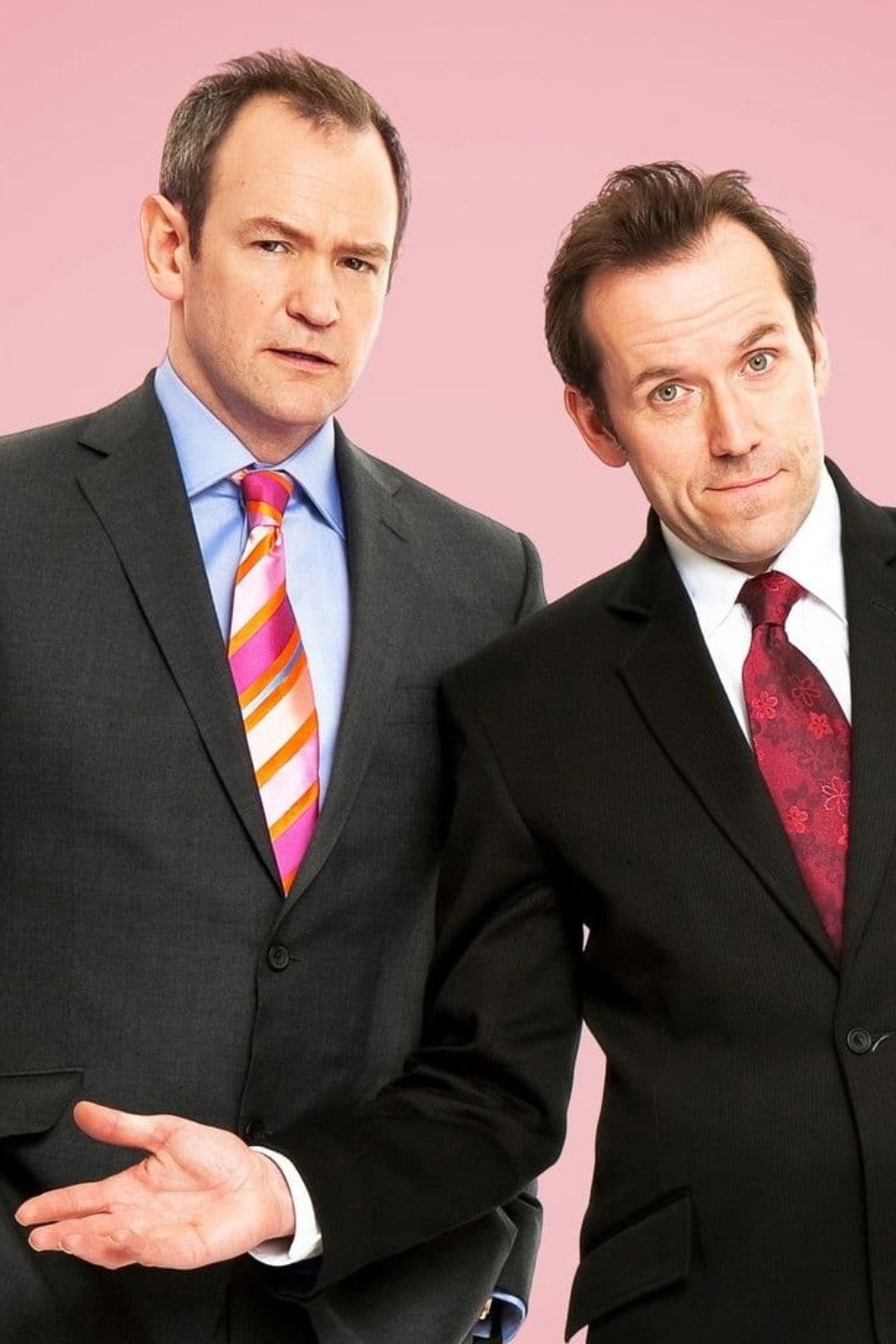
Armstrong and Miller’s return to sketch comedy has one of the best recurring ideas of its decade, the RAF pilots who speak like bored teenagers, and enough else to fill most weeks. The rest is hit-and-miss, and the third series repeats itself.
Sketch shows live or die on two or three recurring characters, and the rest is filler that the good ones make you forgive. The Armstrong and Miller Show has one great recurring idea, two or three decent ones, and a fair amount of filler. It is good. If you like sketch comedy you should give it an evening, and if you do not, one episode will tell you quickly.
The great idea is the pilots. Alexander Armstrong and Ben Miller sit in a Second World War mess in leather jackets and clipped moustaches, and Dominic Brigstocke shoots them like a Sunday-night period drama: warm lamps, wood panelling, a wireless in the corner. Then they open their mouths and out comes the speech of a bored fifteen-year-old outside a chicken shop, every sentence ending in “isn’t it”. That is the whole joke, and it should wear out in a fortnight. It does not, because the writers keep finding new things for them to be aggrieved about, and because Armstrong and Miller never break the accent or the posture. We laughed until it hurt the first time, and we were still laughing in the third series, which is rarer than it sounds.
Brabbins and Fyffe are the next best thing. Two folk singers in cardigans strum pleasant melodies to a polite room and sing lyrics of astonishing filth in the voices of men who have never said a rude word in their lives. The BBFC’s 15 certificate is earned almost entirely here, and gladly. The trick is the gap between the tune and the words, and it is the same trick as the pilots, which tells you what Armstrong and Miller are good at: putting the wrong voice in the right room.
Six writers are credited, Armstrong and Miller among them alongside Andy Hamilton, Toby Whithouse, Jon Foster and George Sawyer, and you can feel the different hands. Some sketches are small and observational, a couple failing to say a thing to each other over dinner, and these are played almost straight. Others go for the big silly premise and run it into the ground. Caroline Norris produces, and the show looks more expensive than most half hours of its kind; Brigstocke frames each sketch in the style of whatever it is sending up, so a spoof documentary looks like a documentary and a spoof drama looks like a drama. Karen Hayley and Jason Lewis are the people in the background, and they are good at being ignored, which is a skill.
The filler is the problem. A sketch show that runs 30 minutes has to fill them, and too often a one-off idea is allowed to go one beat past its punchline and then one more. Some of the observational pieces are so accurate about how people actually talk that they stop being funny and become simply true, which is admirable and slightly frustrating on a Friday night. And by the third series, which arrived in 2010, the recurring characters have become catchphrase machines. We knew what the pilots would say before they said it, and we found we minded less than we expected, but we did mind.
Against the standards of the genre it sits comfortably above most British sketch shows of its decade and a little below the best of the nineties, which had more good ideas per half hour and fewer that were plainly there to make up the time. Only one review of any weight has been written so far and it was warmer than we are; we think it saw the pilots and forgave the rest, which is understandable.
Watch it one episode at a time, not three in a row. The pilots will survive any amount of repetition. The dinner parties will not.