Series review

Toxic Town

2025 · Directed by Minkie Spiro · Series · 55m · 15

In a sentenceJodie Whittaker can explain the injustice with a look; the script insists on helping

Drama

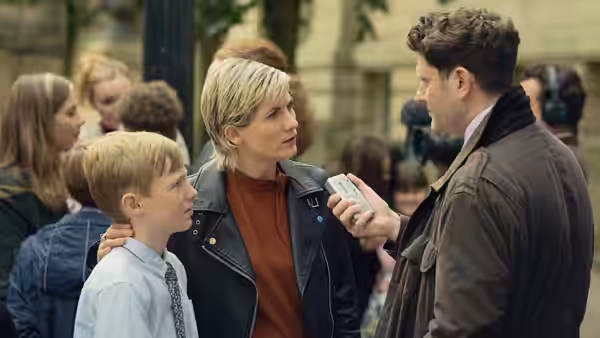
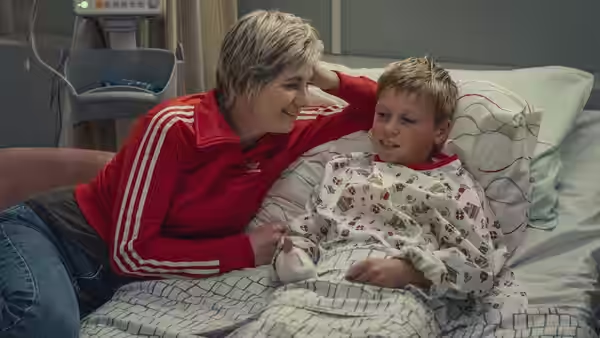
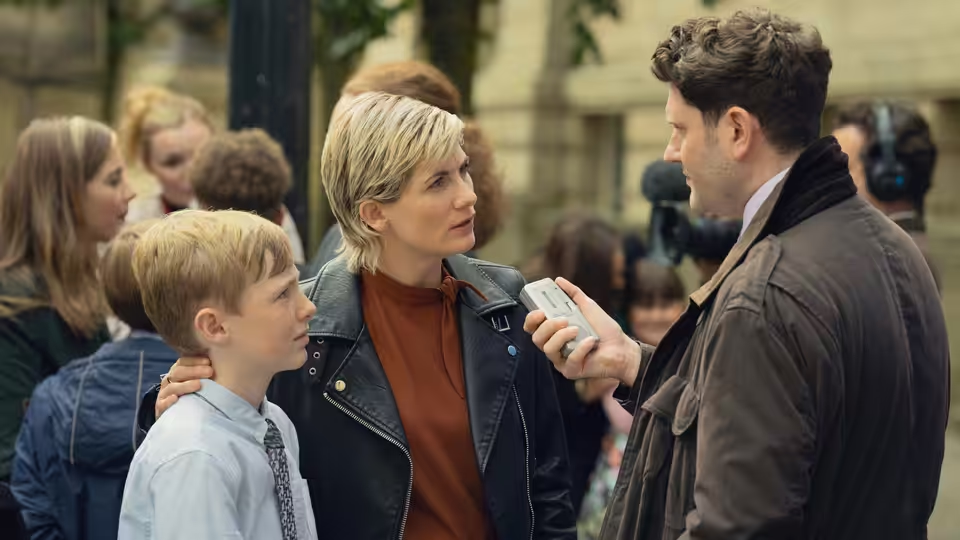
Toxic Town follows a group of mothers in Corby as they seek justice over toxic waste linked to their children’s birth defects. Jodie Whittaker plays Susan McIntyre, Aimee Lou Wood is Tracey Taylor and Claudia Jessie plays Maggie Mahon, with Karla Crome as Pattie Walker. Their campaign brings the effects of the scandal on families into a legal fight over responsibility and safety. Based on the real Corby case, the four-part drama also features Rory Kinnear as Des Collins and Robert Carlyle as Sam Hagen. Minkie Spiro directs, with writing credits for Jack Thorne and Amy Trigg.

Fi1m review

The performances make Toxic Town worth the anger it stirs up. Jodie Whittaker and Aimee Lou Wood give this familiar injustice drama the force that its tidier, more sentimental passages sometimes lack.

Toxic Town is a good, sometimes over-neat drama about mothers who should never have had to become campaigners. Across four episodes, director Minkie Spiro makes the Corby toxic waste case comprehensible without letting the legal dispute take over from the families affected by it. The series is strongest when it stays with the women and weakest when it starts explaining what their struggle means. We recommend it for the performances, with a reservation about its fondness for telling us things we have already understood.

The writing, credited to Jack Thorne and Amy Trigg, understands that the children cannot simply become evidence in a legal case. Their mothers have lives to carry on with, even as the campaign demands more of them. That attention gives the story weight, but the script is less willing to grant complexity to the people opposing them. Some characters are made so plainly objectionable that the drama barely needs to establish what they have done.

Jodie Whittaker, as Susan McIntyre, gives the series the complication its less sympathetic characters lack. Susan’s fierceness never quite conceals how exposed she feels, and Whittaker makes keeping up the fight seem like something that requires constant effort. We were moved by the vulnerability she lets show while Susan presses for justice for her child. It matters because a drama like this can so easily make a campaigning mother seem incapable of having a moment’s doubt.

Aimee Lou Wood’s Tracey Taylor gives the series an equally persuasive account of the hurt behind the campaign. Wood allows determination and suffering to remain visible together, so the women never settle into a single, reassuring image of courage. The pleasure of watching these actors is in how little they need to advertise their characters’ decency. Spiro’s sympathy is clear throughout, and at its best the programme allows us to care about the mothers without turning every encounter into a lesson.

The cinematography by Sergio Delgado and Tony Miller is clear and polished, sometimes to a fault. Alongside Alexandra Toomey and Julian Nagel’s production design, it gives the families’ circumstances a tidiness that we found a little too reassuring. That finish makes the programme easy to settle into, but it can also soften the discomfort of what it depicts. Spiro gets more convincing messiness from the actors.

Editors Chris Gill and Jamie Pearson give the campaign enough pace to sustain our interest, although the courtroom stretches are noticeably less involving. The script makes room for information at the expense of character in those passages. Sion Trefor’s score adds emotional encouragement we do not always need. With Whittaker and Wood already making the cost of this fight clear, the programme could afford to let us decide more often how to feel.

There is a reason British injustice dramas keep returning to people having to organise before they will be heard. The familiar shape can make a complicated case accessible, and Spiro uses it to keep the mothers in view. We only wish the series were less anxious to underline the lesson. Watch for Whittaker and Wood; patience with the explanatory passages will be repaid.

Critical consensus AI synthesised

78
Positive
7
Mixed
1
Negative
0

Most critics respond warmly to Toxic Town, praising its account of the Corby toxic waste scandal for keeping the mothers and their fight for justice at the centre. Praise clusters around the cast, particularly Jodie Whittaker’s combination of fierceness and vulnerability, with Aimee Lou Wood also frequently singled out. The reviews value the attention paid to personal tragedy and working-class lives, finding the drama involving even when its approach feels familiar.

The reservations concern how neatly that struggle is packaged. Several critics find touches of sentimentality, gloss or over-explanation, though these rarely outweigh the performances. The Telegraph finds the courtroom scenes duller than the personal stories. The Evening Standard offers the strongest reservations, arguing that soapy conventions and overly villainous characters restrict the emotional depth. The spread is largely positive rather than sharply divided: most critics accept the conventional storytelling, while the dissent questions how much feeling it allows.

The i Paper
27 February 2025 · Emily Baker
90*

The critic deems the series compulsory viewing for its powerful account of the Corby toxic waste scandal and the mothers' fight for justice. It singles out Jodie Whittaker's astonishing lead performance and the expertly crafted suspense for praise.

Read the full review →
The Guardian
27 February 2025
80*

The critic finds the series a bittersweet, feelgood drama about mothers fighting corporate negligence in the Corby toxic waste scandal, praising the exceptional performances of Jodie Whittaker and Aimee Lou Wood as the central mothers. It notes some cheesiness and spoon-feeding but values the story's humanity and timely message about fighting greed.

Read the full review →
The Telegraph
27 February 2025 · ★★★★ · Anita Singh
80

The review highlights how the drama excels at detailing personal tragedies in the Corby case but finds the courtroom scenes duller and notes Netflix feels like an odd home for such a British story. It praises the cast, especially Jodie Whittaker, and calls it very watchable overall.

Read the full review →
Radio Times
7.5/10 · Jack Seale
75

The critic praises this as an impassioned, strongly cast true-story drama that sheds light on the little-known Corby poisoning scandal. It singles out the series for belatedly giving its working-class protagonists a powerful voice.

Read the full review →
The Independent
27 February 2025 · Nick Hilton
75*

The critic sees it as another entry in the 'British injustice' genre, like Mr Bates vs The Post Office, with a fine cast bringing a historic scandal to light. It praises the engaging characters and underdog spirit but notes it can feel too glossy and sentimental at times.

Read the full review →
Evening Standard
27 February 2025 · Adam Bloodworth
65*

The review calls the series decently bingeable due to its shocking true story of the Corby waste scandal and strong performances from Jodie Whittaker and Aimee Lou Wood. It criticises the soapy conventionality that limits emotional depth and the overly villainous characters.

Read the full review →

Cast

Stills

If you liked this, try…

Dark Waters poster

Dark Waters

2019 · Another patient account of contaminated lives and the work required to establish responsibility

Silkwood poster

Silkwood

1983 · Workplace danger becomes personal, with the campaigning never allowed to eclipse the woman

The Story of Qiu Ju poster

The Story of Qiu Ju

1992 · A woman’s demand for redress encounters bureaucracy in all its wearying detail

Pride poster

Pride

2014 · Collective action with humour, where friendships matter as much as the campaign

Mr Bates vs The Post Office poster

Mr Bates vs The Post Office

2024 · Ordinary people organise against institutional certainty, with actors who make the frustration count