Iain Forsyth and Jane Pollard make an absorbing, often funny portrait of Nick Cave at work. Its carefully managed candour can be frustrating, but the songs and conversations make it rewarding even without prior devotion.
Iain Forsyth and Jane Pollard’s 20,000 Days on Earth is an absorbing film about making songs, with a frustrating reluctance to press the man making them. Nick Cave shares the writing credit with the directors, and his involvement helps explain how carefully he is presented. The partly staged day gives his memories and thoughts a shape without pretending that the camera has caught him unprepared. He is funny enough, and the work interesting enough, to make the arrangement worthwhile.
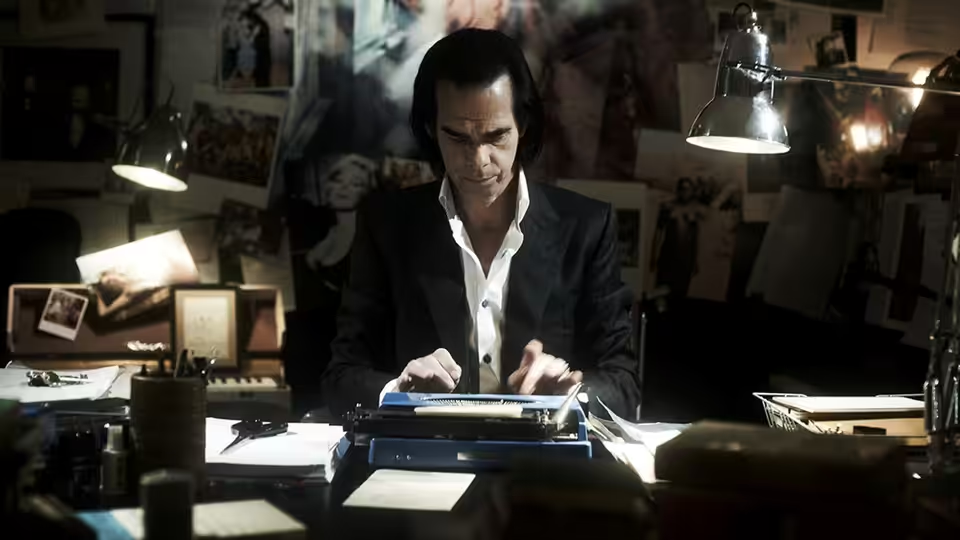
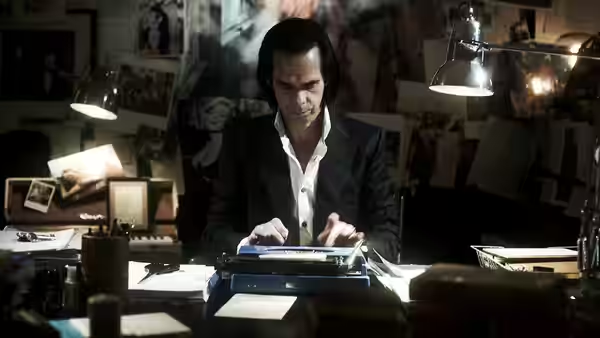
Erik Wilson’s shadow-heavy photography makes the staged encounters feel like parts of the same imagined day. The shadows suit a subject who takes his public image seriously, and the camera helps maintain that image even in apparently intimate company. It is an effective choice, though the solemnity can make an ordinary conversation seem more momentous than it is. The therapist and archive sequences keep the attention on recollection, giving his accounts of himself a structure beyond a series of anecdotes.
Jonathan Amos’s editing gives that day a clear rhythm, with the cross-cutting in the performance material providing a welcome increase in energy. Across 97 minutes, conversation and music have room to develop without the film feeling obliged to deliver a complete life story. The notebooks and doodles are especially useful. Seeing those scraps become songs turns a vague subject into a process we can begin to follow.
We felt unexpectedly fond of Nick Cave during his dinner conversation with Warren Ellis. The pleasure of talking to someone familiar makes his seriousness easier to live with, and the exchange has an ease that the formal framework does not quite allow elsewhere. Warren Ellis gives him someone to respond to, which is a relief after so much explanation. There is warmth in that familiarity, and it helps the film accommodate the more self-important stretches.
The music by Nick Cave and Warren Ellis gives all this discussion a purpose: we hear what the thinking and scribbling are for. The live performances have an urgency that justifies spending so long with the person who makes the songs. They also allow feeling into a film whose subject can be rather busy describing it. The attention to both unfinished work and performance means we can make our own judgements about how much the explanations tell us.
The limitation is the lack of pressure on the account we are given. The therapy framework suggests that uncomfortable questions might follow, but mostly supplies another occasion for the subject to speak on his own terms. His eloquence occasionally seems to satisfy the directors before it has satisfied us. Their willingness to let him control the conversation leaves some of the promised intimacy out of reach, however handsomely the encounters are filmed.
By music-documentary standards, the willingness to stage encounters is refreshing. It gives the directors a way to organise talk about memory and writing without turning every thought into a biographical lesson. Familiarity with the songs will help, but curiosity about writing and performance should be enough. We recommend making time for the company, with no expectation of a searching interrogation.