Mstyslav Chernov brings us close enough to the fighting for every pause to feel precious. This is a harrowing, humane documentary whose combat footage is stronger than the narration laid over it.
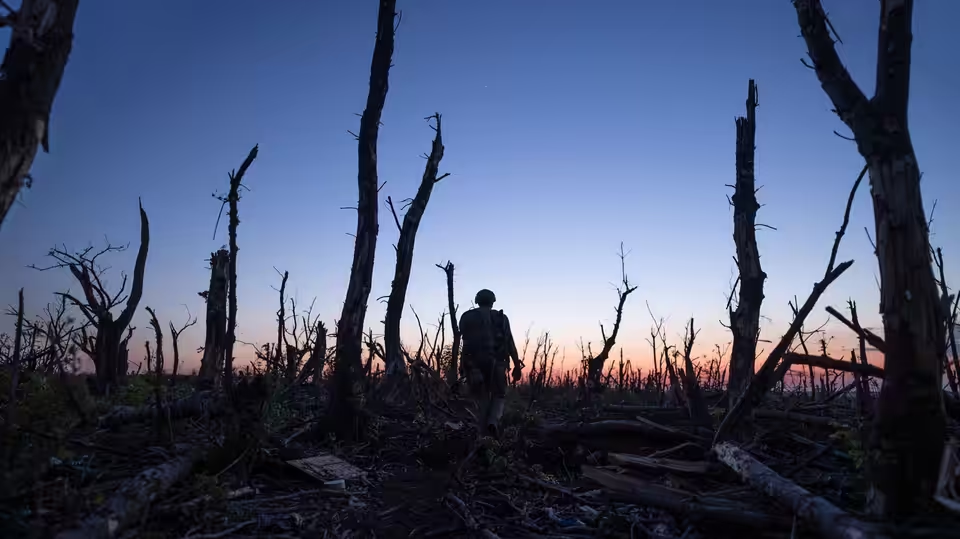
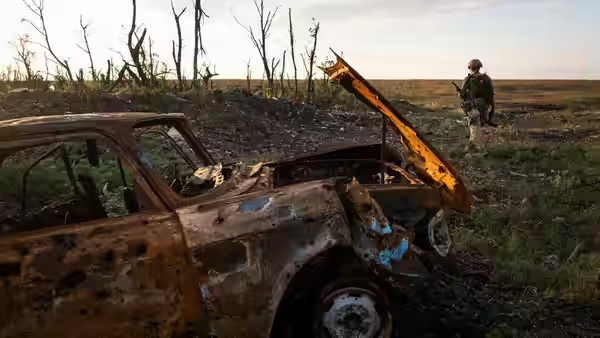
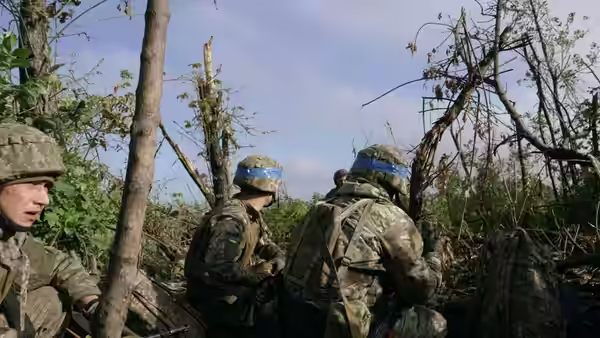
Mstyslav Chernov’s 2000 Meters to Andriivka is a harrowing, humane documentary that we recommend despite some unnecessary explanation. It follows Ukrainian soldiers fighting towards the village, making the advance intelligible through combat, waiting and conversations with the men involved. Chernov is concerned with what it takes to keep going when progress means more fighting. The film’s strength is the time it spends with people who must do that work, and the attention it pays when they are not fighting.
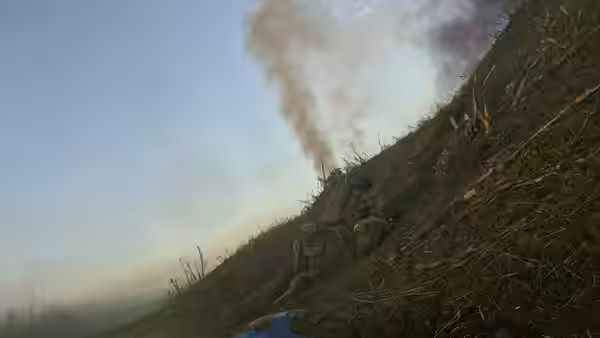
Chernov’s cinematography and the soldiers’ body-camera footage bring us close without making combat reassuringly legible. The body cameras are especially difficult to watch, because the view belongs to someone who has to keep moving through the danger. We were frightened by that dependence on the person carrying the camera. The images are sharp enough to prevent the men becoming distant figures in a war report, yet the film does not pretend that seeing this gives us anything approaching their experience.
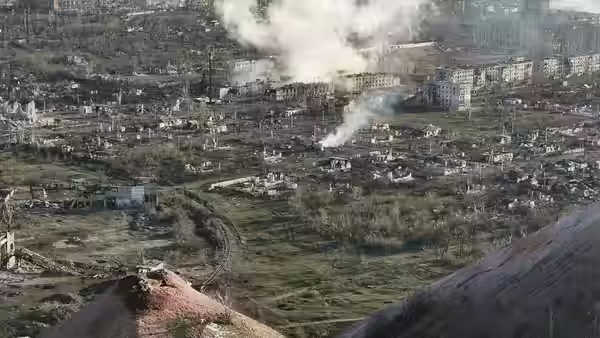
Chernov’s use of drone imagery is more complicated. The view from above can be beautiful, and the distance allows us to look at a battlefield without the bodily alarm of the ground-level footage. But drones also serve the fighting, so this change of perspective cannot be treated as harmless visual relief. The film makes us consider who is looking, what they can see and what they might do with that information.
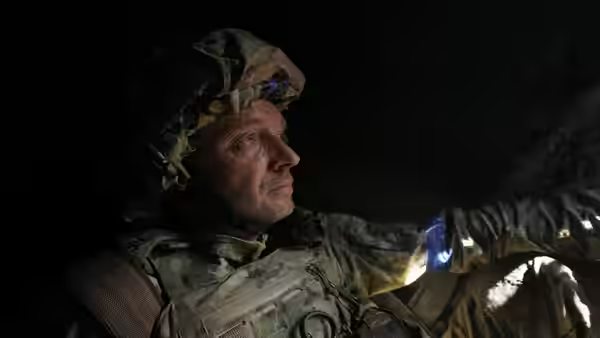
Michelle Mizner’s editing gives the conversations and stretches of waiting enough space to matter. The men are allowed to occupy the screen without having to supply action, and their company changes how the fighting feels. In a less patient documentary, such passages might be reduced to brief introductions before the next burst of combat; here, they are part of what we have come to watch. That patience helps Chernov keep the soldiers recognisable as people, with lives that cannot be adequately described by their role in an advance.
The reservation is the narration, which is sober but sometimes tells us what the images and conversations have already established. The broader explanations can interrupt the close attention the film otherwise asks of us. Sam Slater’s music poses a related problem when it softens the fighting, offering an emotional cue where the footage has already supplied more than enough. Neither choice undoes the force of the material, but both suggest a needless anxiety about leaving us to respond for ourselves.
At 108 minutes, this asks for sustained attention to people under sustained pressure. War films sometimes encourage us to admire endurance without thinking much about what it costs, and Chernov makes that difficult. His attention to the men during the waits is crucial: they do not exist only for the moments when they are in danger. Choose it when there is time afterwards to sit quietly, without another film already queued up.