Film review

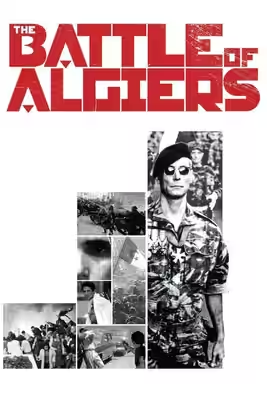
The Battle of Algiers

1966 · Directed by Gillo Pontecorvo · 2h 02m · 15

In a sentenceA war film that makes the distance between the television and the sofa feel inadequate

DramaWarHistory

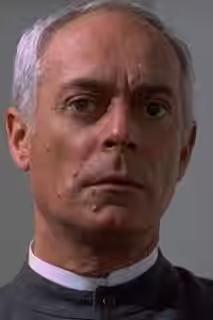
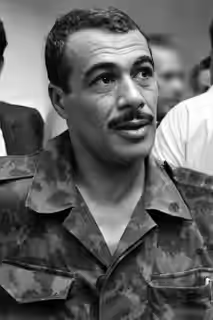
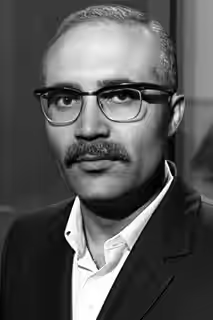
In Algiers, the struggle for Algerian independence from France brings armed resistance and military repression into the city’s daily life. Brahim Hadjadj plays Ali La Pointe, Yacef Saâdi plays El-Hadi Jaffar, and Jean Martin plays Colonel Philippe Mathieu. Gillo Pontecorvo’s drama follows an urban revolt through the people engaged in it, tracing guerrilla tactics, retaliation and the suffering of civilians. Political aims and immediate dangers shape decisions on both sides as the conflict spreads through the city. The film uses a documentary-like approach to reconstruct the confrontation between an independence movement and colonial power.

Plays from YouTube when you press play; nothing loads from them until then.

Fi1m review

Gillo Pontecorvo’s reconstruction of the Algerian revolt is gripping, lucid and hard to bear. Its documentary style makes the violence feel close, though the concentration on the campaign sometimes leaves too little time with the people caught in it.

Gillo Pontecorvo’s The Battle of Algiers is a war film we would recommend even to people who usually avoid war films, provided they can face its cruelty. Its account of the Algerian revolt against French rule makes the fighting comprehensible without allowing familiarity to dull the horror. Pontecorvo wants us to follow how an urban struggle works: the organisation, the attacks, the retaliation. He gives that work the pace of a thriller, and refuses to make the suffering incidental.

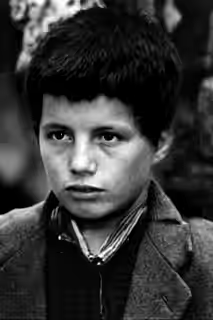
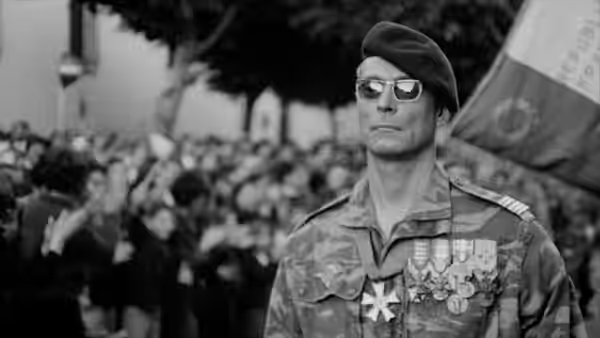
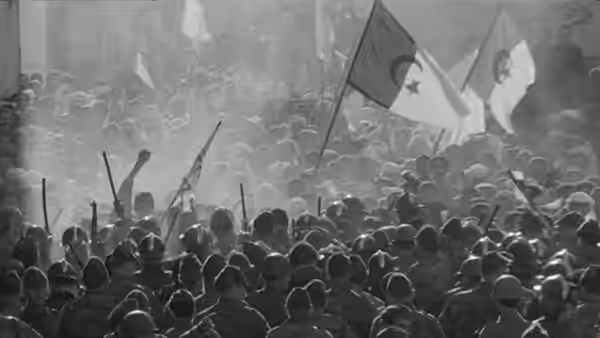
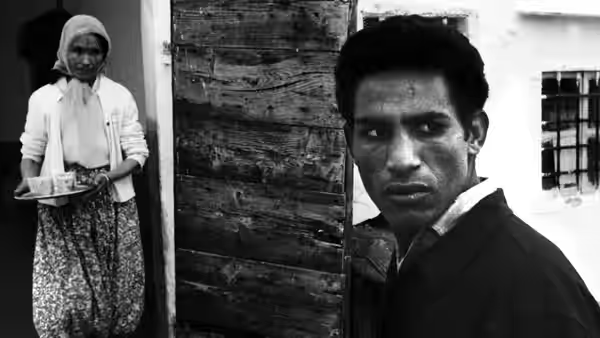
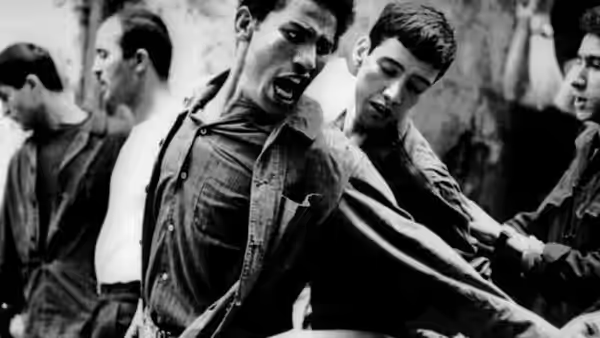
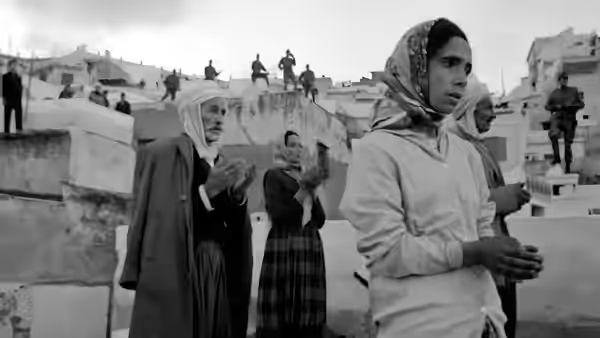
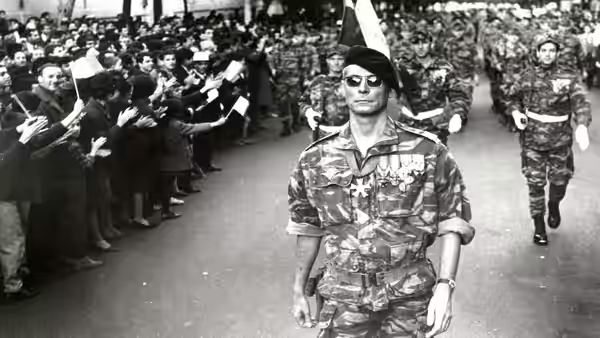
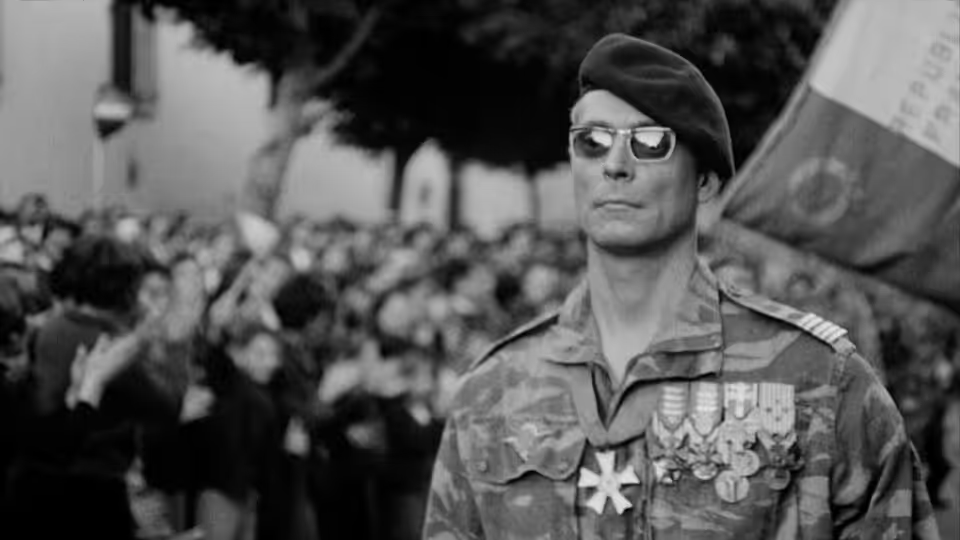
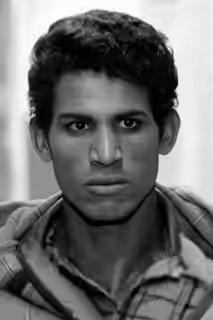
Marcello Gatti’s black-and-white photography gives the reconstruction the apparent immediacy of news footage. That resemblance matters because it discourages us from settling down to admire a neatly arranged historical drama; the people seem to have more pressing things to do than be photographed. The images retain enough detail to keep individuals visible within the larger struggle. Gatti makes the scale legible, but our attention keeps returning to faces.

Editors Mario Morra and Mario Serandrei make the guerrilla campaign unusually easy to follow. The suspense comes from understanding what is being attempted and what it might cost. Sergio Canevari’s production design sustains the impression of a city where people have to keep living through all this. The urban setting never becomes a convenient collection of targets. This is large-scale reconstruction with an eye for ordinary life, and that attention makes the danger more distressing.

Brahim Hadjadj, as Ali La Pointe, gives the film a watchful, resistant human presence amid the explanations of tactics. Jean Martin’s Colonel Philippe Mathieu is credible enough to make the military reasoning uncomfortable to hear. Yacef Saâdi’s El-Hadi Jaffar belongs to the same restrained performance style. The acting fits the documentary manner, though the concentration on the collective struggle has a cost. We sometimes want longer with a person before the campaign requires our attention elsewhere.

We were horrified by the torture; understanding the conflict did nothing to make the suffering easier to watch. Pontecorvo is clear about the violence committed by both sides, and political sympathy never excuses the damage to human beings. The film’s sympathies lie with the independence struggle, which makes its blunt account of resistance violence more demanding. The attention to civilian suffering prevents the tactics from becoming an entertaining puzzle.

The music by Ennio Morricone and Pontecorvo supplies a mournful accompaniment to the account of tactics. It gives us time to register the suffering as something more than the result of a military decision. Occasionally it presses a feeling that the photography has already earned, and we notice the persuasion. More often, its sadness is necessary: without it, we might become too interested in how the fighting works and pay too little attention to whom it hurts.

Some of the praise emphasises the film’s neutrality. We do not think that describes a drama so plainly sympathetic to independence, or so attentive to suffering. Its achievement as a political war film is to let that sympathy survive an honest account of what armed resistance involves. We recommend it, with a firm warning about the torture and civilian suffering.
Critical consensus AI synthesised

95
Positive
6
Mixed
0
Negative
0

The consensus is strongly positive, with praise centred on Pontecorvo’s documentary-like reconstruction and the force of its political drama. Critics repeatedly single out the newsreel-style photography, the sense of events unfolding rather than being staged, and the attention to individuals within the uprising. The reviews also agree that its depictions of violence on both sides create compassion without softening the brutality, while its suspense makes the political detail gripping rather than dutiful.

There is little substantive dissent in these accounts, and no recurring reservation emerges. The differences concern how critics describe the film’s political stance: Radio Times stresses its refusal to condemn or condone, while Film Comment emphasises clear sympathies alongside an unromanticised account of resistance and escalation. Some reviews foreground the reconstruction’s realism; others place greater weight on its analysis of urban revolt and the human cost of repression.

Radio Times
★★★★★ · David Parkinson
100

The critic describes it as a stark and compelling drama and compassionate masterpiece of political analysis with much contemporary resonance. Its strengths include a cinéma-vérité approach that refuses to condemn or condone while balancing aggression with terrorism and depicting honorable individuals on both sides.

Read the full review →
Time Out
8 May 2007 · ★★★★★ · Dave Calhoun
100

The critic finds Pontecorvo’s stirring anatomy of an urban uprising strikingly relevant today and superb and unrivalled. It effectively moulds political commentary with drama through its mournful tone, journalistic approach and intimate details amid grand-scale reconstruction.

Read the full review →
Sight and Sound
· Michael Brooke
95*

The critic calls it unquestionably the greatest political film ever made. It is riveting as a suspense thriller and rigorously clear-eyed in its presentation of atrocities committed by both sides, with uncanny relevance to how terrorist cells operate.

Read the full review →
Empire
27 April 2007 · David Parkinson
90*

The critic hails the film as a technical and dramatic masterclass that retains its power to shock and provoke long after its original release. Pontecorvo's neo-realistic approach, with its non-professional cast and newsreel-like style, is singled out for creating genuine compassion amid depictions of violence on both sides.

Read the full review →
Film Comment
· Mark Harris

The critic highlights the film's enduring status as a radical, documentary-style depiction of colonial revolt and urban guerrilla tactics that resonated with 1960s radicals. Pontecorvo is praised for balancing clear sympathies with an unromanticized, blunt portrayal of violence and escalation in resistance movements.

Read the full review →
RogerEbert.com
30 May 1968 · Roger Ebert

Pontecorvo's film is a great, deeply realistic reconstruction of the Algerian struggle that succeeds in feeling like actual events. It is passionate yet neutral, showing the cost of violence and torture on both sides with universal relevance.

Read the full review →

Cast

Stills

Awards

Academy Awards, 1969

Nominated
Best Director
Nominated
Best Writing, Original Screenplay

Academy Awards, 1967

Nominated
Best International Feature Film

International Submission to the Academy Awards, 1967

Nominated
International Submission to the Academy Awards

Venice Film Festival, 1965

Won
Golden Lion

If you liked this, try…

Army of Shadows poster

Army of Shadows

1969 · Resistance work rendered with a comparable refusal to make killing look gallant.

The Ascent poster

The Ascent

1977 · Another wartime drama that takes coercion and personal responsibility painfully seriously.

Bloody Sunday poster

Bloody Sunday

2002 · A similarly immediate reconstruction of political violence, with civilians kept in view.

A Taxi Driver poster

A Taxi Driver

2017 · An uprising approached through an ordinary worker, with more warmth and humour.

Quo Vadis, Aida? poster

Quo Vadis, Aida?

2020 · For the same unbearable attention to civilians caught inside military decisions.