Charlotte Wells’s first film watches a young father and his daughter through a holiday in a Turkish resort and asks you to notice what she cannot. It is patient and exact, it hurts more than you expect, and it will not do the work for you.
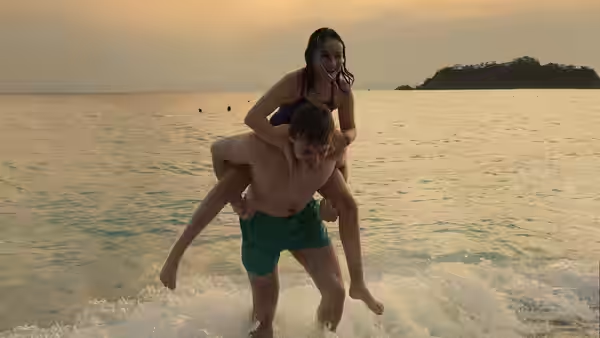
Charlotte Wells’s first film as writer and director spends 101 minutes on a package holiday and nothing happens that would make the postcard. Calum (Paul Mescal) and his daughter Sophie (Frankie Corio) swim, eat at the buffet, argue about whether he will get up and sing. What Wells is after is the distance between what a child sees on holiday with her father and what she will understand about it later. She gets there, and without a single scene in which anyone explains anything.
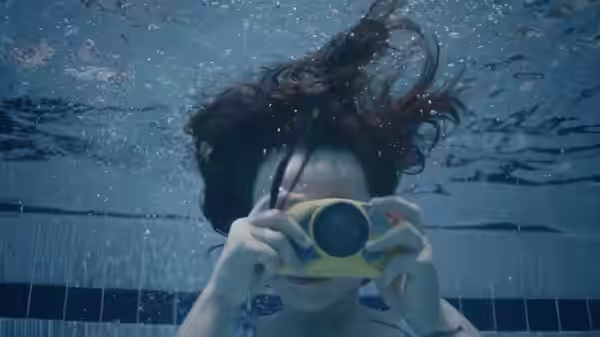
The camcorder is the method. Gregory Oke shoots the resort in flat midday light, tiled pools and white balconies and brown hills behind, and keeps cutting to the MiniDV footage Calum and Sophie take of each other, smeared and blue with the timecode ticking in the corner. Oke also keeps finding Calum in reflections: in a mirror, at the edge of a shot that is really about someone else. Blair McClendon’s editing does the rest. He leaves scenes a beat early, holds on a hotel corridor after the people have gone, cuts to black in the middle of a line. It looks like affectation on paper and like remembering on screen.
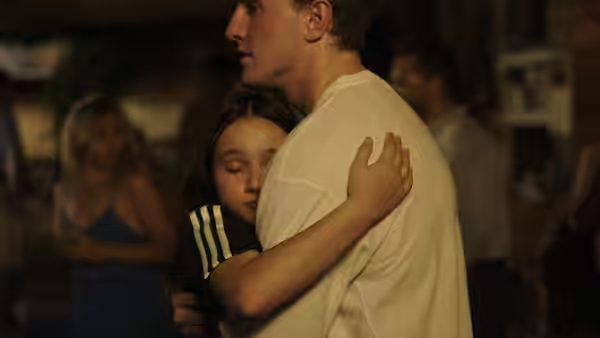
Mescal plays Calum as a man who is good company for most of every day. He jokes, he plays along, he films her filming him. Then she leaves, and the camera stays, and something goes out of his face. There is no breakdown and no speech, just a man sitting on a bed with his back to us. What upset us most was not one scene but the pattern, the silences getting a beat longer each time, and how little Mescal does to signal them. We have not stopped thinking about it.
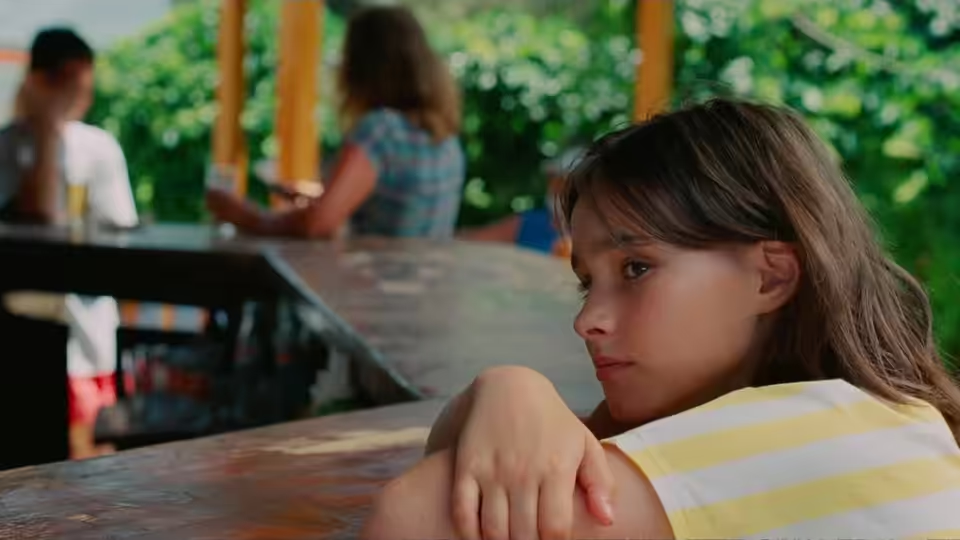
Corio, a newcomer, is the reason this is not simply a portrait of a sad man. Sophie is a child watching the teenagers, and Wells lets her watch: the older kids, Olly (Spike Fearn) among them, kissing in the pool; Michael (Brooklyn Toulson), a boy her own age, across an arcade pool table. Corio’s face does the commenting she does not. The karaoke scene is the one most critics single out, and they are right. Sophie wants them to sing together. Calum will not go up. She sings alone, small and flat, to a room of sunburnt strangers while her father sits at the table, and we found it hard to look at, because a child is being braver than her parent and both of them know it. Corio does not push a note.
The period is done with things, not announcements. Billur Turan’s resort is lilos, plastic loungers and tiles that never quite match. Frank Gallacher dresses the pair like people wearing the same three outfits in rotation. Oliver Coates’s score is mostly low cello and a hum at the edges, and it stays out of the daytime; the pop of the time comes off hotel speakers, Queen and Bowie included, and carries more than a score could. Wells lets the Brits abroad be funny, and they are.
What we are less sure of is the cutting away. Every so often Wells leaves the holiday for a few frames of something else, which we will not describe. For the first hour these interludes told us there was a wound before the film had shown us one, and we resented being told. They pay off. The two mixed reviews among many warm ones call it style over substance, and we can see why. Wells never says what is wrong with Calum. That is the point, because Sophie does not know either and the film is her memory. If you need to be told, you will find 101 minutes of holiday video with the interesting bits cut out.
Watch it at home if you must, but put the phone in another room. The film works by what is half-seen at the edge of the frame and half-heard through a wall, and it does not repeat itself. Take the 12A seriously: there is nothing in it a child could not watch, and a fair amount a parent might rather they did not, yet.