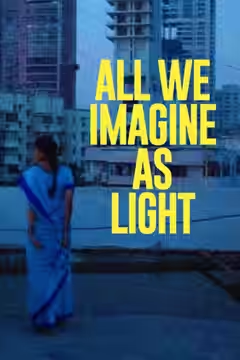
Payal Kapadia’s film follows two nurses and a hospital cook through a Mumbai shot almost entirely after dark, and it is patient, tender and quietly angry. The second half leaves the city and asks for some faith, which it mostly repays.
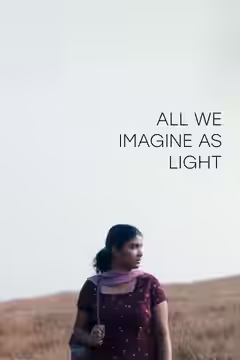
All We Imagine as Light opens with voices. Over pictures of Mumbai after dark, markets being unloaded, a train, wet tarpaulin, people we never see tell us how long they have lived here and where they came from, and none of them says the word home. Payal Kapadia, who wrote and directed, spends a few minutes on this before she gives us a face, and by then we know what her film is about: a city full of people who arrived from somewhere else and have not quite decided to stay. It is a lovely film, tender and slow and cross underneath, and we recommend it with one caveat about its second half.
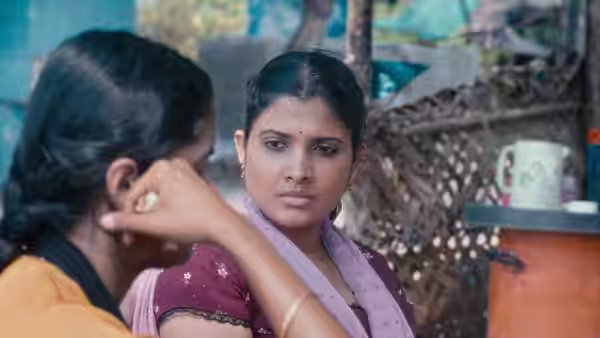
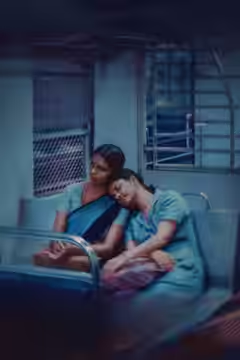
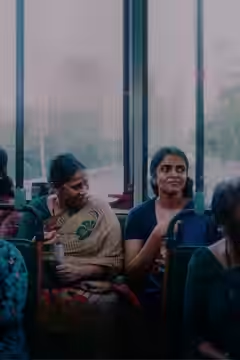
The face, when it comes, is Prabha’s. Kani Kusruti plays her as a senior nurse at a Mumbai hospital, a woman from Kerala whose husband went to Germany for work after an arranged marriage and has stopped ringing. She shares a small flat with Anu (Divya Prabha), a younger nurse who is seeing a Muslim boy called Shiaz (Hridhu Haroon) and hiding him from parents who are lining up a groom. The third woman is Parvaty (Chhaya Kadam), the hospital cook, whose building has been bought by developers who want her out and who has no paper to say her late husband ever lived there. Dr Manoj (Azees Nedumangad) writes poems and would like Prabha to read them.
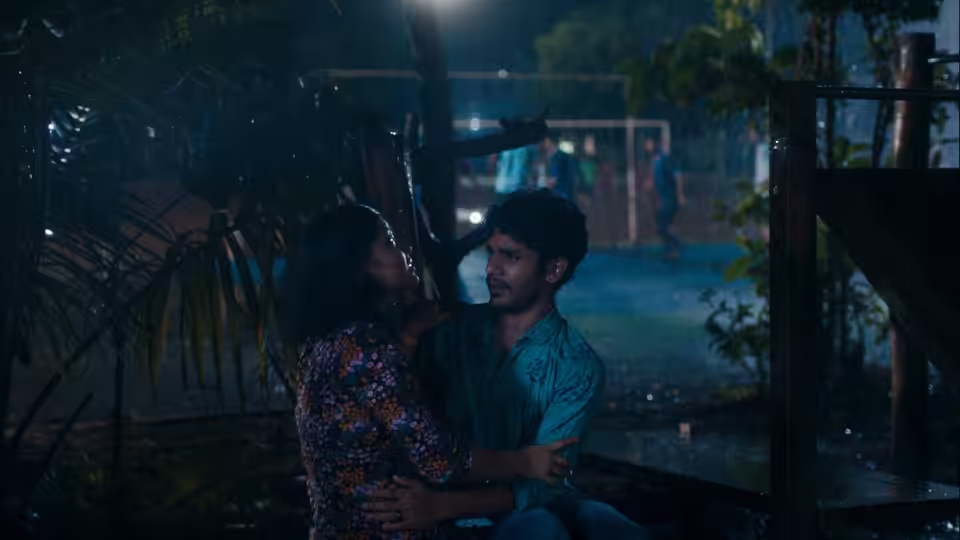
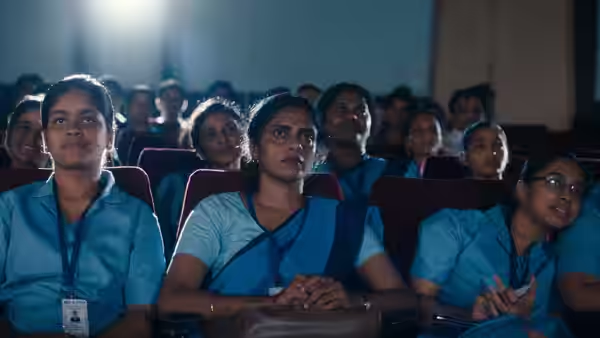
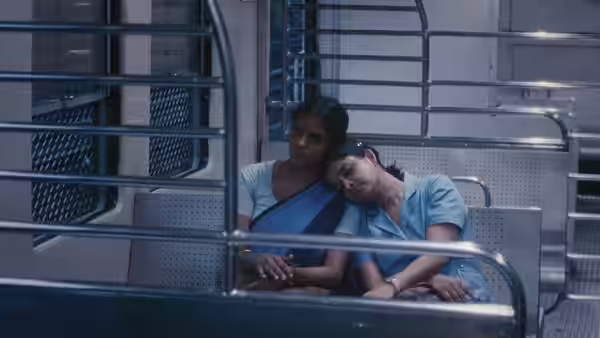
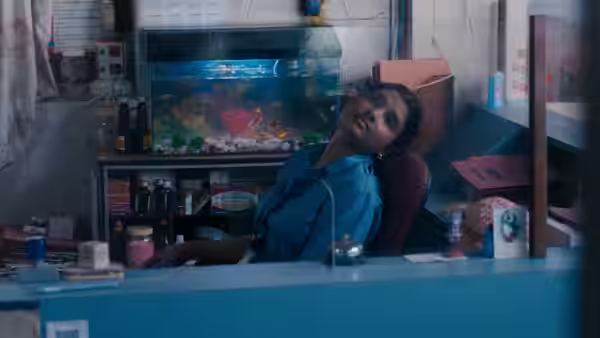
Ranabir Das shoots nearly all of the Mumbai half at night, and he lights it with what is there: sodium lamps, shop signs, the blue-white of a phone held under a blanket, rain on the window of a moving train. The flat, put together by production designers Piyusha Chalke, Shamim Khan and Yashasvi Sabharwal, is one room and a kitchen with a curtain doing the work of a wall, and the camera does not treat it as a trap. People cook in it and sleep in it and the cat comes and goes. Maxima Basu puts the nurses in the same pale uniform at work and then lets Anu go out in colour while Prabha stays in what she came home in. You could tell the two women’s ages from the washing line.
Early on, a parcel arrives from Germany. It is a rice cooker, red, expensive, and there is no note. Prabha unpacks it, looks at it, and later that night, alone in the kitchen, she picks it up and holds it against herself. We were moved more than we expected to be by a woman embracing a kitchen appliance, and it is Kusruti’s stillness that does it. She does not cry. She presses the cold metal to her chest and waits, as though it might warm up. Kapadia does not add a word.
The scene most critics single out, in which Manoj gives Prabha a poem and she reads it by her open window, is as good as they say, though we liked Nedumangad more in the corridors, hovering, trying to find a reason to be where she is. Anu’s strand is thinner. Divya Prabha is lively and exact, and her scenes with Kusruti, teasing, borrowing money, being told off, are the warmest in the film. But Shiaz for a long stretch is a voice on a phone and a boy on a scooter, and the film cares more about what stands between the pair than about who they are together. That is partly the point. It still leaves one of the three stories waiting for its turn.
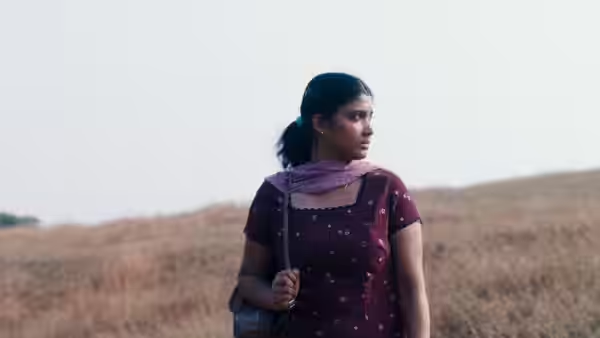
Then the film leaves the city, and takes a turn we will not describe. What we can say is that Das swaps neon for sunlight, that Dhritiman Das’s music, which has stayed out of the Mumbai scenes almost entirely, is allowed in, and that Clément Pinteaux, who has been cutting between ward and flat with unhurried regularity, starts holding shots longer than we expected. It took us a quarter of an hour to settle into the new pace, and we suspect some viewers will not. We did, in the end, and Anu’s story gets its best scene there.
Chhaya Kadam is the film’s ballast. Parvaty smokes, drinks and has no illusions about who the city is for, and Kadam plays her without a shred of self-pity. Kapadia’s anger about Mumbai’s developers and its papers-or-nothing bureaucracy is real, and she lets Kadam carry it rather than a speech.
At 118 minutes it never hurries, and its 15 certificate is for very little. Watch it late, with the lights off and the window open if the weather allows; it is a night film for most of its length.