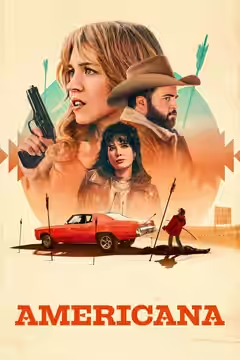
Americana is a watchable crime western whose actors do more convincing work than its writing. The humour and sympathy survive, but awkward dialogue and uncertain handling of violence make it a qualified recommendation for genre enthusiasts.
Tony Tost’s Americana wants to make a crime western funny without treating everyone in it as a fool. It is decent, uneven work, worth considering for the cast if this is already a genre we enjoy. The trouble comes when the writing insists on everyone’s eccentricity through their dialogue, or uses violence in ways that weaken its sympathy for them. There is enough here for 107 minutes, but some of it needs firmer handling.
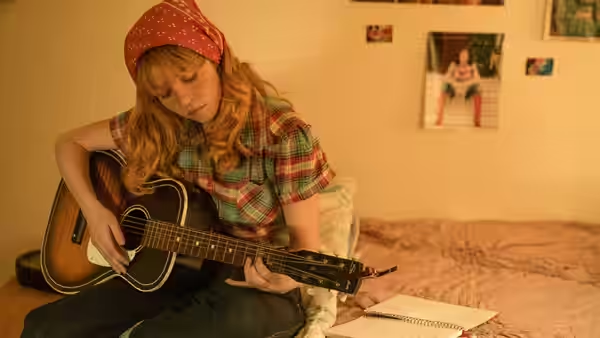
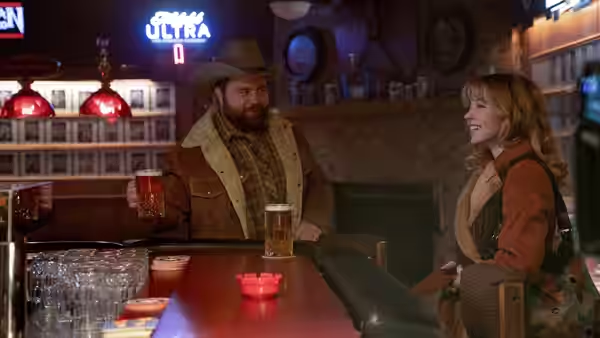
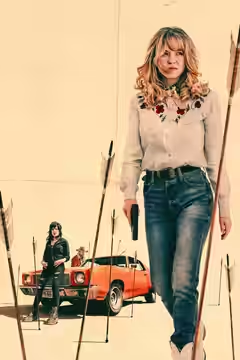
Sydney Sweeney plays Penny Jo Poplin as someone accustomed to being overlooked, resisting the temptation to turn reserve into an elaborate performance of shyness. We felt protective of her, because being overlooked seems like something she has learnt to live with. Halsey, as Mandy Starr, is the stronger presence, giving the film a directness that some of its more contrived characters lack. Neither performance needs the writing to keep reminding us that these people deserve our attention.
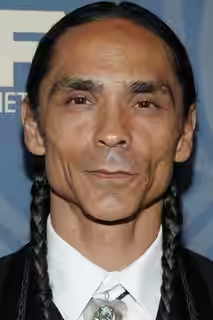
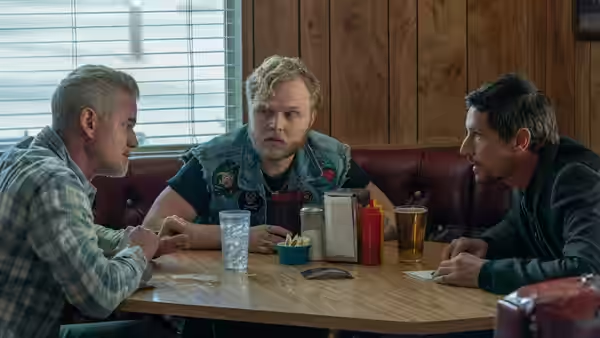
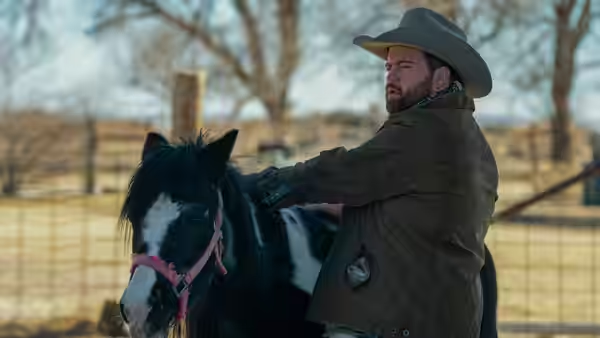
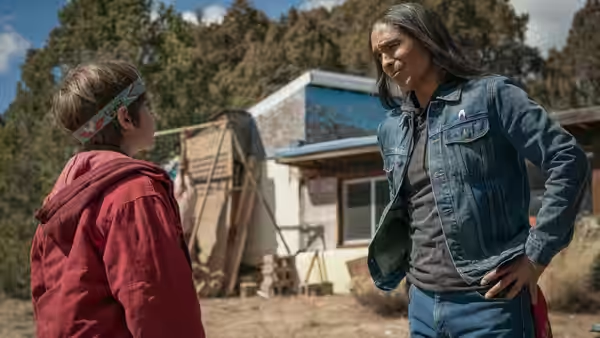
Zahn McClarnon supplies welcome dry humour as Ghost Eye, without labouring to make sure we notice the joke. It is the kind of performance that makes a busy ensemble easier to spend time with. Elsewhere, some figures are thinly written enough that even a willing cast cannot make them feel necessary to the story. The company includes Paul Walter Hauser as Lefty Ledbetter, Simon Rex as Roy Lee Dean and Eric Dane as Dillon Macintosh.
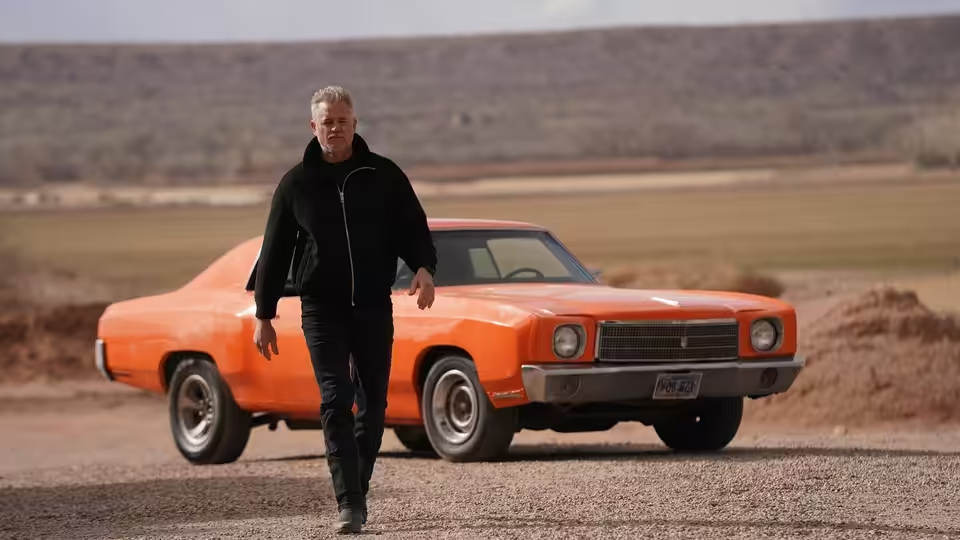
Nigel Bluck’s cinematography makes the South Dakota setting feel expansive, and the film benefits from having so much room around its crowded cast. Russell Barnes’s production design contributes to the assured, eccentric look. The settings are more convincing than some of the conversations taking place in them. A comic western can get away with a great deal of artificial dialogue, but here we too often hear the effort that has gone into it.
Peter McNulty’s editing has to accommodate both the crime story and the passages in which the writer-director pauses over his ideas. Those pauses sometimes cost more momentum than the ideas repay. David Fleming’s music helps the separate moods coexist, without quite making their transitions feel natural. The film can be funny and considerate within a scene, then seem unsure how long to stay there or how sharply to move on.
The more serious problem is the violence. The film asks us to care about people trying to improve their lives, then handles their danger with a casualness that weakens that care. Its treatment of Native American stories also needs more attention than the competing interests allow. A crime comedy can accommodate cruelty, but it needs to be clear when it finds that cruelty funny and when it expects us to feel the consequences.
Against the standards of the comic western, Americana has the faces, the setting and enough affection for its characters to be worth considering. What it lacks is the ease that would make its mixture of crime, jokes and hopes for a better life feel natural. See it for Sydney Sweeney, Halsey and Zahn McClarnon, and allow for stretches when the writing gives them more work than it should.