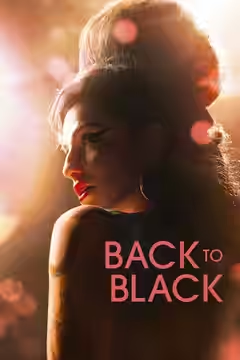
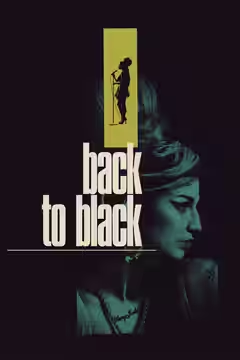
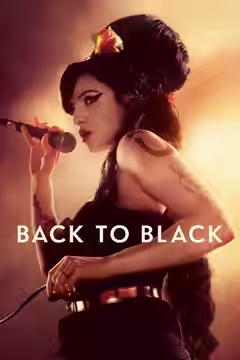
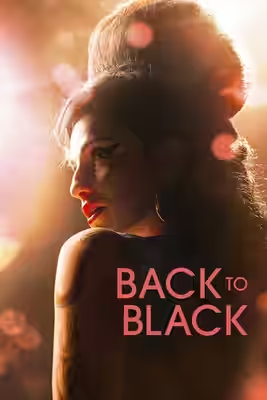
Back to Black poster

Back to Black

2024 · Directed by Sam Taylor-Johnson
2h 02mMusicHistoryDrama15
48
Fi1m score
42
Critics · 19
Audience · not yet

Where to watch in the UK

Checked 10 September at 22:29. Prices and availability change; the service’s page is the last word.

Plays from YouTube when you press play; nothing loads from them until then.

Synopsis

Amy (Marisa Abela) is a north London teenager who sings jazz standards in her Nan’s kitchen and has no interest in being anyone else. Her grandmother Cynthia (Lesley Manville) taught her the records; her father Mitch (Eddie Marsan) drives a cab and believes in her; her mother Janis (Juliet Cowan) worries from the doorway. A young manager, Nick Shymansky (Sam Buchanan), gets her a deal and a first album. Then, in a Camden pub, she meets Blake (Jack O’Connell), and the film follows what happens between them, and what it does to her songs. Sam Taylor-Johnson directs from a script by Matt Greenhalgh.

Fi1m review

In a sentenceTwo hours in Camden and the only thing that ever gets darker is the eyeliner

Marisa Abela is good enough to make you stop checking her against the real thing, and Sam Taylor-Johnson’s film is too fond of everyone in it to tell her story. A soft-lit romance where a hard life should be; watch it for her.

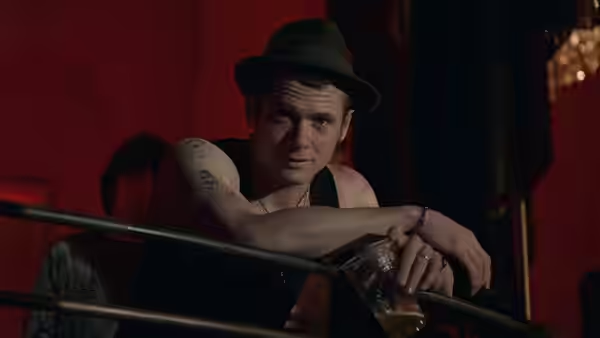
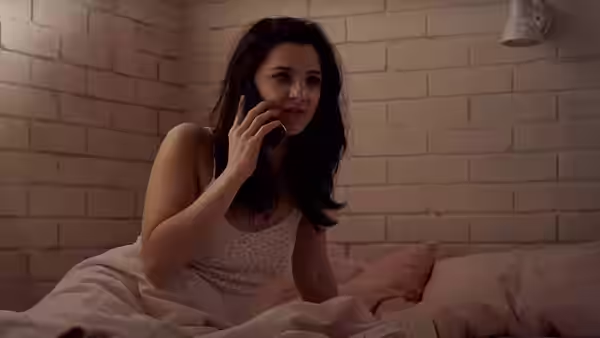
Sam Taylor-Johnson and her writer Matt Greenhalgh have made a film about Amy Winehouse that runs 122 minutes and has decided, early and firmly, that it is a love story. The first half hour sets out the household: a sing-song in the front room, Cynthia (Lesley Manville) at the piano, Mitch (Eddie Marsan) beaming, Amy (Marisa Abela) taking the high line and meaning it. Nick Shymansky (Sam Buchanan) turns up with a car and a contract, and the songs start arriving. Then Blake (Jack O’Connell) puts a coin in a jukebox in a Camden pub, and the film has found what it wants to be about.

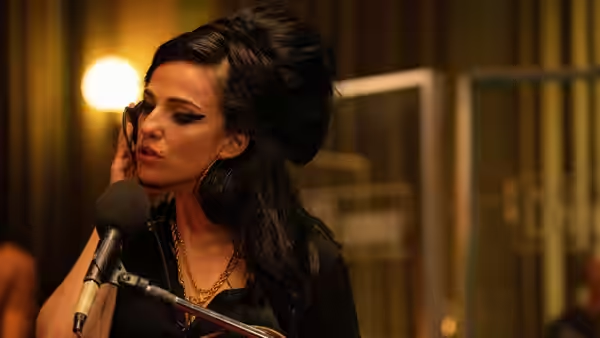
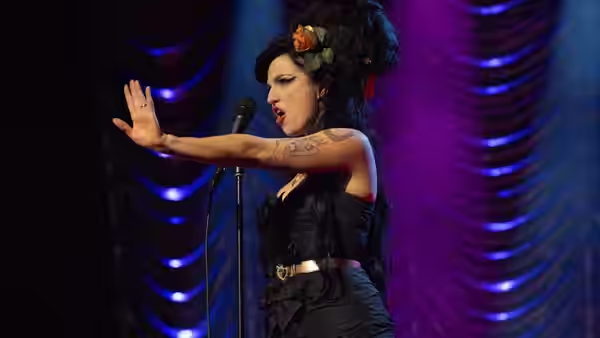
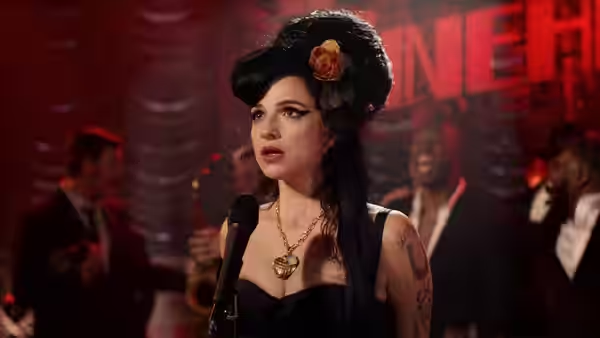
Abela is the reason to be here, and she is a real reason. She does not do an impression, or not for long. The walk is there, and the sideways look, and the way of making a compliment sound like a challenge, but after ten minutes we stopped measuring her against the footage and simply watched a person. The singing is her own, and while it does not have the low, heavy pull of the records, it is never embarrassing, which in a film like this is most of the battle. When she stands in a small club and gets a crowd to go quiet, we believed the crowd.

We were moved, more than we had planned to be, by the scenes in her Nan’s kitchen. Manville plays Cynthia as a woman who has been glamorous and knows it, and who watches her granddaughter with a mixture of pride and something colder, as if she can see where this goes. There is a shot of the two of them at a table with a pot of tea, not saying much, and Nick Cave and Warren Ellis let a single line of strings sit under it and go no further. It is the quietest thing in the film and the truest.

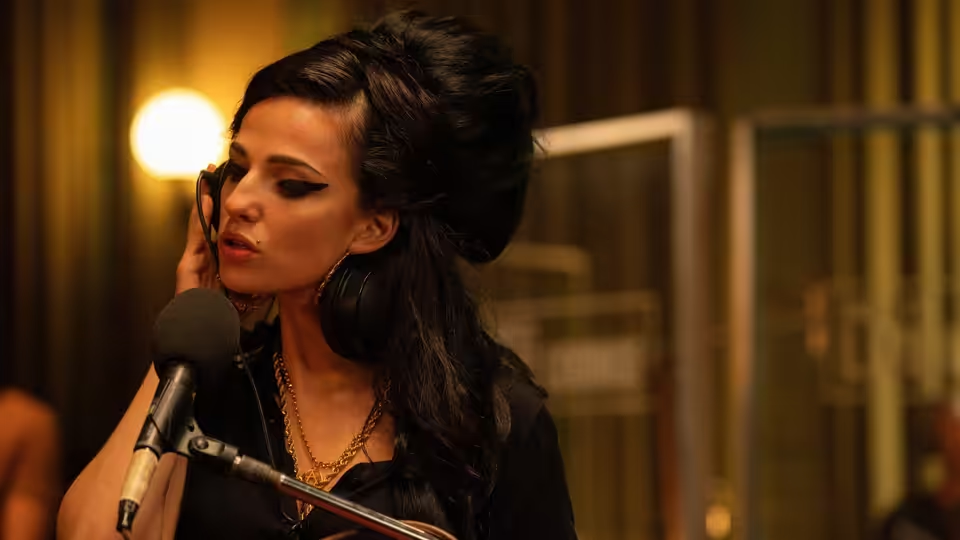
The craft around the edges is careful. Polly Morgan lights Camden in a warm amber that makes even the wet pavements look kind, and Sarah Greenwood’s flats and pubs have the right clutter: ashtrays, a pool table, a mattress on the floor. PC Williams’s costumes track the change from jeans and vests to the beehive and the little dresses without ever making a point of it. Martin Walsh cuts the years as a set of jumps, and the songs act as chapter headings, so that every stretch of the life is there to explain a lyric.

That is also the problem. Greenhalgh’s script keeps stopping to show us where a line came from, a row here, a name on a wall there, and the effect is of a very expensive footnote. Nothing in the writing is interested in how she worked, who she listened to, or what a studio day was like; the music happens to her, like weather. And the film is remarkably gentle with the men. Marsan’s Mitch is a worried dad and nothing more. O’Connell is charming, and it is easy to see the pull, but the script never asks him a hard question, and it is not much harder on her. Everyone here is doing their best. That is a comfortable view of a life that did not end comfortably.

The second half goes where you know it goes, and takes turns we will not describe, but we can say that the tone barely darkens with the material. Morgan keeps the amber, the strings stay soft, and the flashbulbs outside the flat are shot as spectacle rather than assault. By then we were restless, and then we were irritated at being restless, because the actress in the middle of it was working hard and the film kept looking away from her.

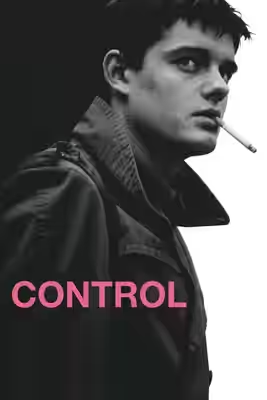
Greenhalgh wrote Control, which managed a musician’s short, bad life in 122 minutes without flinching, and Taylor-Johnson’s Nowhere Boy found a real edge in a young John Lennon. Set beside those, this is the gentler, safer film, and beside Asif Kapadia’s documentary Amy it is a brochure. The reviews so far have been rough, and we understand why, though we think they undersell what Abela and Manville do in a kitchen.

See it if you want two hours in the company of a very good performance and can forgive the film around it. If you want to understand what happened to Amy Winehouse, the documentary is still there, and it is not afraid of the answer.

Critical consensus AI synthesised

42
Positive
2
Mixed
5
Negative
12

Most critics agree on one thing: Marisa Abela. Nearly every review, including the harshest, praises her performance, singling out the voice, the mannerisms and the physical commitment, and several say she is the only reason to watch. The reservations cluster around the script and the approach. The film is called sanitised, formulaic and cautious, more interested in the romance with Blake Fielder-Civil than in the songs or how they were made, and several critics object that it goes easy on the men in Winehouse’s life while leaving her at the centre of a story that is not really about her. Little White Lies and Collider go furthest, treating this as a distortion of the record rather than tact. The spread is wide. Deadline and NME find an honest film that gives Winehouse her own agency; the Guardian finds it forgiving and heartfelt. Sight and Sound is the rare dissenter on the performance, arguing Abela’s singing does not match Winehouse’s command.

Variety
9 April 2024 · Owen Gleiberman
65*

Marisa Abela nails Winehouse in every look, mood, and note, delivering an authentic force-of-nature performance that anchors the film. The dysfunctional love story keeps the audience at a remove, making the portrait authentic yet clinical and detached rather than powerfully cathartic.

Read the full review →
Radio Times
9 April 2024 · ★★★ · Terry Staunton
60

The critic says the biopic struggles to get under Amy’s skin and offers only snapshots of her malaise despite Abela’s extraordinary performance; the music sequences are a highlight but the personal story remains enigmatic.

Read the full review →
Total Film
9 April 2024 · James Mottram
60*

A competent but occasionally clunky biopic that works best as a love story and benefits from Abela's terrific vocal and physical performance. It holds back on the darker aspects of Winehouse's decline compared to the documentary Amy.

Read the full review →
Empire
9 April 2024 · Hayley Campbell
50*

A solid central performance from Abela is let down by a weak script that cherry-picks facts and tells us little new about Winehouse. The film fails to explore her artistic process or what she saw in Fielder-Civil.

Read the full review →
The New York Times
16 May 2024 · Alissa Wilkinson
40*

The film fails to center Amy Winehouse’s perspective as intended and softens or shuffles facts in ways that rewrite her history. Marisa Abela’s committed performance and a few sequences, especially the pub meet-cute, stand out as bright spots amid the shortcomings.

Read the full review →
Time Out
8 April 2024 · Phil de Semlyen
40*

The review criticizes the biopic’s pedestrian script full of spelled-out origin stories and its soft-soaped approach, noting Abela handles the impossible task solidly but the film ultimately hits too many off-keys.

Read the full review →

Cast

Sam Buchanan
Nick Shymansky
Pete Lee-Wilson
Perfume Paul
Thelma Ruby
Great Auntie Renee

Stills

If you liked this, try…

Amy poster

Amy

2015 · Kapadia’s documentary looks straight at the things this film turns away from.

Control poster

Control

2007 · Greenhalgh’s Ian Curtis script, shot in black and white and with no comfort in it.

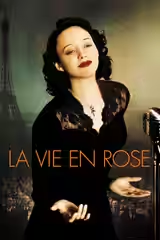
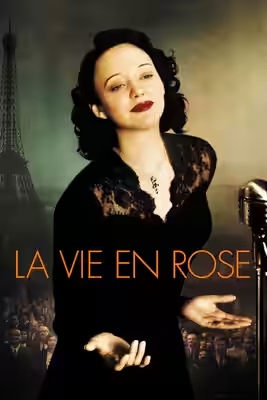
La Vie en Rose poster

La Vie en Rose

2007 · Marion Cotillard’s Piaf, a biopic that lets its singer be difficult and still loves her.

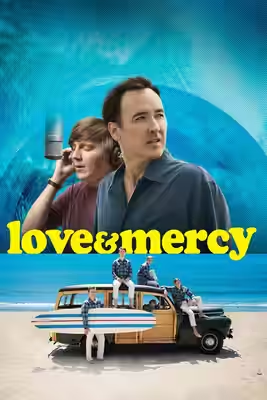
Love & Mercy poster

Love & Mercy

2014 · Brian Wilson in the studio and in the wreckage; a music film about actually making music.

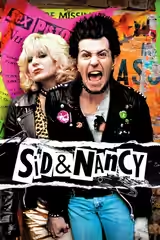
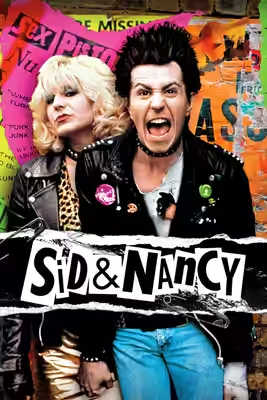
Sid and Nancy poster

Sid and Nancy

1986 · Alex Cox’s punk romance, filthy and unsentimental, the film this one keeps glancing at.