David Earl and Chris Hayward give this gentle robot comedy enough warmth and deadpan friction to overcome a thin supporting story. It is worth an evening, provided repeated bouts of eccentricity do not test the patience.
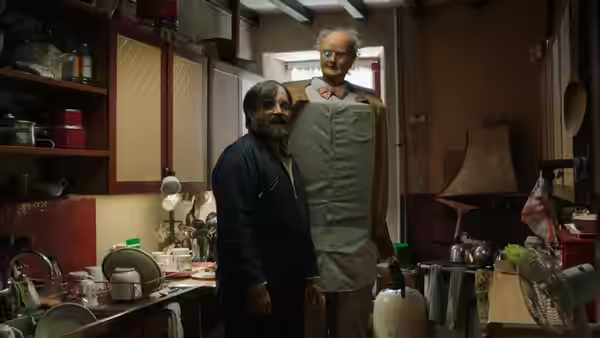
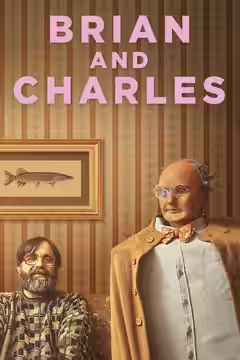
Brian and Charles is a funny, kindly comedy whose central friendship is much better developed than the story around it. Jim Archer treats the notion of a lonely man building himself a robot companion with enough seriousness to make the silliness matter. The question is how much company Brian can bear once his invention starts behaving like somebody else. That is a sound basis for a small comedy, and David Earl and Chris Hayward, who also write the screenplay, give it an affectionate, argumentative life.
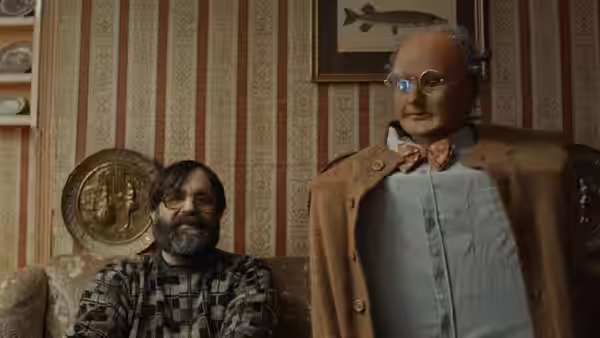
David Earl’s Brian needs companionship without quite knowing what to do with it. The performance catches the embarrassment of wanting a friend while having little practice at being one, and it does not ask us to regard him as a case study. His awkwardness is funny because David Earl allows it to be awkward, rather than repeatedly signalling that we should find it lovable. When the film concentrates on his dealings with Charles, the writing notices how much two people can find to disagree about without either having particularly good grounds for complaint.
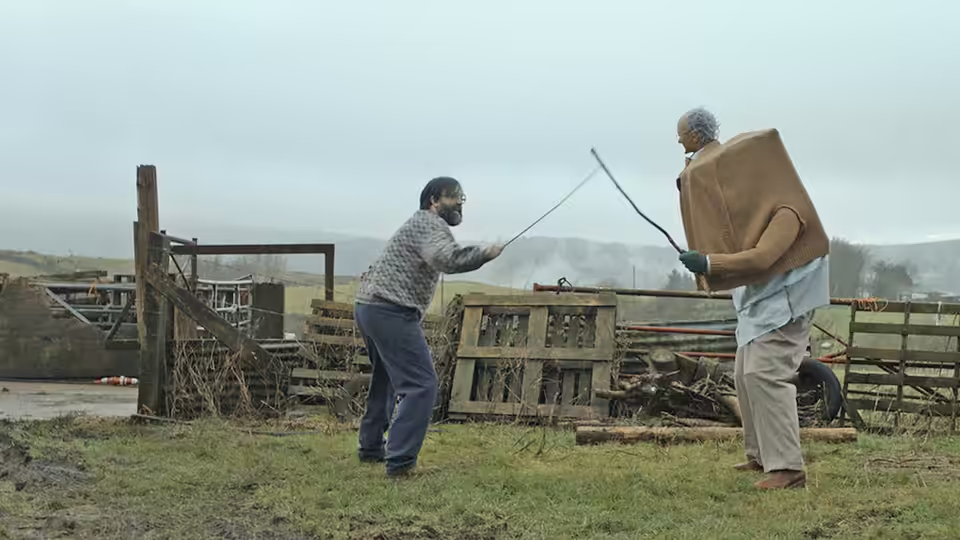
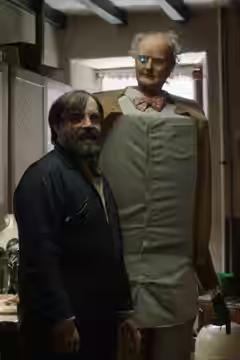
Chris Hayward makes Charles expressive through movement and a voice that seems poorly equipped for expressing anything. The deadpan delivery gives the robot’s curiosity an edge: he wants to know things, and he is not necessarily impressed by the answers. We laughed at his synthesised backchat, particularly the adolescent certainty that Brian is being unreasonable. It is a good joke about parenthood, made better by the fact that the parent has built the person now answering him back.
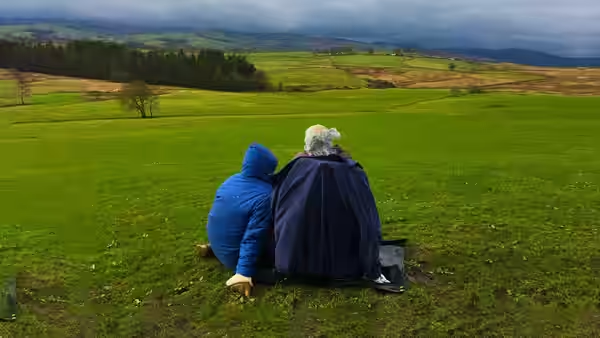
Murren Tullet’s cinematography suits the homemade feel, though the mockumentary conceit remains loosely applied. The camera’s supposed presence never becomes particularly interesting in itself. Hannah Purdy Foggin’s production design helps the improbable robot belong in the farm setting, without competing with him for attention. Jo Walker’s editing gives the exchanges room to find their comic rhythm, but cannot disguise how often the film returns to the same joke. At 91 minutes, it is short enough to forgive that repetition, though we still notice it.
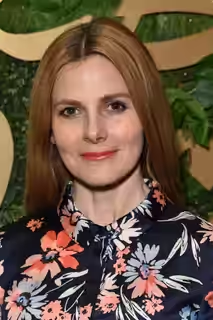
The trouble is what happens around the central pair. Louise Brealey gives Hazel a welcome delicacy, and the tentative romance is appealing when allowed to remain tentative. But Hazel is too thinly written to command the same interest as Brian and Charles, while the broader conflict has the dutiful feel of something added because a feature needs a plot. We keep waiting for the film to return to the two performances that make its familiar material worth watching.
Daniel Pemberton’s music is sympathetic to the film’s gentleness, although the sweetness can become insistent. Jim Archer is strongest when he trusts an odd voice, an ungainly movement or a slightly uncomfortable pause to carry the feeling. As science fiction, the film has little interest in technological grandeur, and that modesty is a virtue. Its robot is interesting because living with him takes some adjustment, and the comedy understands how affection can survive a considerable amount of irritation.
Choose it for a quiet evening, with some tolerance for repetition and an affection for people who struggle to talk to one another. There is no need to be particularly interested in robots. Enjoy the conversations, and forgive the rather obvious attempts to interrupt them.