Bill Forsyth makes a coastal property deal funny without pretending the locals are above wanting money. The performances and scenery reward its gentle pace, though the fondness for eccentricity sometimes softens questions the film has done well to raise.
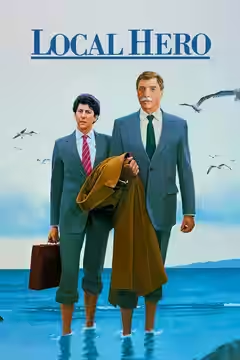
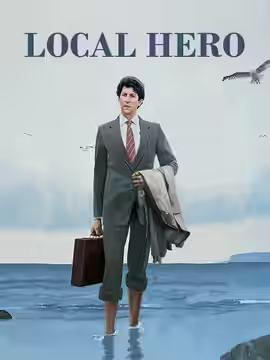
Bill Forsyth’s Local Hero is a warm, quietly funny comedy about people who would quite like to be rich. Its coastal town sees an oil development as a chance to profit, an awkward detail for anyone expecting a simple contest between decent villagers and grasping business interests. Forsyth lets that appetite remain perfectly understandable. We recommend it warmly, with a warning that its fondness for eccentricity sometimes takes the pressure off questions worth pursuing.
The pleasure is in how slowly Forsyth’s screenplay allows people to become more than their immediate business. Conversations develop at their own pace, and the supporting characters are allowed to be peculiar without having their peculiarities explained. We laughed at the town’s readiness to cash in. What caught us was the cheerfulness of it: the prospect of losing the coast is also the prospect of getting paid. Forsyth trusts us to notice both, and does not demand that we disapprove.
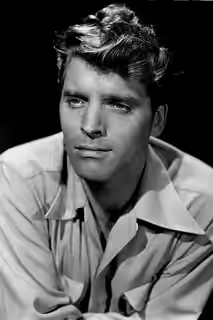
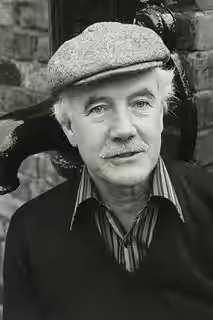
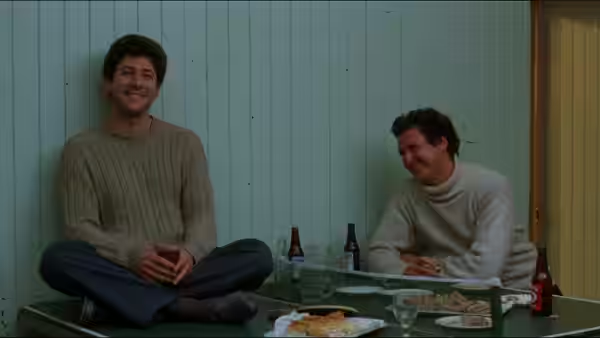
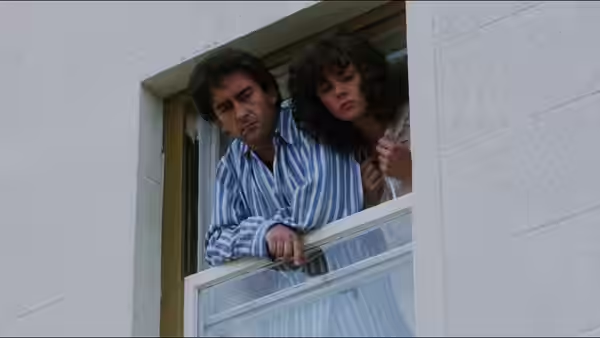
Peter Riegert, as Mac MacIntyre, gives the film a useful steadiness; he does not compete with every odd person around him. Burt Lancaster’s Felix Happer is a pleasure because Lancaster seems so comfortable with the character’s silliness. Denis Lawson’s Gordon Urquhart has a briskness that stops the ensemble becoming uniformly dreamy. The actors leave one another room, and Forsyth gets much of the humour from their different ways of responding to the same situation.
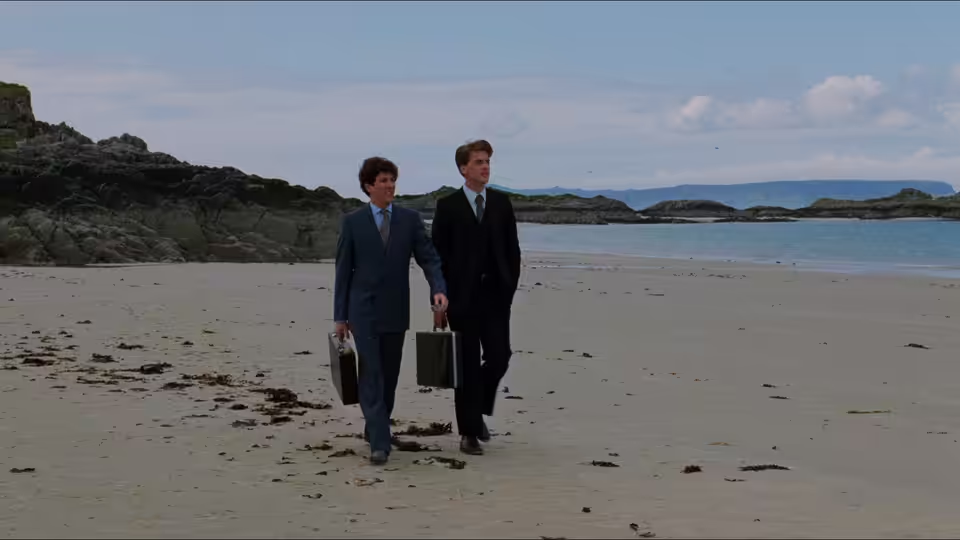
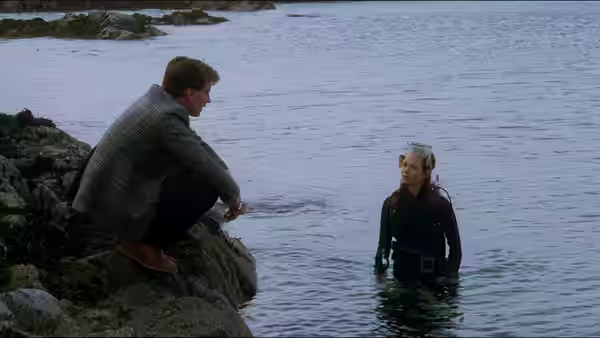
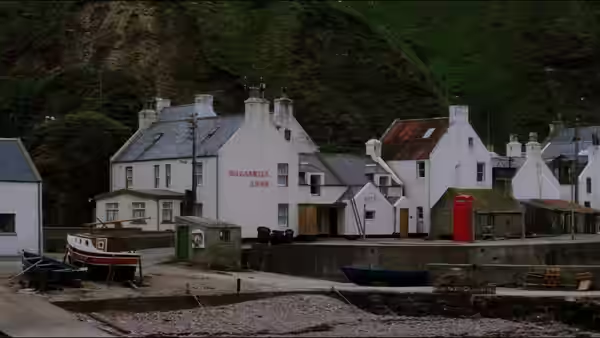
Chris Menges makes the coastline an effective part of the comedy: we can see its appeal while the town is considering what it might fetch. The scenery is beautiful, but the people’s interest in a sale prevents beauty from settling the question for them. Roger Murray-Leach’s production design makes the village feel lived in, an important restraint when the people are this eccentric. It gives their oddities a recognisable everyday setting.
Michael Bradsell’s editing gives the comedy time to develop without announcing every change of mood. Mark Knopfler’s music supplies warmth and allows the quieter passages to hold our attention. We were more moved than we expected by the affection for this place, because the music and coastal photography make it inviting even as its inhabitants contemplate selling. Bradsell sustains that unhurried rhythm over 111 minutes.
Forsyth can, however, be too forgiving. He finds so much to like in these people that the proposed development can begin to feel less troubling than it ought to. The film is entitled to be a fairy tale, but its gentleness occasionally saves it the trouble of being more searching about the bargain on offer. Among village comedies, it earns its place by allowing the locals to be greedy and still likeable. We would have liked it to hold on to that awkwardness more firmly when the whimsy takes over.
It is a good choice for company, provided nobody expects the jokes to arrive at fixed intervals. The pauses matter, and the gradual acquaintance with these people is a large part of the pleasure. Watch it with someone who can enjoy a silence without reaching for the remote.