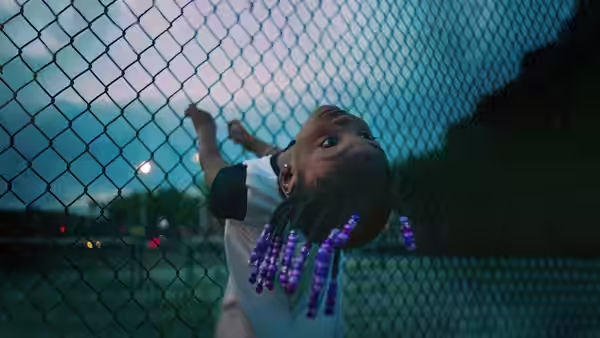
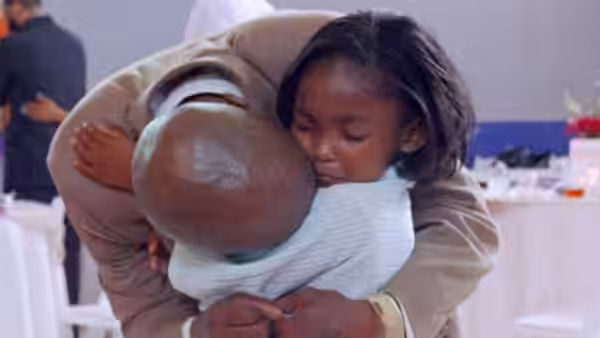
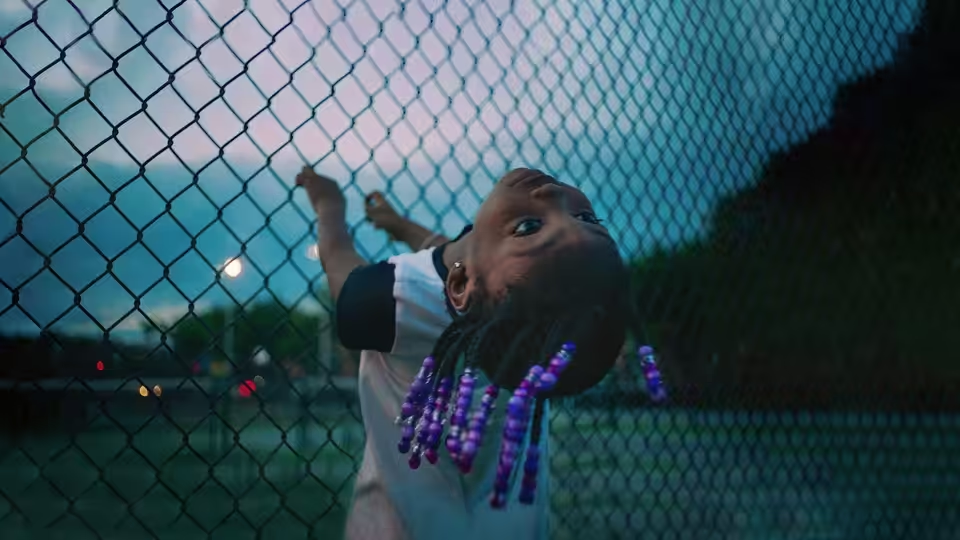
A young girl reaches up to a chain-link fence outdoors
Film review

Daughters

2024 · Directed by Natalie Rae, Angela Patton · 1h 48m

In a sentenceA prison dance where the adults have more catching up to do than the children

Directors Natalie Rae and Angela Patton follow four girls preparing for a father-daughter dance in the prison where their fathers are held. Chad Morris appears as himself. In the months leading up to the event, the girls talk about their relationships with the men and the separation that shapes their family lives. The fathers also face the prospect of meeting their daughters at the dance. Preparations bring hopes for renewed closeness, alongside uncertainty about what the occasion can change. The girls want time with their fathers, but imprisonment determines the terms of that contact and places limits on what a family reunion can offer.

Plays from YouTube when you press play; nothing loads from them until then.

Fi1m review

Natalie Rae and Angela Patton make a moving documentary about daughters preparing to dance with their imprisoned fathers. Its attention to the girls earns our trust, though the programme itself needs harder questioning.

Natalie Rae and Angela Patton’s Daughters follows four girls in the months before a father-daughter dance in prison. A reunion gives the film a clear destination, but the preparation matters because it gives the children time to speak about the men they miss. This is a thoughtful, affecting documentary, strongest when it pays close attention to those girls. We recommend it, with reservations about how little scrutiny it gives the programme that makes the meeting possible.

The girls’ candid reflections are more revealing than any tidy account of what a father ought to be. We were moved by how openly they discuss their fathers, particularly when their affection makes the pain of separation clearer. Rae and Patton give these thoughts room without turning each one into a lesson for the adults watching. The conversations become uncomfortable because the children have so much invested in a meeting whose limits they cannot set.

Michael Fernandez’s cinematography keeps our attention on faces, where excitement and uncertainty can be difficult to tell apart. The framing gives the girls space to be observed without making them seem like exhibits in a case about imprisonment. The care taken matters: we have time to look at each girl, rather than simply collect the information she supplies. Their expressions deserve the attention, especially when the prospect of closeness brings several feelings at once.

Editors Troy Josiah Lewis and Adelina Bichis allow the girls’ reflections to interrupt the pull towards the dance. That patience helps us understand why the event carries such weight, although the film does not sustain the same concentration across its 108 minutes. The pacing becomes less assured in its later stretch, which would benefit from some tightening without sacrificing the attention given to the children. Kelsey Lu’s music adds tenderness, though the girls’ own voices are what stayed with us.

The decision not to set out why the fathers are imprisoned is sensible for a film looking principally at their daughters. It keeps us from sorting the men into categories of deserving and undeserving before listening to what their children need. That choice does not oblige the film to accept the dance programme quite so readily, however. We wanted clearer questions about what this concentrated promise of closeness asks of a child, and about the responsibilities of the adults arranging it.

Documentaries built around an organised event can make the calendar do too much of the storytelling. Preparations supply momentum, and the approaching date supplies suspense without necessarily deepening our understanding of anyone involved. Daughters largely avoids that problem by staying interested in the girls as people with conflicting feelings, rather than treating them as proof that the programme works. They are allowed to feel hurt by people they love, and the film takes those feelings seriously.

The film asks us to take a child’s need for her father seriously without pretending that affection can settle everything. Its willingness to leave hope and uncertainty unresolved is valuable, even when we wish the filmmakers would question the arrangements more closely. Watch it with someone willing to talk afterwards, and leave time for that conversation.
Critical consensus AI synthesised

77
Positive
12
Mixed
4
Negative
0
Los Angeles Times
9 August 2024 · Robert Abele
90*

Abele finds the documentary touching and achingly beautiful, making a heartfelt case for second chances. He praises the filmmakers’ emotional honesty and their willingness to show both hope and uncertainty around the father-daughter dance.

Read the full review →
The New Yorker
90*

The critic calls the documentary an emotionally shattering, deeply empathetic work. They single out its portrait of the damage incarceration does to family intimacy and childhood innocence.

Read the full review →
Vulture
16 August 2024 · Bilge Ebiri
90*

Ebiri praises Daughters as an admirable, emotionally powerful documentary elevated by sensitive, artful filmmaking. He singles out its focus on the girls’ and fathers’ faces and the devastating perspective on how time changes their relationships.

Read the full review →
Variety
23 January 2024 · festival review · Lisa Kennedy
85*

Kennedy finds the documentary quietly consequential and moving in its account of incarceration’s effects on families. She praises its compassionate attention to the girls and the intimate, lyrical filmmaking.

Read the full review →
IndieWire
25 January 2024 · B+ · David Ehrlich
83

Ehrlich praises the documentary as deeply moving while valuing its refusal to settle for easy sentiment. He singles out its final chapter for showing how the dance’s brief reunion meets the difficult realities that follow.

Read the full review →
The AV Club
12 August 2024 · B+ · Brent Simon
83

Simon finds the documentary moving, compassionate, and emotionally resonant, while noting a missed opportunity to address a co-director’s connection to the program. He especially praises its artful filmmaking, including evocative cinematography and editing that give the girls’ inner lives room to emerge.

Read the full review →

Straight answers AI written, from our review

Is Daughters worth watching?
Daughters is worth watching for its patient attention to four girls preparing to meet their imprisoned fathers at a dance; we score it 81 out of 100. We are moved by their frank accounts of love and separation, though the later pacing needs tightening and the programme itself deserves harder questioning.
How long is Daughters, and what is it rated?
Daughters runs 1h 48m. It is a documentary film.
Where can I watch Daughters in Austria?
Daughters is streaming on Netflix in Austria. Availability is checked daily; the links above go straight to each service.
How violent or frightening is Daughters, and is it suitable for children?
Daughters has a UK 12A certificate, meaning children under 12 need an accompanying adult at the cinema. Its emotionally difficult material includes girls discussing separation from their imprisoned fathers and their uncertain hopes for renewed closeness. We recommend considering a child’s readiness for those family conversations rather than treating the certificate as a blanket endorsement for younger viewers.
How does Daughters compare to Once Upon a Time... in Hollywood?
Daughters is the stronger choice for intimate documentary observation, while Once Upon a Time... in Hollywood offers a leisurely fictional afternoon with two men in 1969 Los Angeles. We recommend the former for its moving attention to children living with separation; the latter suits those drawn to good company and a lovingly observed city, despite its excessive length.
What should I watch after Daughters?
After Daughters, try Time (2020, Fi1m 77): Another patient documentary about imprisonment, family life and the years spent waiting. Then Leave No Trace (2018, Fi1m 88): A father and daughter love each other without needing the same life; and The Quiet Girl (2022, Fi1m 84): A child’s guarded feelings receive the patient attention adults so often withhold.

Cast

If you liked this, try…

  1. Time (2020, Fi1m 77)Another patient documentary about imprisonment, family life and the years spent waiting.

  2. The Work (2017) · not reviewed yetPrison group therapy makes difficult emotions visible without promising easy repairs.

  3. After Life (1998) · not reviewed yetA quieter companion about the memories people keep when ordinary contact ends.

  4. Leave No Trace (2018, Fi1m 88)A father and daughter love each other without needing the same life.

  5. The Quiet Girl (2022, Fi1m 84)A child’s guarded feelings receive the patient attention adults so often withhold.