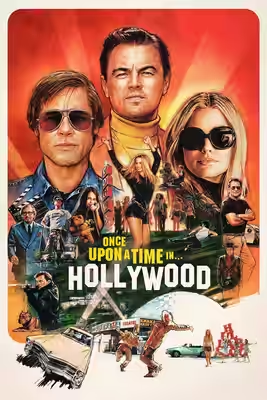
Tarantino’s slowest and kindest film is a long afternoon in 1969 Los Angeles with two men whose time is running out. It is too long and it looks away from things it should not, but the company is good and the city is lovely.
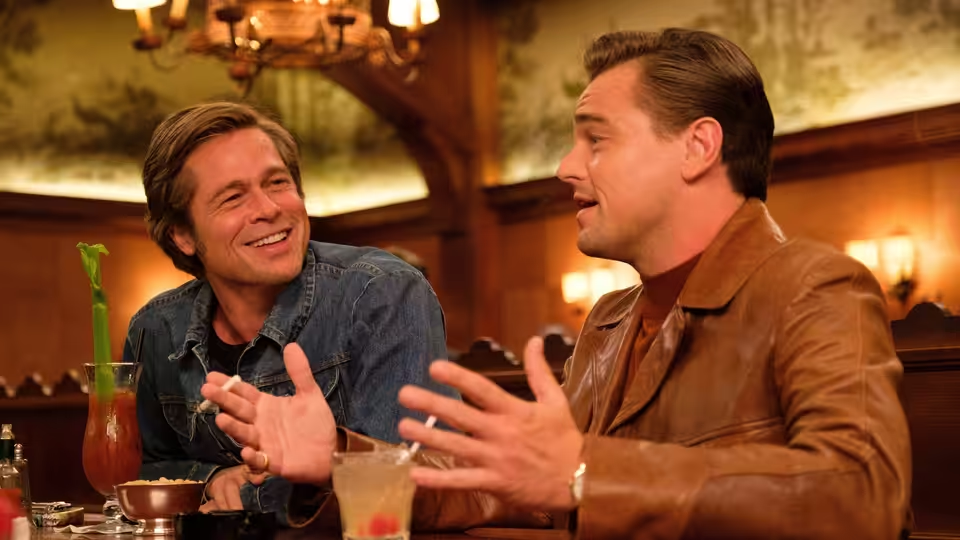
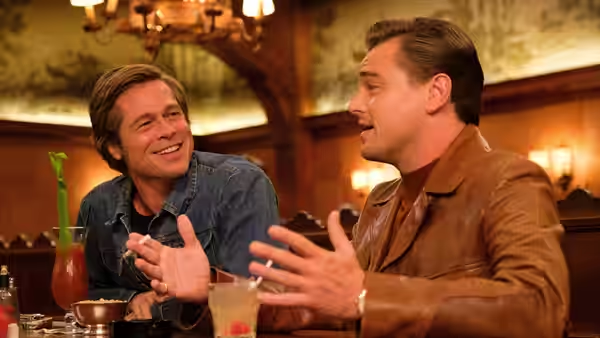
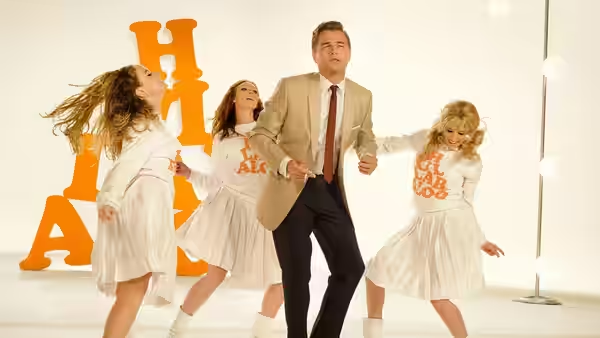
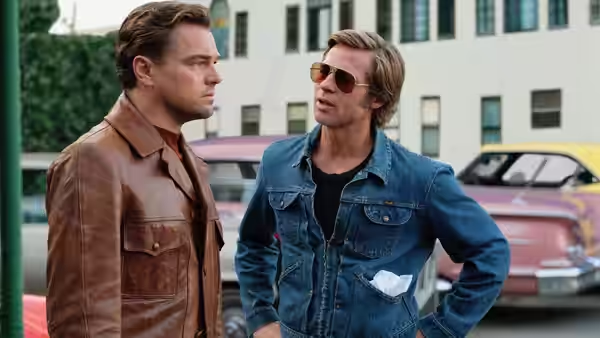
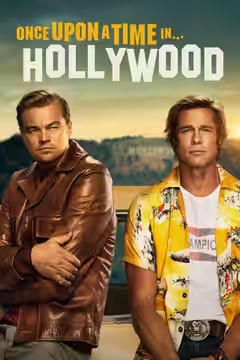
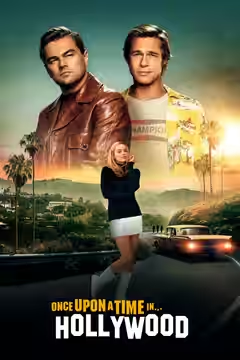
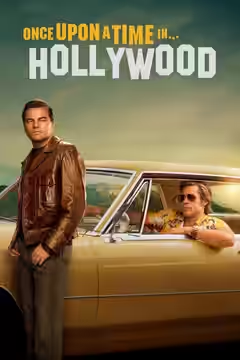
Quentin Tarantino has made a film about two men who have been in the business a long time and can feel it ending. Rick Dalton (Leonardo DiCaprio) starred in a television Western and now gets hired to lose fights to younger men on television. Cliff Booth (Brad Pitt) was his stunt double and is now his driver. It is 1969, and up the hill from Rick’s house Sharon Tate (Margot Robbie) has moved in with her husband, the director Roman Polanski. If you know what happened that August, you will spend the film waiting.
This is a good film and a long one. At 162 minutes it dawdles, and for most of that time we were glad to be in the car. It is the warmest thing Tarantino has made and one of the least shaped, and two or three scenes are hard to defend. We recommend it, with those reservations.
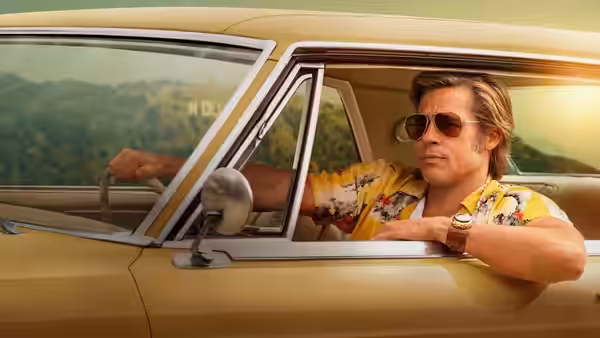
Barbara Ling has rebuilt a stretch of Los Angeles that no longer exists. There is a shot at dusk where the neon along the boulevard comes on sign by sign as the cars pass beneath it. Robert Richardson shoots the streets from low and from moving cars, in gold and dusty light, so the city looks the way people who grew up there insist it did. Arianne Phillips keeps Cliff in the same jeans and Hawaiian shirt for a week, and it suits him. There is no composer. The songs come off the car radio, adverts and jingles left in, and the radio places the film in its year better than any caption could.
DiCaprio has never been better at being bad at something. Rick is a decent actor who knows he is not a great one, and the film’s middle follows him through a day on a Western pilot, opposite Timothy Olyphant’s Jim Stacy, fluffing his lines and then screaming at himself in his trailer. A child co-star (Julia Butters, as Trudi Fraser, more serious about the work than anyone there) sits beside him between takes and talks to him as a colleague, and later tells him something kind. We were moved more than we expected, and Butters did it: she says the line straight, with no sense that she is comforting him, and DiCaprio’s face does the rest.
Pitt has the easier part and knows it. Cliff wants nothing, feeds his dog, and fixes Rick’s aerial with his shirt off while the film stops to watch. Then he gives a lift to a girl called Pussycat (Margaret Qualley) and drives her out to the ranch where she lives, and the film changes temperature. Cliff insists on saying hello to the old man who owns the place (Bruce Dern, as George Spahn), and Dakota Fanning stands on the porch and tells him no. Fred Raskin cuts the walk to the house so slowly that we were frightened for a man we had not thought could be hurt. It is the best sequence in the film.
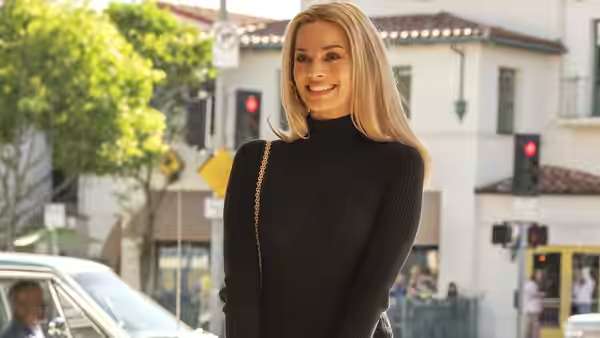
The problems are real. Robbie’s Sharon Tate is given almost nothing to say; she dances, drives, buys a book, and sits in a cinema watching an audience enjoy her. It is lovely, and it is all there is; a film this long could have found her a conversation. Mike Moh plays Bruce Lee as a braggart who exists to make Cliff look good, and we winced at a real man being used as a punchline. Cliff has a thing in his past that the film raises and then shrugs off as a joke, and wants us to shrug too. And there are twenty minutes in the middle that Raskin could have lost.
The last half hour is where the film has been heading, and we will not say what happens, except that it is loud, it earns its 18 certificate, and it left us laughing and uneasy at once. The film is pleased with itself about it; we were less sure. Against Tarantino’s own work it is gentler than Inglourious Basterds and The Hateful Eight, and closest in mood to Jackie Brown, which was better built.
Watch it on an evening with nothing after it. If you are checking the clock at the hour mark, it will not win you back.