Tarantino’s third film slows down, listens, and gives Pam Grier and Robert Forster the quietest and best scenes he has ever written. It is also a good half hour too long, and the middle knows it.
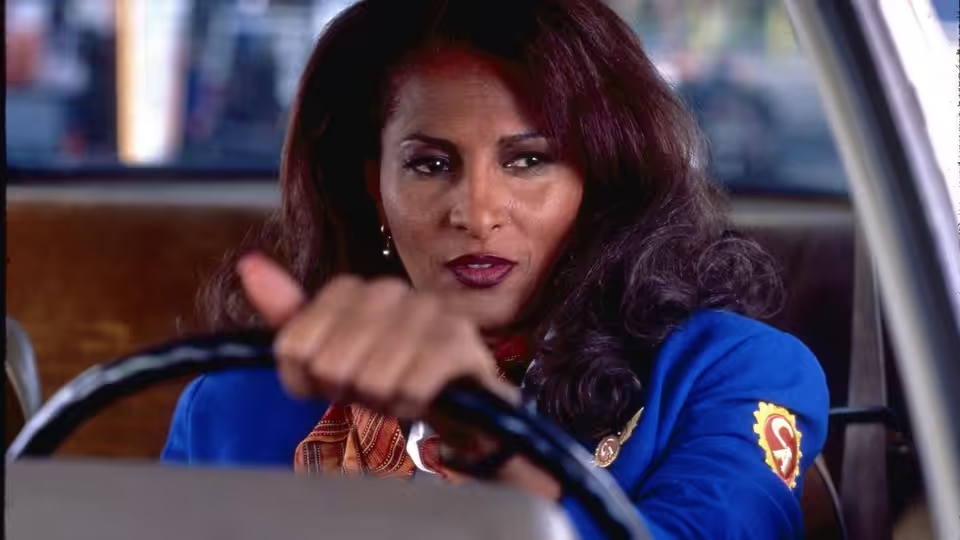
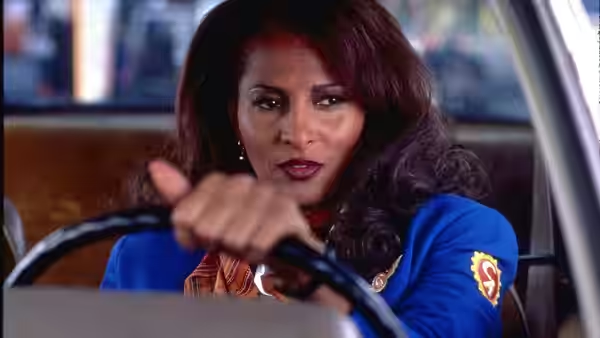
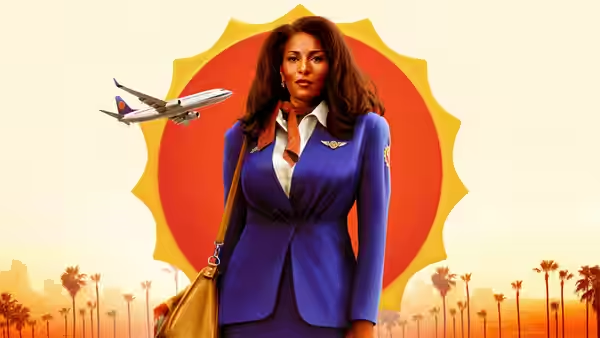
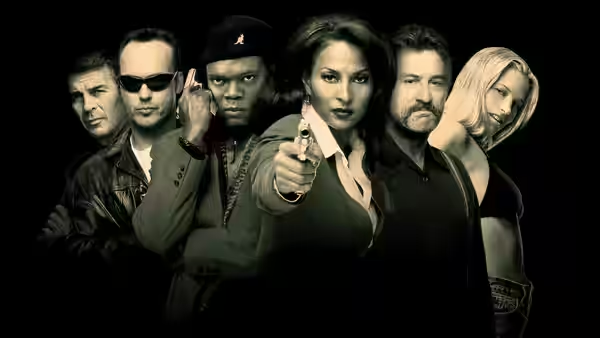
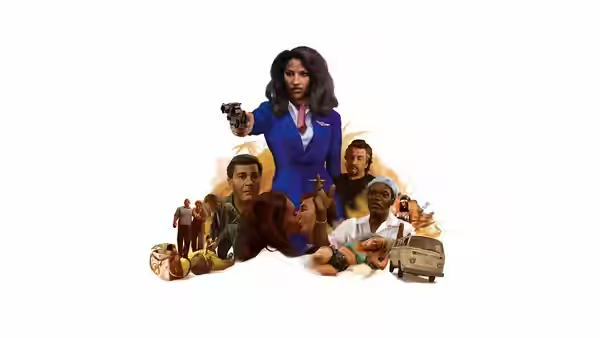
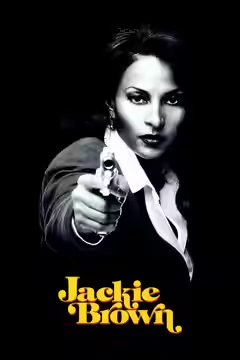
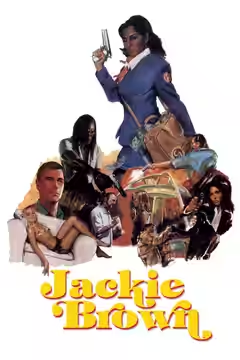
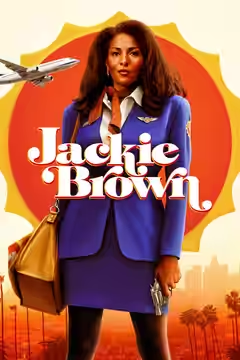
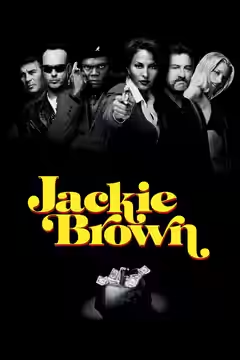
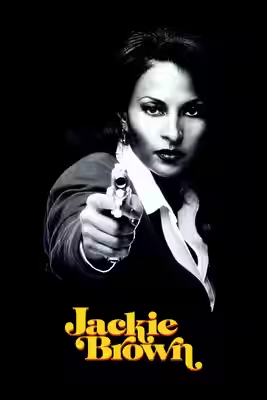
Quentin Tarantino’s third film is an adaptation of Elmore Leonard’s novel Rum Punch, and it is the one where he stops showing off. Pam Grier plays Jackie Brown, a flight attendant carrying money that is not hers, who is picked up in the first act and offered the usual choice by two men with badges, Ray Nicolette (Michael Keaton) and Mark Dargus (Michael Bowen). They want the man the money belongs to. That man is Ordell Robbie (Samuel L. Jackson), and everyone in the film who has crossed Ordell is either in a cell or nervous. Jackie decides she will be neither. It is a fine film and a long one.
The plot is a scam, and the scam is explained more than once, but the film is not about the plot. It is about two people past the point where anyone expects much of them. Grier plays Jackie with her chin up and her voice level, a woman who has been underestimated by every man she meets and has learned to let them. Robert Forster plays Max Cherry, the bail bondsman who drives her home from jail at night, and the film’s best scene is the one in which he watches her walk towards his car. His face does nothing except decide. It moved us more than we expected, and we could not have told you what had been said, because almost nothing had.
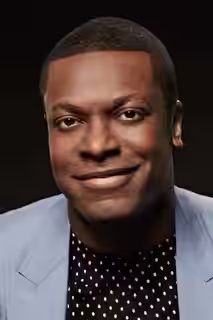
Around them Tarantino has cast people who talk. Jackson’s Ordell never stops; he explains guns, women, prison and loyalty to whoever is nearest, and Jackson makes the flow of it both funny and frightening, because Ordell is most dangerous when he sounds most reasonable. Chris Tucker has one scene early on as Beaumont, a man trying to talk his way out of a car boot, and it is a small masterclass in a character not hearing himself. Robert De Niro, as Ordell’s old friend Louis, does the opposite: he mumbles, shrugs and lets whole conversations go past him, and it is the least he has done on screen in years, deliberately. Bridget Fonda’s Melanie lies on the sofa and needles everyone, and she is right about all of them.
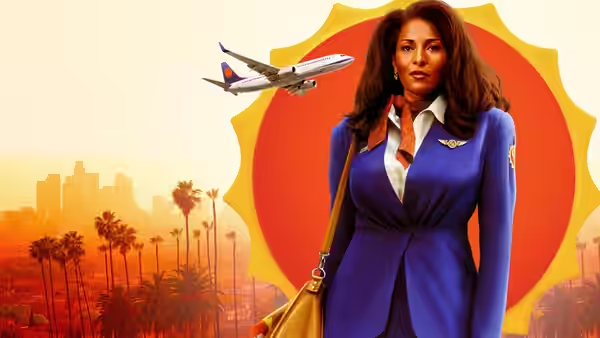
Guillermo Navarro shoots the South Bay of Los Angeles in flat, warm daylight, car parks and strip malls and blocks of flats, and does not pretend any of it is glamorous. David Wasco furnishes Ordell’s rented house with a stereo and not much else, and gives Cherry an office of filing cabinets and a plant, which tells us his whole life. Mary Claire Hannan puts Jackie in her airline uniform for as long as she can bear it and then in her own clothes, which is the moment she starts winning. The soul and funk records on the soundtrack are not decoration; the characters play them, argue over them and buy them, and one of them does more for a courtship than any line of dialogue. Sally Menke lets scenes run past the point where most editors would cut, and late on she shows a single sequence from several points of view without repeating a shot, which is the film’s one flourish and it is earned.
The trouble is 154 minutes. The middle hour, in which Louis and Melanie bicker and Ordell drives from one house to another, sags, and there is a stretch where we stopped following the money and waited for Grier to come back. Tarantino also cannot resist letting Ordell explain the plan a third time, and every time he does the film loses a little of the tension Leonard gave it. Nicolette and Dargus, who ought to be a real threat, are mostly a joke about lawmen who think they are cleverer than they are, and the joke runs long.
After Pulp Fiction (1994) most critics expected another puzzle, and several of the reviews from the time marked the film down for being slow and talky. We think slowness is the point, and that the film is better than its reputation, but we would not argue that all of it is necessary. Get Shorty (1995), the other Leonard adaptation of the decade, ran a good deal shorter and lost nothing.
Watch it at home, in the evening, where the pace stops feeling like a test and starts feeling like company. Stay for every scene Grier and Forster share; forgive the ones they do not. It carries a 15.