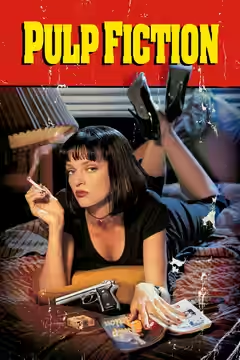
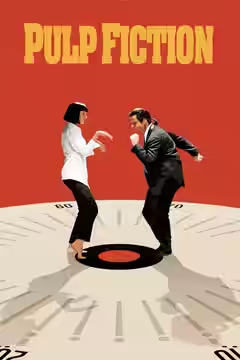
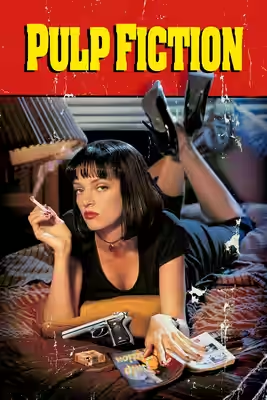
Pulp Fiction poster

Pulp Fiction

1994 · Directed by Quentin Tarantino
2h 34mThrillerCrimeComedy18
82
Fi1m score
Critics · 5 so far
Audience · not yet

Where to watch in the UK

Checked 10 September at 22:29. Prices and availability change; the service’s page is the last word.

Synopsis

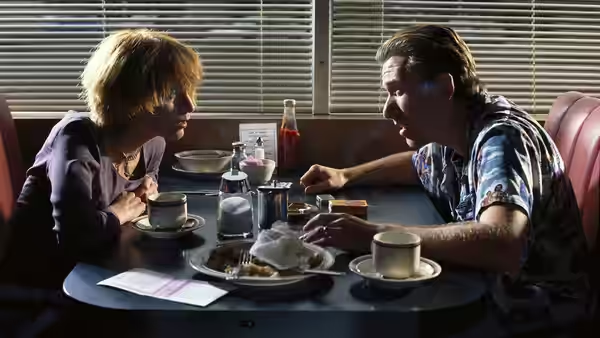
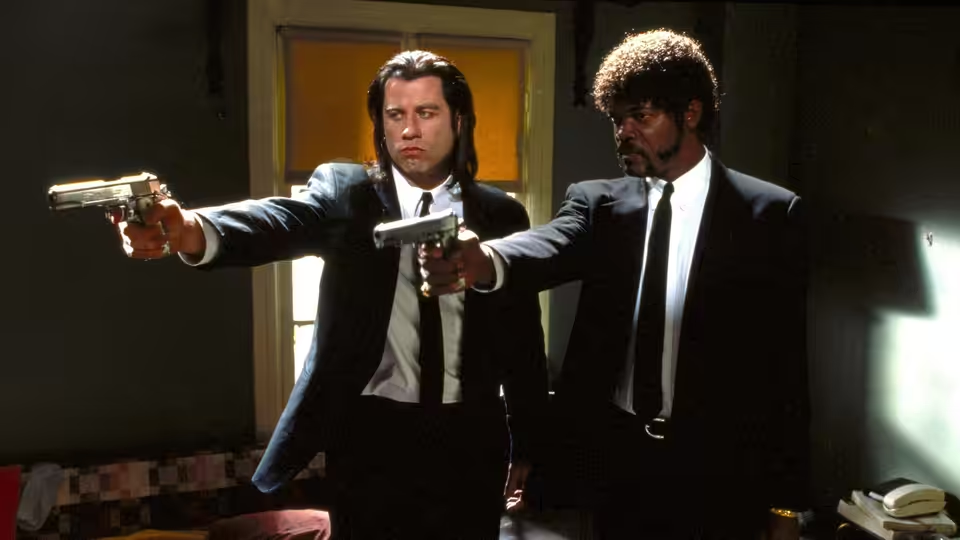
Three crime stories in Los Angeles, told out of order. Vincent Vega (John Travolta) and Jules Winnfield (Samuel L. Jackson) are hitmen sent to collect a briefcase for their boss, Marsellus Wallace (Ving Rhames), a job that starts with an argument about hamburgers. Marsellus then asks Vincent to take his wife Mia (Uma Thurman) out for the evening while he is out of town. Butch Coolidge (Bruce Willis), a boxer, has taken Marsellus’s money to lose a fight. And in a diner, a couple calling themselves Pumpkin (Tim Roth) and Honey Bunny (Amanda Plummer) decide over coffee that restaurants are easier to rob than banks. Quentin Tarantino writes and directs, from a story he wrote with Roger Avary.

Fi1m review

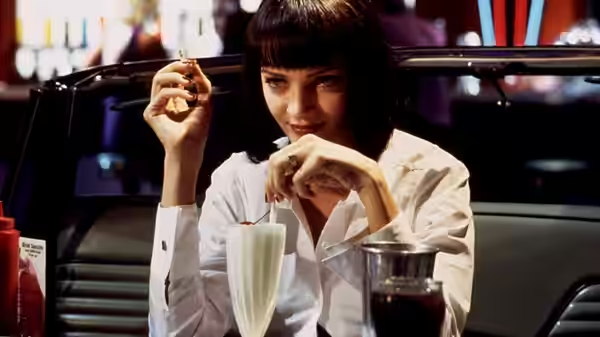
In a sentenceA five-dollar milkshake, a foot massage argument and the plot arriving in the wrong order

Tarantino’s second film is loud, long and pleased with itself, and it also has some of the sharpest talk in any crime film of its decade. Travolta and Jackson carry it, the middle hour flags, and it is still worth your evening.

Quentin Tarantino’s second film, after Reservoir Dogs, is three crime stories told in the wrong order over 154 minutes. Two hitmen collect a briefcase. One of them takes the boss’s wife to dinner. A boxer is paid to lose. It is the talkiest crime film we know, and most of the talk is worth hearing. It is also half an hour too long, and it knows, and it does not care.

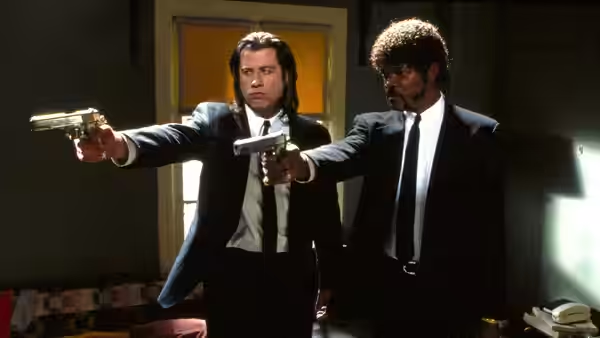
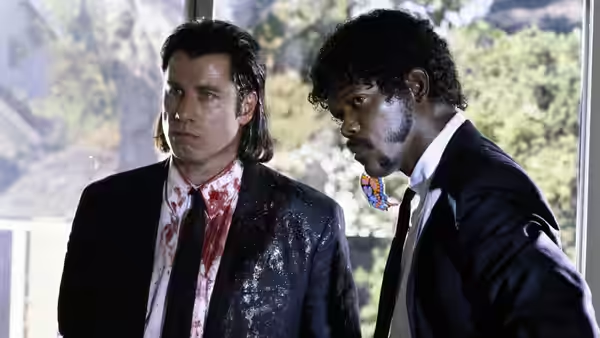
The talk is the film. Tarantino wrote it from a story he worked out with Roger Avary, and the best of it belongs to Vincent (John Travolta) and Jules (Samuel L. Jackson), in a car and a corridor, on what a hamburger is called in Paris and whether a foot massage means anything. Travolta plays Vincent slow and slack, a man who has eaten well for years. Jackson plays Jules as a preacher who has taken the wrong job and brought the sermon with him. We laughed at the foot massage argument for a full minute, then they knocked on the door, we remembered what they had come to do, and we stopped laughing. That is the trick the whole film is trying to pull, and here it pulls it clean.

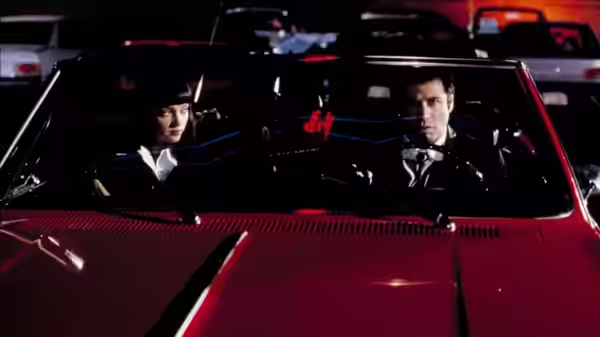
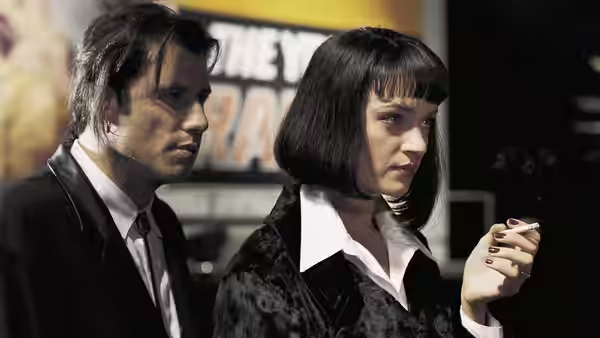
Andrzej Sekula lights it flat and bright, the flat and the diner and the kitchen all lit like a daytime soap, so that when something terrible happens it looks like an accident in the wrong programme. David Wasco’s biggest set is Jack Rabbit Slim’s, a restaurant with booths cut from old cars and waiters got up as dead film stars, so pleased with itself that it becomes a joke about the film’s own tastes. Betsy Heimann puts the hitmen in black suits, white shirts and thin ties, and Mia Wallace (Uma Thurman) in a white shirt and a black bob, and half the film’s fame is those four items of clothing. Sally Menke holds on the two-shots and lets people finish. There is no score to speak of; the film runs on old records, surf guitar and soul, dropped in at the top of scenes.

The dinner date is the centre. Thurman is bored, watchful and flirting from behind glass, Travolta lets her lead, and the dance contest they end up in is pure pleasure and has nothing to do with the plot. What follows, in the living room of Vincent’s dealer Lance (Eric Stoltz), involves a syringe and a medical book, and we watched it through our fingers and heard ourselves laughing at the same time. We have not forgiven the film for that, and we would not want it cut.

Then Bruce Willis takes over, and the film loses some air. Willis is good, chin down and words few, playing a man who has already decided. Christopher Walken tells a small boy a story about a watch, and it is the best few minutes in the chapter. But Maria de Medeiros’s Fabienne gets a long motel scene about pancakes and pot bellies in which the talk is only talk, and somewhere past the hundredth minute we were bored, then cross with ourselves for being bored by Bruce Willis doing little and doing it well. The chapter then takes a turn we will not describe. Tarantino casts himself as Jimmie, a suburban husband with a dressing gown and a grievance, and he is the weakest actor in his own film. Harvey Keitel’s Wolf turns up in a dinner jacket and gets the scene moving again.

Reservoir Dogs was one warehouse and one story, and it was tight. This is three stories and a whole city, and the extra room shows. The violence is played for laughs, the laughs are real, and there is nobody on screen the film grieves for; whether that bothers you is a fair test of whether the film is for you. The reviews on release were split, some calling it shapeless and self-indulgent, others saying it had remade the genre. We are nearer the second camp than the first, and we have kept our reservations.

See it with someone who will quote it back to you for a week, because they will. It runs 154 minutes and carries an 18, and it earns both.
Critical consensus AI synthesised

5 of 6
Positive
3
Mixed
1
Negative
1

With only 5 reviews in so far, the spread is wide. The praise clusters on Tarantino’s dialogue and on the performances, John Travolta’s and Samuel L. Jackson’s above all, with several critics also admiring the way the three stories are shuffled out of order. The reservations cluster on what the talk is for: a moral vacuum where the violence is played for amusement, and a running time some find shapeless and self-indulgent. The Guardian is the sharpest dissenter, calling it lurid and in need of an editor, while the Los Angeles Times finds a gifted mimic of film history who has not yet found new ground.

Empire
1 January 1994 · Ian Freer
90*

The critic praises Tarantino's non-linear structure, witty dialogue, pop culture references, and the performances of Travolta, Willis, Thurman, and Jackson, noting how the film redefines the crime genre with its gleeful amorality and hyperkinetic energy.

Read the full review →
The New York Times
23 September 1994 · festival review · Janet Maslin
85*

The critic calls the film a triumphant, cleverly disorienting journey through a demimonde of danger, shock, hilarity and vibrant local color sprung from Tarantino's imagination. It ultimately offers a stunning vision of destiny, choice and spiritual possibility.

Read the full review →
The New Yorker
3 October 1994 · Anthony Lane
70*

The critic finds the film's narrative form violently disrupted and its violence more verbal than visual, with a moral vacuum where talk dominates. John Travolta's performance stands out for its lack of vanity and ability to hold attention amid the chaos.

Read the full review →
Los Angeles Times
14 October 1994 · Kenneth Turan
50*

The critic praises the hip, idiosyncratic dialogue and performances by Travolta and Jackson but finds the film uneven, self-centered, and overly reliant on shock value and posturing. It is seen as the work of a gifted mimic of movie history who has not yet opened new ground.

Read the full review →
The Guardian
20 October 1994 · Derek Malcolm
40*

The critic finds the film lurid and shapeless, overly long and self-indulgent with nothing substantial to say, though it has patches of brilliance and strong performances. He praises the cameos by Christopher Walken and Harvey Keitel but criticizes the excessive violence used for amusement and lack of editing.

Read the full review →
Radio Times
5 out of 5 stars · David Parkinson

The critic praises Tarantino's genius for hard-boiled comic dialogue and astonishing control over characters and crossplots, highlighting the exhilarating mix of pop and pulp along with standout performances from the revitalised John Travolta and Samuel L. Jackson.

Read the full review →

Cast

John Travolta
Vincent Vega
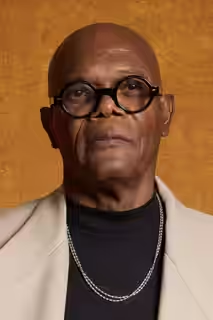
Samuel L. Jackson
Jules Winnfield
Uma Thurman
Mia Wallace
Bruce Willis
Butch Coolidge
Ving Rhames
Marsellus Wallace
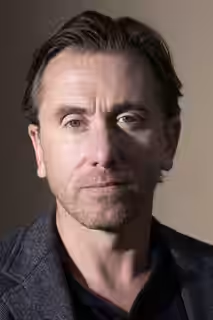
Tim Roth
Pumpkin

Stills

Awards

Academy Awards, 1995

Nominated
Best Actor
Nominated
Best Director
Nominated
Best Film Editing
Nominated
Best Picture
Nominated
Best Supporting Actor
Nominated
Best Supporting Actress
Won
Best Writing, Original Screenplay

Australian Film Institute Award for Best Foreign Film, 1995

Nominated
Australian Film Institute Award for Best Foreign Film

BAFTA Film Awards, 1995

Nominated
Best Actor in a Leading Role
Nominated
Best Actress in a Leading Role
Nominated
Best Direction
Nominated
Best Editing
Nominated
Best Film
Nominated
Best Sound
Won
Best Actor in a Supporting Role
Won
Best Original Screenplay

César Award for Best Foreign Film, 1995

Nominated
César Award for Best Foreign Film

David di Donatello for Best Foreign Actor, 1995

Won
David di Donatello for Best Foreign Actor

David di Donatello for Best Foreign Actress, 1995

Nominated
David di Donatello for Best Foreign Actress

Independent Spirit Awards, 1995

Nominated
Best Supporting Male
Won
Best Director
Won
Best Male Lead
Won
Best Screenplay

Japan Academy Prize for Outstanding Foreign Language Film, 1995

Nominated
Japan Academy Prize for Outstanding Foreign Language Film

MTV Movie Award for Best Dance Sequence, 1995

Won
MTV Movie Award for Best Dance Sequence

MTV Movie Award for Best Female Performance, 1995

Nominated
MTV Movie Award for Best Female Performance

MTV Movie Award for Best Male Performance, 1995

Nominated
MTV Movie Award for Best Male Performance

MTV Movie Award for Best Movie, 1995

Won
MTV Movie Award for Best Movie

MTV Movie Award for Best On-Screen Duo, 1995

Nominated
MTV Movie Award for Best On-Screen Duo

SAG Awards, 1995

Nominated
Outstanding Performance by a Female Actor in a Supporting Role
Nominated
Outstanding Performance by a Male Actor in a Leading Role
Nominated
Outstanding Performance by a Male Actor in a Supporting Role

Cannes Film Festival, 1994

Won
Palme d'Or

Dallas-Fort Worth Film Critics Association Award for Best Film, 1994

Won
Dallas-Fort Worth Film Critics Association Award for Best Film

Directors Guild of America Award for Outstanding Directing – Feature Film, 1994

Nominated
Directors Guild of America Award for Outstanding Directing – Feature Film

Golden Globes, 1994

Nominated
Best Actor – Motion Picture Drama
Nominated
Best Director
Nominated
Best Motion Picture – Drama
Nominated
Best Supporting Actor – Motion Picture
Nominated
Best Supporting Actress – Motion Picture
Won
Best Screenplay

London Film Critics Circle Award for Actor of the Year, 1994

Won
London Film Critics Circle Award for Actor of the Year

Los Angeles Film Critics Association Award for Best Actor, 1994

Won
Los Angeles Film Critics Association Award for Best Actor

Los Angeles Film Critics Association Award for Best Director, 1994

Won
Los Angeles Film Critics Association Award for Best Director

Los Angeles Film Critics Association Award for Best Film, 1994

Won
Los Angeles Film Critics Association Award for Best Film

National Board of Review Award for Best Director, 1994

Won
National Board of Review Award for Best Director

National Board of Review Award for Best Film, 1994

Won
National Board of Review Award for Best Film

National Board of Review: Top Ten Films, 1994

Won
National Board of Review: Top Ten Films

National Society of Film Critics Award for Best Actor, 1994

Nominated
National Society of Film Critics Award for Best Actor

National Society of Film Critics Award for Best Director, 1994

Won
National Society of Film Critics Award for Best Director

National Society of Film Critics Award for Best Film, 1994

Won
National Society of Film Critics Award for Best Film

National Society of Film Critics Award for Best Screenplay, 1994

Won
National Society of Film Critics Award for Best Screenplay

National Society of Film Critics Award for Best Supporting Actor, 1994

Nominated
National Society of Film Critics Award for Best Supporting Actor

National Society of Film Critics Award for Best Supporting Actress, 1994

Nominated
National Society of Film Critics Award for Best Supporting Actress

New York Film Critics Circle Award for Best Director, 1994

Won
New York Film Critics Circle Award for Best Director

If you liked this, try…

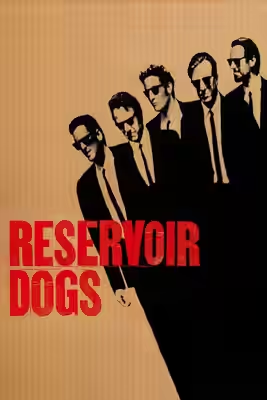
Reservoir Dogs poster

Reservoir Dogs

1992 · The same talk, one warehouse, no slack; the film this one grew out of

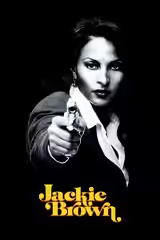
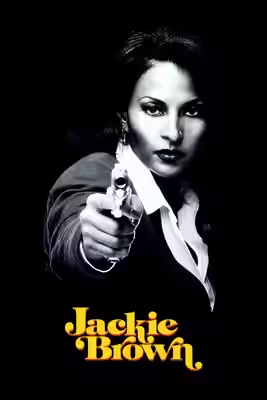
Jackie Brown poster

Jackie Brown

1997 · Tarantino slowed down and grown up, with Pam Grier doing the least and the most

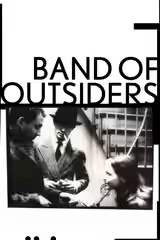
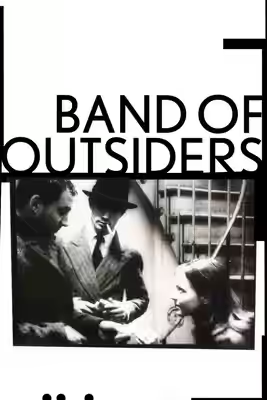
Band of Outsiders poster

Band of Outsiders

1964 · Godard’s petty crooks dance in a café; you will recognise where Mia learned it

Sexy Beast poster

Sexy Beast

2000 · Ben Kingsley as a gangster who talks people to death, on the Costa del Sol

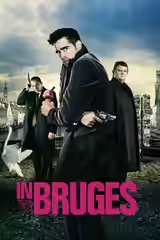
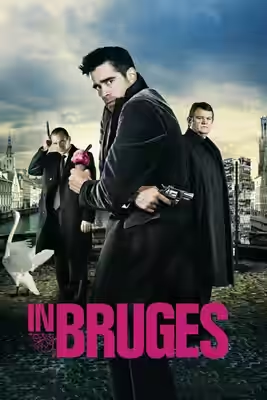
In Bruges poster

In Bruges

2008 · Two hitmen, a lot of conversation, a small Belgian city, and real guilt for once