Tarantino’s snowbound whodunnit is superbly built, finely scored and far too long, and its cruelty is the point rather than the price. Worth an evening for the cast and for Morricone; do not expect to like anyone in it.
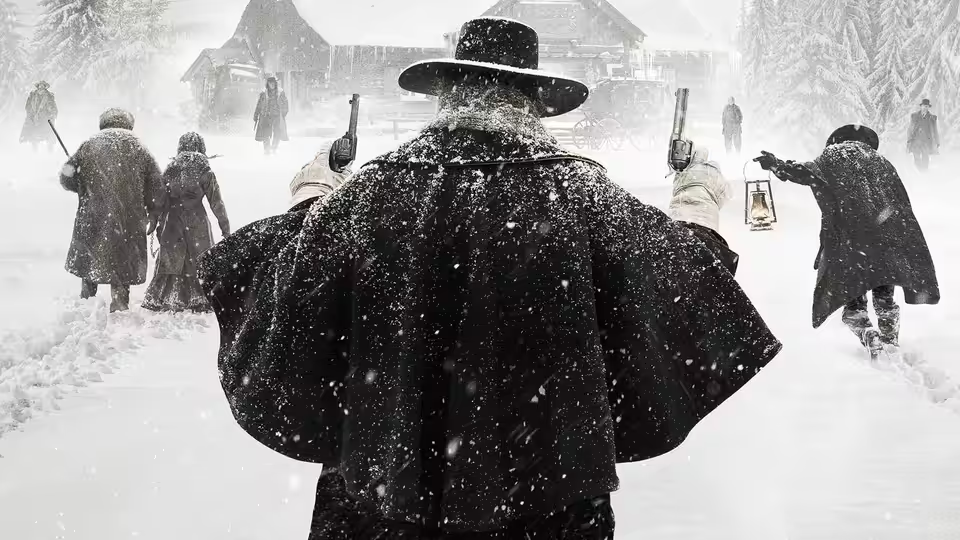
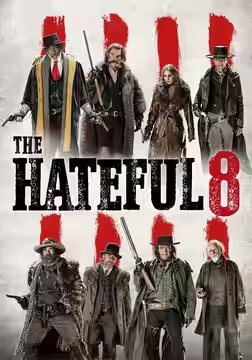
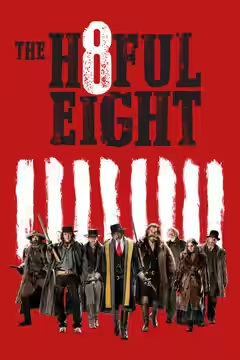
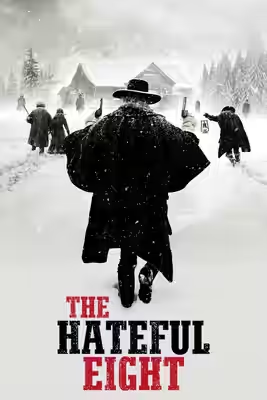
Quentin Tarantino puts eight people in one room and a blizzard outside it. A bounty hunter, John Ruth (Kurt Russell), is taking a prisoner, Daisy Domergue (Jennifer Jason Leigh), to hang. On the road he picks up another bounty hunter, Major Marquis Warren (Samuel L. Jackson), and a man who says he is the new sheriff, Chris Mannix (Walton Goggins). The storm drives them into a stopover where four strangers are already waiting, and somebody is lying. The Hateful Eight is expertly made and it runs 188 minutes, and the second fact does the first no favours.
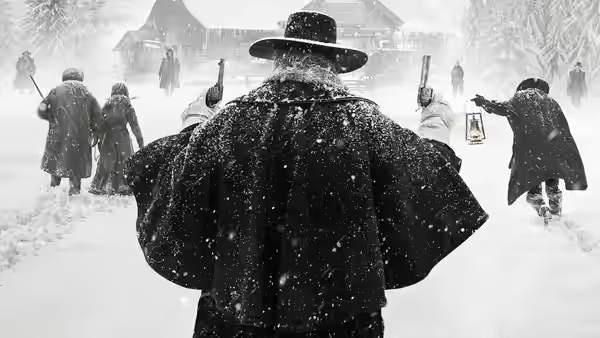
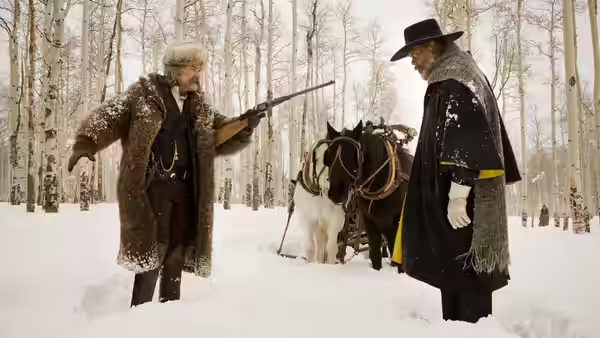
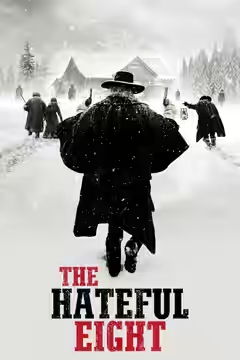
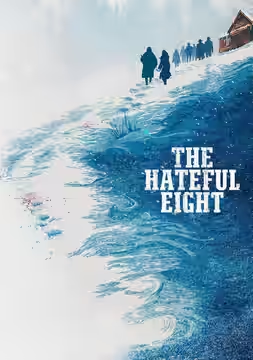
Robert Richardson opens on snowfields, a stone crucifix and a six-horse coach, then goes indoors and stays there. He uses the width of the frame for faces: a line of men along a bar, a man at the far edge listening to a conversation at the other. Yohei Taneda’s stopover is one long wooden room with a stove, a bar, a bed, a chessboard and a door that has to be nailed shut every time it is opened, and by the end we knew where everything in it stood. Ennio Morricone’s score, a low dragging brass theme that sounds like something large moving under the snow, is the best thing in the film and is not used nearly enough.
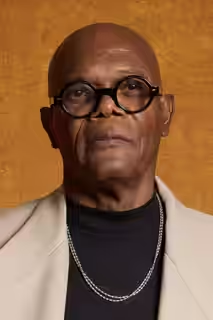
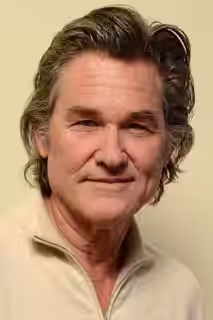
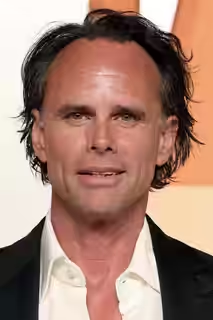
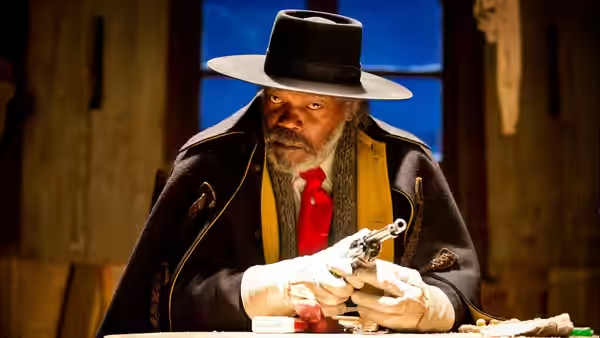
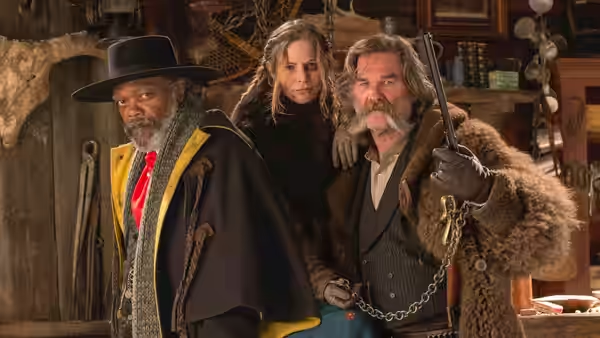
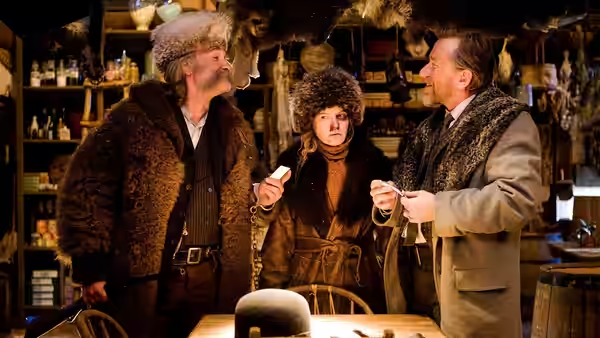
Jackson gives Warren the grave, amused courtesy of a man who has decided the cabin is his. Russell plays Ruth as a walrus in a coat, all moustache and bark, chained at the wrist to his prisoner and hitting her whenever she speaks. Leigh takes the blows and grins through the blood, and she makes Daisy funnier and more frightening the worse she looks. Goggins’s Mannix is the one who made us laugh, a man whose mouth runs a mile ahead of his judgement, and he is the only character who changes across the three hours.
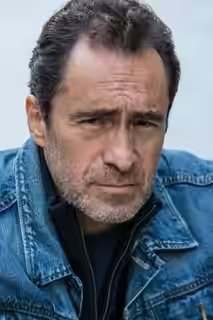
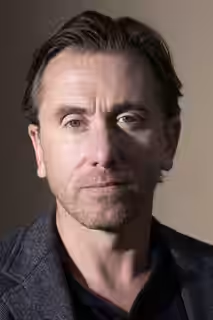
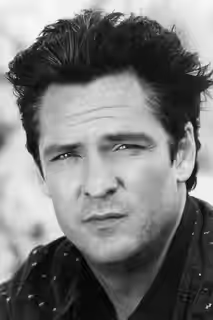
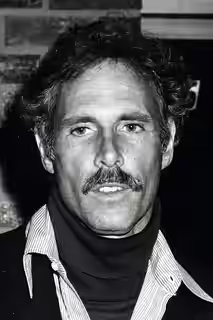
Tim Roth plays Oswaldo Mobray, a travelling hangman, with a clipped English delivery that is a performance of a performance, and it is a pleasure. Demián Bichir’s Bob says little and stirs a stew. Michael Madsen’s Joe Gage writes in a journal in the corner. Bruce Dern’s General Sandy Smithers sits by the fire and hates Warren on sight, and their exchange is the film’s best-written stretch, two old soldiers deciding how much of the war to bring indoors. Courtney Hoffman dresses each man to look like what he wants to be taken for, which is not the same as what he is.
Here is what we felt, and we did not enjoy feeling it. Every time Ruth’s fist lands on Daisy the film treats it as a punchline, and the first time we laughed. By the third we had stopped, and by the sixth we were looking at the floor. Leigh is so good that the cruelty registers as cruelty, which we suspect is the intention; the film also uses it as a running gag, and we could not hold both in our heads at once.
Fred Raskin’s cutting is patient to a fault. Scenes run until every man has had his say twice. The talk is good talk, about the war, about who fought for whom and what Warren’s letter means, and for the first hour it holds. Somewhere in the second hour, with the stew on and the door nailed shut again, we looked at our watch, and again twenty minutes later. Then the second half takes a turn we will not describe, and Raskin cuts the last stretch fast, loud and red, as if released.
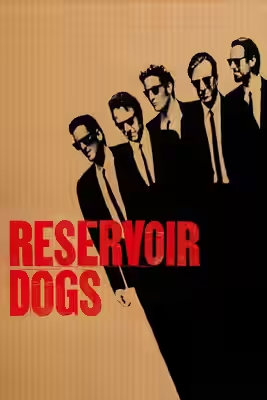
Set against Tarantino’s own films this is Reservoir Dogs (1992) with the heating off: one room, men in the wrong company, a rat among them. That film was tight; this one is not, and the extra hour is spent on speeches. The speeches want to be about America, the war just finished and the country it left. Sometimes they are. More often they are about how much Tarantino enjoys the sound of a man telling a story, and the film cannot tell the difference.
See it at home, where the length is a smaller problem and the cabin stays the size of a cabin. It is an 18, and the certificate is not a formality.