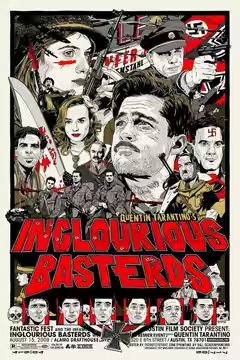
Tarantino’s rewrite of the war is 153 minutes of people talking in rooms until somebody reaches for a gun, and the talk is the best he has written in years. Christoph Waltz carries it; the men it is named after nearly sink it.
Quentin Tarantino writes and directs a 153-minute war film in five chapters, and the first caption tells you what sort of war it will be: “Once upon a time in Nazi occupied France”. Colonel Hans Landa (Christoph Waltz) drives up to a dairy farm to ask the farmer some questions about a missing Jewish family. He is offered wine and asks for milk. He talks, at length, in French and then in English, for reasons that turn out to be practical, and the farmer answers. Almost all of it happens at a kitchen table.
It is the best-built scene Tarantino has directed. Robert Richardson keeps the light coming through one window and lets the kitchen go warm and brown around it, and Sally Menke cuts as slowly as the scene can stand, holding on Waltz while he finishes sentences nobody wants finished. We held our breath for most of it. What did it was the milk: poured, praised and drunk with perfect manners while the camera drifts down through the floorboards to show us who is lying underneath. Nobody has raised a voice and we already wanted to be somewhere else.
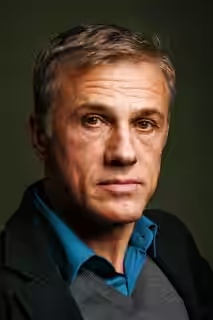
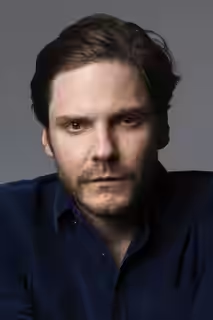
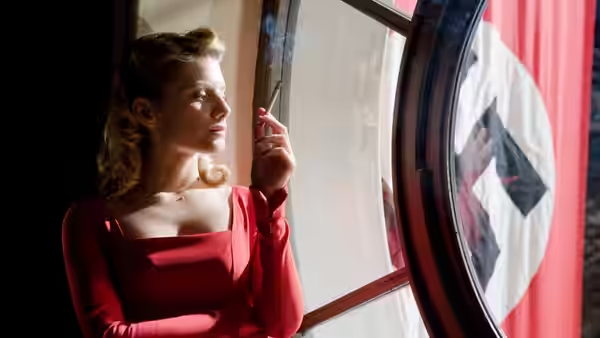
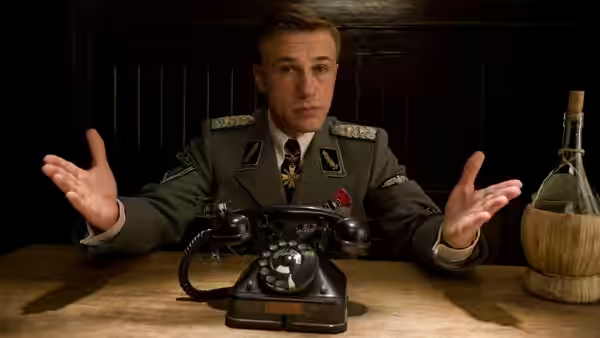
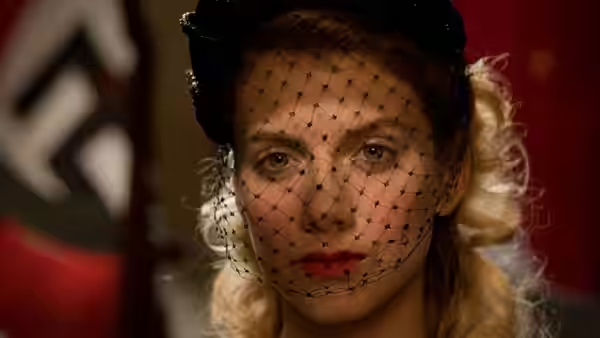
Waltz plays Landa as a man who likes being the cleverest person present and wants everyone to enjoy it with him. He moves between German, French and English the way other people change chairs, and he is courteous right up to the moment courtesy stops being useful. The film’s other lead has been rather overlooked. Mélanie Laurent plays Shosanna, who runs a cinema in Paris under another name some years after the farm and is courted there by Fredrick Zoller (Daniel Brühl), a German war hero who has just starred in a film about himself. Laurent plays her still and watchful; Brühl makes Zoller boyish enough that his vanity takes a while to show.
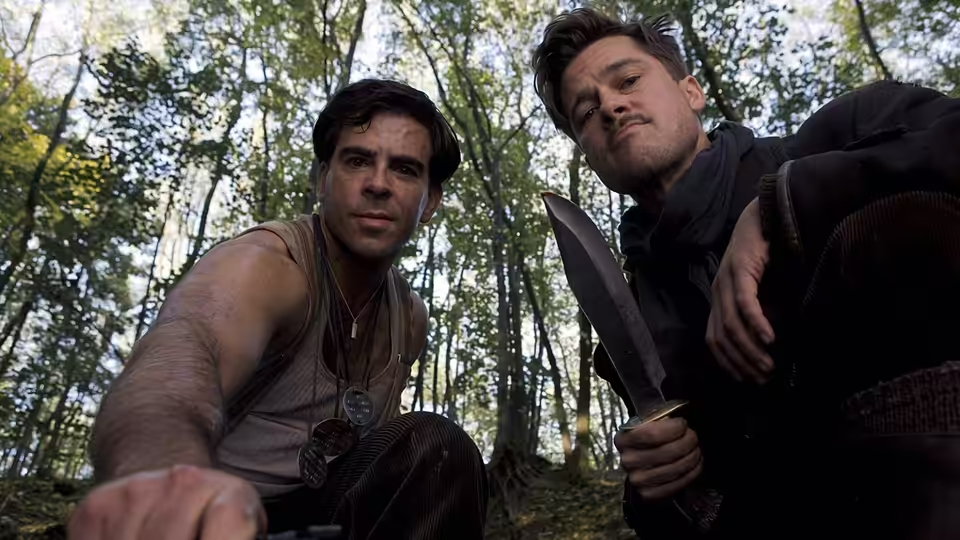
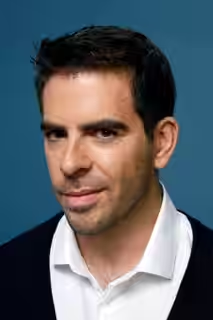
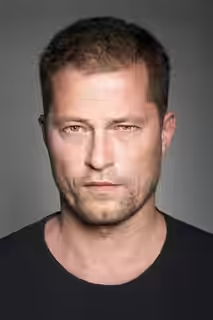
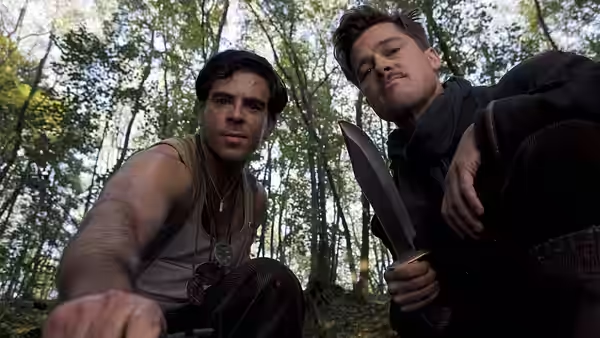
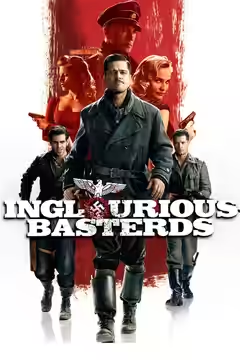
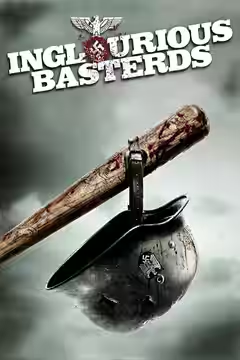
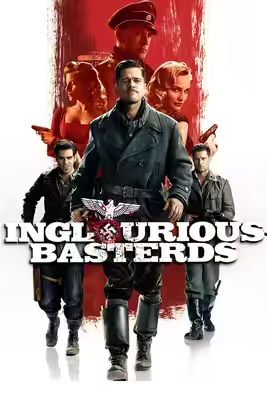
Then there are the Basterds. Lieutenant Aldo Raine (Brad Pitt) leads a small unit of Jewish-American soldiers behind the lines, killing Germans and taking their scalps. Pitt plays him with his jaw stuck out and a drawl you could spread on toast, and it is a turn rather than a performance. Eli Roth’s Donny Donowitz has a baseball bat and one expression. Til Schweiger’s Hugo Stiglitz gets a title card, a guitar riff and a flashback. The second chapter is theirs, and it is where we looked at our watch. The film that carries their name is the least interested in them.
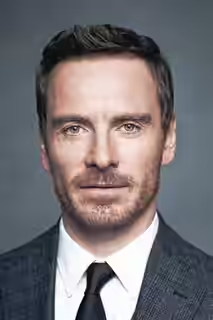
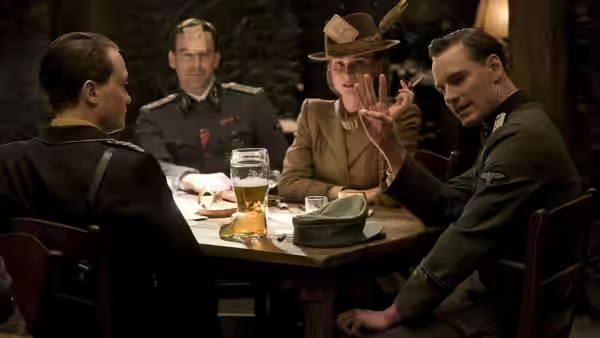
The later chapters bring in Michael Fassbender as Archie Hicox, a British officer who was a film critic before the war, and Diane Kruger as Bridget von Hammersmark, a German star working for the other side. A long scene in a cellar bar, which David Wasco builds low and cramped with the tables too close together, does what the farmhouse did with more people and more languages, and it is the second reason to see the film. We will not say how it ends. The last chapter takes the war somewhere history did not, and we will not describe that either, except to say that Anna B. Sheppard and Giorgio Armani dress it well and Richardson lights the cinema like a church.
Most critics do not agree with us. The reviews settled around the middle and several went well below it: too long, too pleased with itself, careless with the dead. We think the first two complaints are wrong. The talk is not the wait before the suspense; the talk is the suspense, because in occupied France the wrong word in the wrong accent gets you shot. The third complaint is fairer. The film treats the war as a set of film conventions and says so in its first line, and how far that excuses it depends on how much you think a fairy tale owes the facts. Whenever Hitler is on screen shouting, it is less clever than it thinks.
Against his own work it is the most patient film he has made since Jackie Brown, and the first in which his chatter has consequences. It is also baggy in the middle, and 153 minutes is a long time to spend on five scenes, however good three of them are.
See it for the farmhouse and the cellar, and see it in one sitting: each chapter builds its pressure from nothing, and a pause lets it out. The 18 certificate is earned in short bursts between long conversations. Most of it is in French and German with subtitles, and anyone who minds that should know it now.