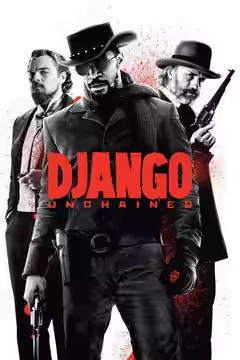
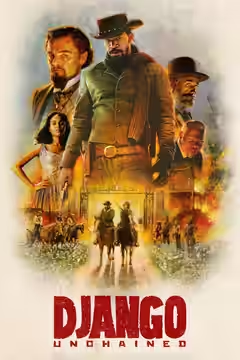
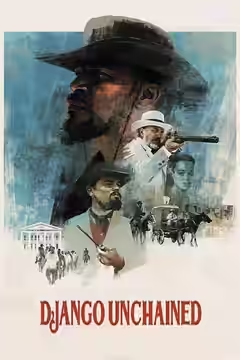
Tarantino’s spaghetti western about slavery is funny, brutal and well acted, and it is forty minutes too long. Waltz, DiCaprio and Jackson talk each other into corners with relish; then the film reaches its natural end and keeps going.
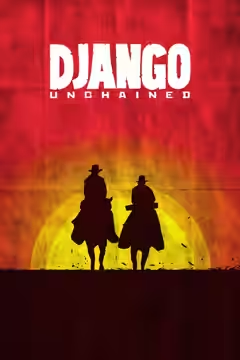
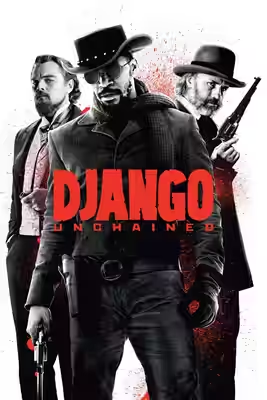
Quentin Tarantino has taken the Italian western, its crash zooms and whistled themes and sudden gouts of blood, and pointed it at American slavery. Django Unchained is a revenge story: a freed slave and a German bounty hunter ride into Mississippi to buy back the slave’s wife from a plantation owner who does not know he is being robbed. It runs 165 minutes and carries an 18, and for two of those hours it is as much fun as we have had at a Tarantino film in years. It is a fine film with a poor last act.
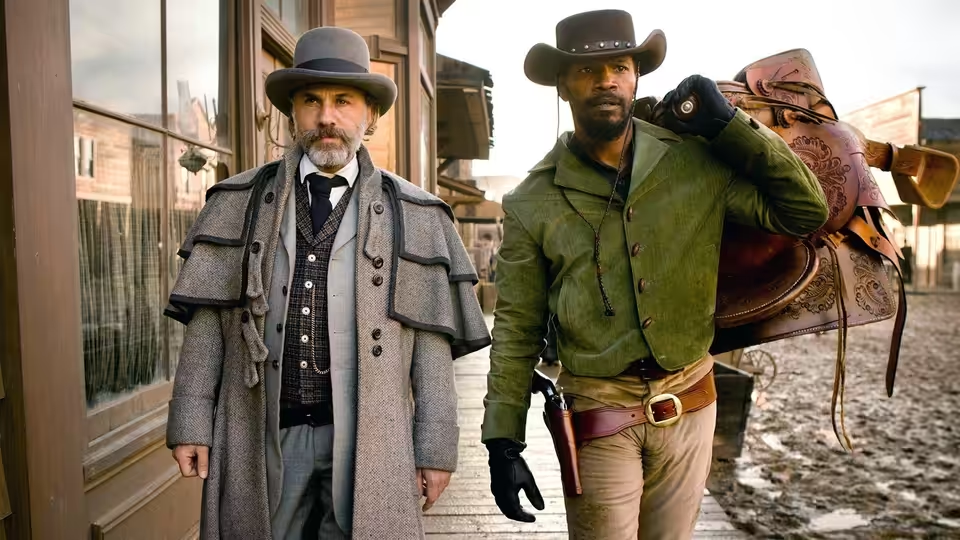
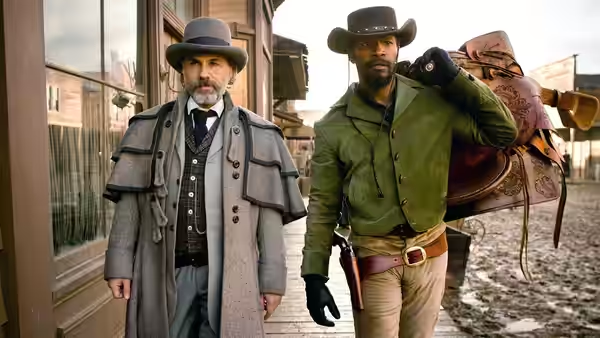
Christoph Waltz’s Dr King Schultz is the engine. He is a dentist who has given up dentistry, drives a wagon with a giant tooth bouncing on a spring above it, and shoots people for money with the manners of a man returning a library book. Waltz plays all of it as courtesy, and the courtesy is the joke and the weapon at once. Jamie Foxx, as Django, has the harder job. He spends the first hour watching and saying little, because a slave who speaks out of turn is a dead slave, and Foxx makes the watching count.
Leonardo DiCaprio arrives late as Calvin Candie, owner of a plantation called Candyland, and he is loose, funny and rotten. Candie has bad teeth, a taste for French he cannot speak, and the manner of a boy who has never been told no. Samuel L. Jackson’s Stephen, the old house slave who actually runs the place, is the film’s most unsettling creation: he shuffles and cackles and plays the fool, and he misses nothing. The long dinner at Candie’s table is the centre of the film, and we will say nothing about how it ends. It is close to half an hour of people talking and it is the tensest stretch Tarantino has directed since the basement bar in Inglourious Basterds (2009).
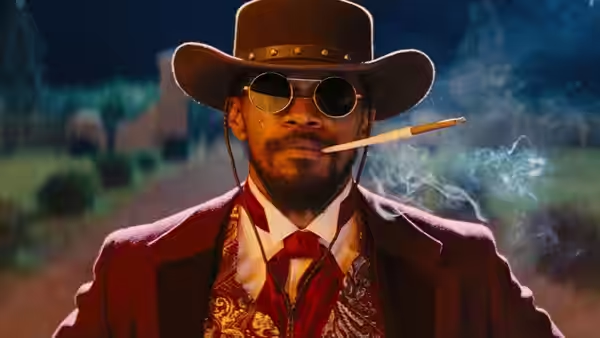
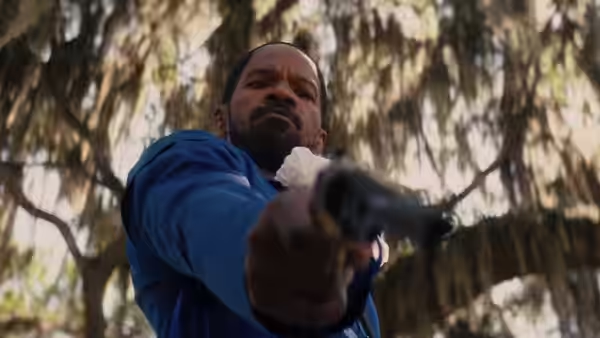
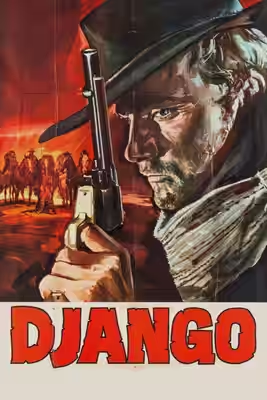
Robert Richardson shoots the winter bounties in hard white light, so that blood on snow reads as paint, and the Mississippi scenes in green and gold. His zooms are borrowed from the Italians and used, mostly, as punchlines. J. Michael Riva builds Candyland as white columns and long verandas with the cruelty kept just off the porch. Sharen Davis puts Schultz in grey fur and Candie in burgundy velvet; when Django is told to choose his own clothes he picks a powder-blue satin suit, and the film lets everyone laugh at it until they see him shoot. Luis Bacalov’s theme from Sergio Corbucci’s Django (1966) opens the film, and the soundtrack later drops hip hop over a gunfight and gets away with it.
We laughed harder than we have at anything of Tarantino’s in years at a lynch mob arguing about whether anyone can see through the eyeholes in their bags. The scene runs long, and the longer it runs the funnier and the more pointed it gets: these men are ridiculous, and they have come to kill. Then we got to Candyland, and we were horrified. Tarantino stages the cruelty there at length and without cutting away, sometimes in the background of a conversation, and we found it hard to watch and were meant to. The film’s case is that this violence was ordinary, and that the violence Django does back should feel like a holiday. We bought it.
The trouble is the shape. Fred Raskin, cutting his first Tarantino film after the death of Sally Menke, lets scenes run past the point where she would have closed them, and the middle hour sags. Worse, after the dinner the film has a further act to get through, and it is the weakest stretch: a change of location, a new set of faces, and a scene in which the director puts himself on screen with an accent he should have left to an actor. Kerry Washington, as Broomhilda, is given almost nothing to do but be looked at and rescued. The film insists she is the reason for everything, and that would land harder if it had let her speak.
Set against Inglourious Basterds, which pulled the same trick of rewriting history as revenge fantasy, this is the looser film. The talk is as good, the villains are better, and the structure is worse. See it with company, for three men at a table and for the bags. Know that somewhere past the two-hour mark you will be allowed to think it is over, and it will not be.