Natalie Rae and Angela Patton make a moving documentary about daughters preparing to dance with their imprisoned fathers. Its attention to the girls earns our trust, though the programme itself needs harder questioning.
Natalie Rae and Angela Patton’s Daughters follows four girls in the months before a father-daughter dance in prison. A reunion gives the film a clear destination, but the preparation matters because it gives the children time to speak about the men they miss. This is a thoughtful, affecting documentary, strongest when it pays close attention to those girls. We recommend it, with reservations about how little scrutiny it gives the programme that makes the meeting possible.
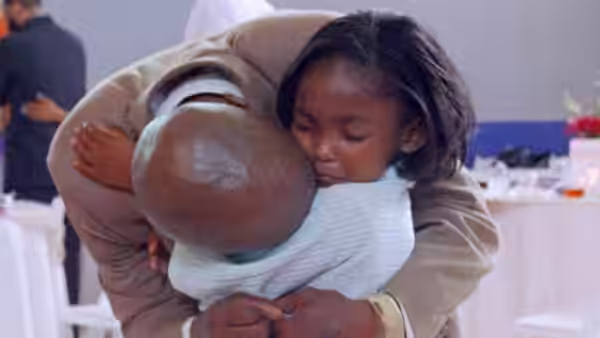
The girls’ candid reflections are more revealing than any tidy account of what a father ought to be. We were moved by how openly they discuss their fathers, particularly when their affection makes the pain of separation clearer. Rae and Patton give these thoughts room without turning each one into a lesson for the adults watching. The conversations become uncomfortable because the children have so much invested in a meeting whose limits they cannot set.
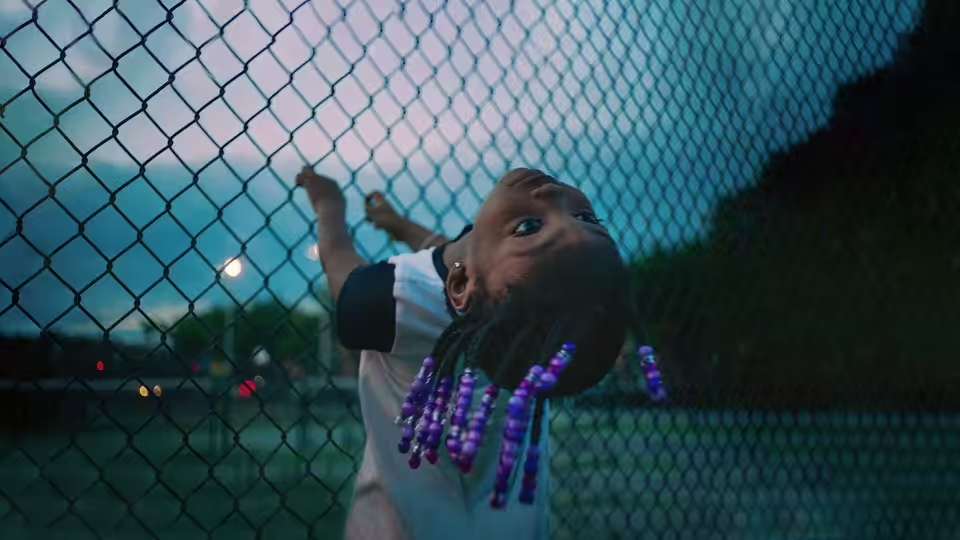
Michael Fernandez’s cinematography keeps our attention on faces, where excitement and uncertainty can be difficult to tell apart. The framing gives the girls space to be observed without making them seem like exhibits in a case about imprisonment. The care taken matters: we have time to look at each girl, rather than simply collect the information she supplies. Their expressions deserve the attention, especially when the prospect of closeness brings several feelings at once.
Editors Troy Josiah Lewis and Adelina Bichis allow the girls’ reflections to interrupt the pull towards the dance. That patience helps us understand why the event carries such weight, although the film does not sustain the same concentration across its 108 minutes. The pacing becomes less assured in its later stretch, which would benefit from some tightening without sacrificing the attention given to the children. Kelsey Lu’s music adds tenderness, though the girls’ own voices are what stayed with us.
The decision not to set out why the fathers are imprisoned is sensible for a film looking principally at their daughters. It keeps us from sorting the men into categories of deserving and undeserving before listening to what their children need. That choice does not oblige the film to accept the dance programme quite so readily, however. We wanted clearer questions about what this concentrated promise of closeness asks of a child, and about the responsibilities of the adults arranging it.
Documentaries built around an organised event can make the calendar do too much of the storytelling. Preparations supply momentum, and the approaching date supplies suspense without necessarily deepening our understanding of anyone involved. Daughters largely avoids that problem by staying interested in the girls as people with conflicting feelings, rather than treating them as proof that the programme works. They are allowed to feel hurt by people they love, and the film takes those feelings seriously.
The film asks us to take a child’s need for her father seriously without pretending that affection can settle everything. Its willingness to leave hope and uncertainty unresolved is valuable, even when we wish the filmmakers would question the arrangements more closely. Watch it with someone willing to talk afterwards, and leave time for that conversation.