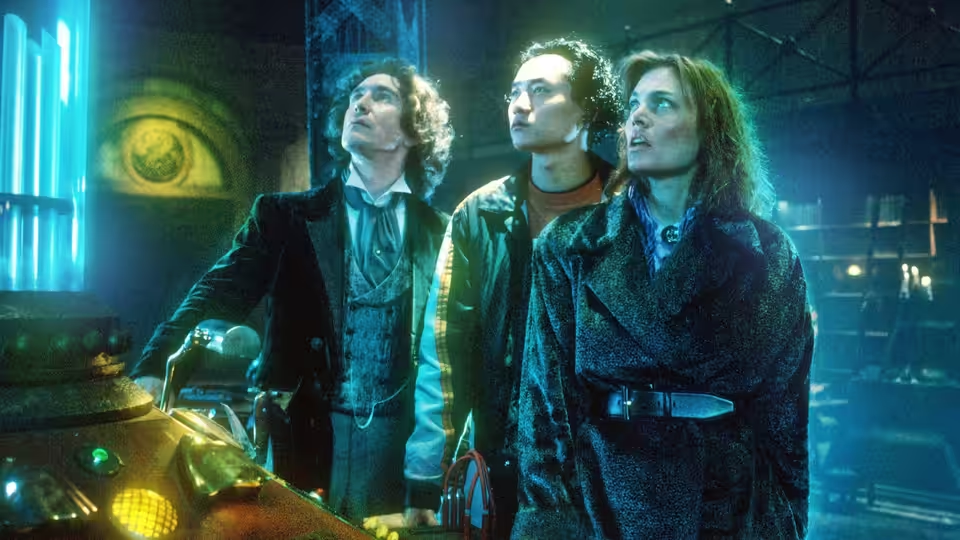
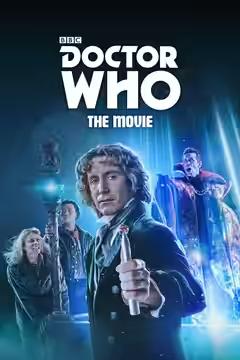
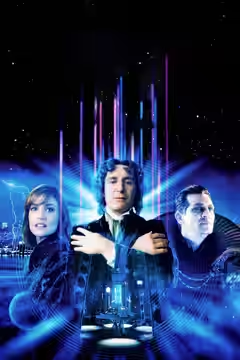
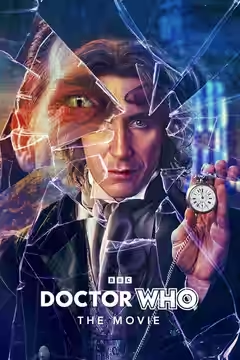
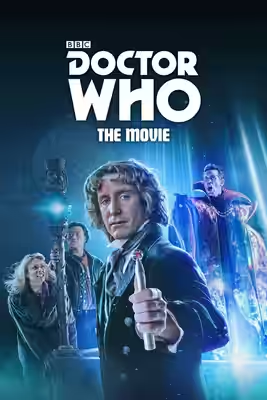
Paul McGann is a fine Doctor, warm and quick and glad to be alive, and the TARDIS is the grandest it has ever been. Around them sits a tired chase plot and Eric Roberts playing the Master in sunglasses as if from another channel.
The series had been off the air since 1989 when this was made, and it arrived as a one-off film with a job to do: reintroduce the character to a new audience, hand the part from Sylvester McCoy to Paul McGann, and persuade someone in America to pay for more. Geoffrey Sax directs from a script by Matthew Jacobs, and the result is a handsome muddle. McGann is the reason to watch it. Almost everything else is the reason it stayed a one-off.
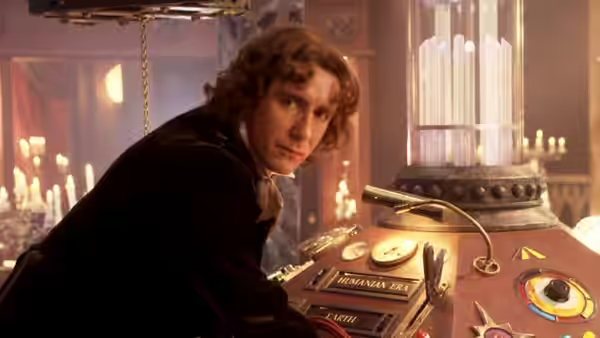
The handover is done gracefully. McCoy gets a quiet opening, pottering about the console, and then a death on an operating table that is harder to watch than anything we remember the series showing. McGann wakes in a morgue and spends his first scenes not knowing his own name, which lets him play the Doctor as a man astonished to be alive. He dresses from a hospital locker in a frock coat and cravat, finds a pair of shoes that fit and is thrilled by them, and tells strangers small true things about their futures. He is open, quick and kind, and he never winks at us. We did not expect a lump in the throat from a pilot, and we got one, around the moment he says the word TARDIS and remembers what it means.
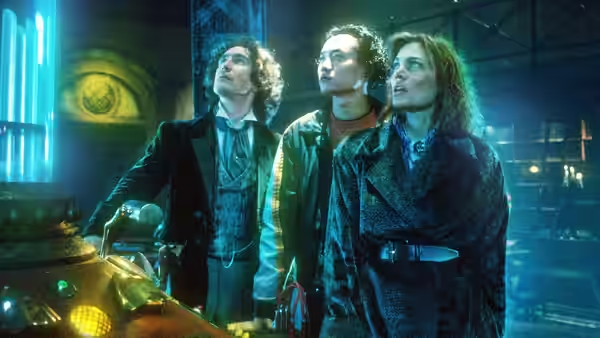
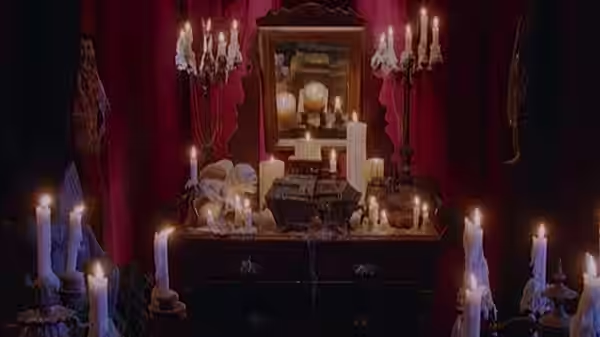
The TARDIS is the other success. Richard Hudolin has thrown out the white room of the old series and built a cathedral: a vaulted library lit by candles, a console of brass and polished wood, a great domed ceiling. Glen MacPherson lights it in amber and the hospital in cold blue, so that every return to the ship feels like coming in from the rain. John Debney gives the theme a full orchestra and treats the old tune with respect. When the police box doors first open onto that room we felt the old thing had come back grander than it had ever been allowed to be.
Then Eric Roberts arrives. Bruce the paramedic wakes with the Master inside him, puts on sunglasses and a floor-length leather coat and announces that he always dresses for the occasion, then spends the rest of the film hissing, spitting and staring into people’s eyes. The Master was always a ham, but he used to have manners and a plan; the script gives Roberts neither. His scheme involves a key and a deadline, and the film keeps restating it rather than building on it. Patrick Lussier cuts a motorcycle chase and an ambulance chase that could belong to any police show of the period, and the clock running down to midnight never once made us check it.
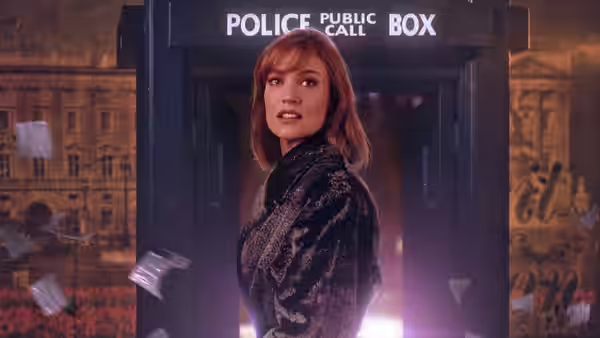
Daphne Ashbrook is better than her lines as Grace, a cardiologist who has lost a patient and found him again with a different face, and she plays the bafflement straight and the irritation dry. Yee Jee Tso is given little to do as Chang Lee beyond being told things. Jacobs wants Grace to be a companion, and the work of making her one is done in a hurry, between chases, as if someone were working from a list.
Against the series’ own standards this is the wrong way round. The old show got by on wit and cardboard. Here the sets are solid and the script is thin, and only McGann seems to remember what the programme used to sound like. It did not get its series. When the programme came back in 2005, the romantic Doctor and the companion with a job and a life of her own came back with it, so the thinking here was not wasted.
For the interested, then, which means anyone who has ever had a favourite Doctor and would like to try another. It carries a 12 certificate, and at 86 minutes it is over before the chases quite wear out their welcome.