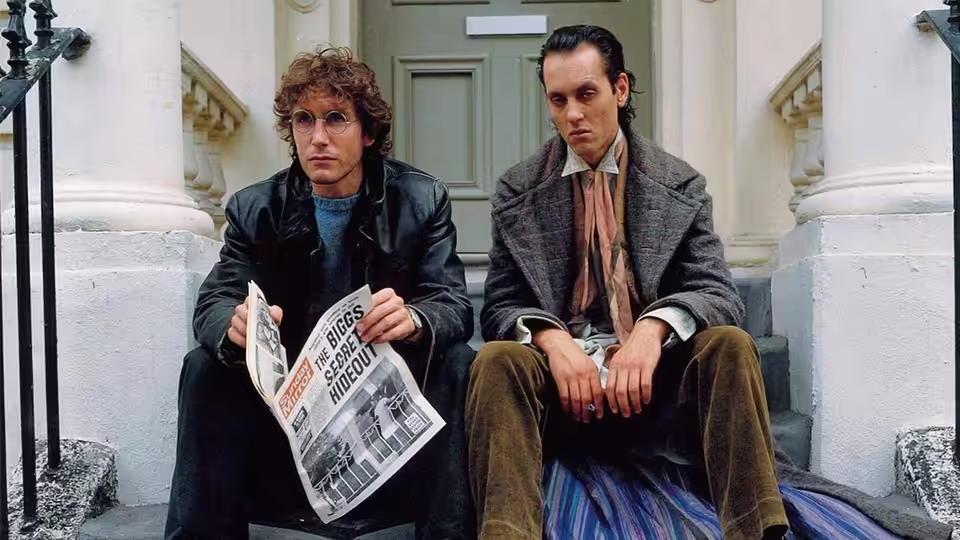
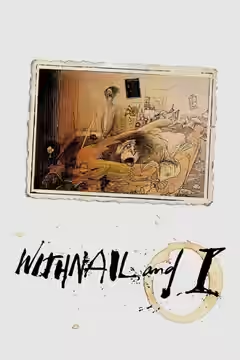
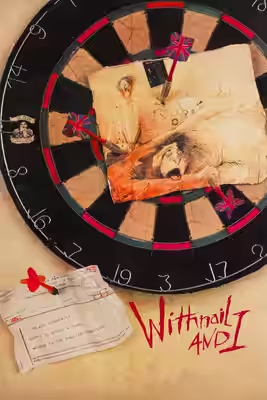
Bruce Robinson’s comedy is sharply written, beautifully acted and unexpectedly sad. Richard E. Grant makes Withnail’s self-pity alarmingly funny, and the occasional drift in the storytelling is a small reservation about a film we warmly recommend.
Withnail & I is an excellent comedy about people who can explain their difficulties at length and still do little to improve them. Bruce Robinson sets two struggling actors in late-1960s London, gives them plenty to complain about and lets them wear each other down. Withnail, played by Richard E. Grant, drinks heavily and regards his unhappiness as something that deserves a hearing. The pleasure is in how precisely the writing catches him making himself impossible, and how hard it remains to dismiss him.
Richard E. Grant understands that Withnail must believe in every complaint, however ridiculous it sounds. There is no reassuring distance between the character and the performance, no suggestion that the actor would like us to know he is more sensible. We felt unexpectedly sorry for Withnail. His drunken self-pity takes up so much of his life that the jokes begin to suggest days being wasted, and the performance makes that waste difficult to laugh away.
Paul McGann has the less conspicuous task, playing Withnail’s companion, and the film needs his quieter presence. The relationship would become wearying if both men demanded our attention with the same force; his responses let us appreciate the discomfort of keeping Withnail company. Richard Griffiths gives Monty a luxuriant sense of his own importance that makes him funny before the writing has finished the job. The supporting performances give us people with different ways of being difficult, rather than merely supplying an audience for Withnail.
Michael Pickwoad’s production design makes the squalor feel sufficiently unpleasant that the men’s inertia costs them something. It is hard to romanticise a life spent in these surroundings, even when the conversation is this good. Peter Hannan’s cinematography gives the performances room, and Alan Strachan’s editing preserves the uncomfortable length of an encounter. The long takes let a complaint continue beyond the point at which a more hurried comedy would have moved along. That patience helps us notice the other actor, and the effort involved in listening.
The writing is often celebrated for its quotability, but collecting the lines misses much of the pleasure. They belong to particular mouths, spoken by men with different ways of making their disappointments somebody else’s problem. Bruce Robinson gets his laughs from the length of a grievance, the unnecessary elaboration of a complaint and the certainty that everyone present ought to be listening. David Dundas and Rick Wentworth’s music suits the underlying sadness, though the dialogue and its delivery are what we remember.
Even these actors cannot make every stretch of inactivity interesting. At 108 minutes, the film has passages where the director seems too attached to another round of complaint, and the story feels slight beside the richness of the characters. The drift is a real reservation, especially if their company has begun to pall. It occasionally makes us wish that somebody would want something urgently enough to act on it, rather than finding another eloquent reason to remain dissatisfied.
As a comedy about male friendship, the film is unusually willing to show how being needed can become exhausting. It understands the attraction of a clever companion and the resentment of having to hear him perform again. That makes its affection persuasive, even when the characters are doing little to earn ours. Watch it with someone who can laugh at a complaint without feeling obliged to offer practical advice.