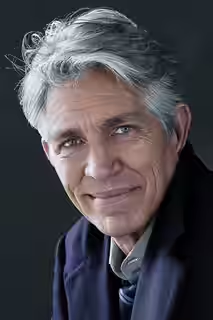
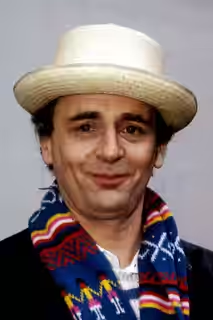
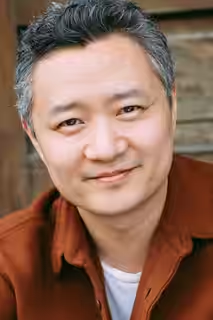
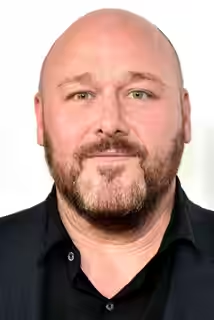
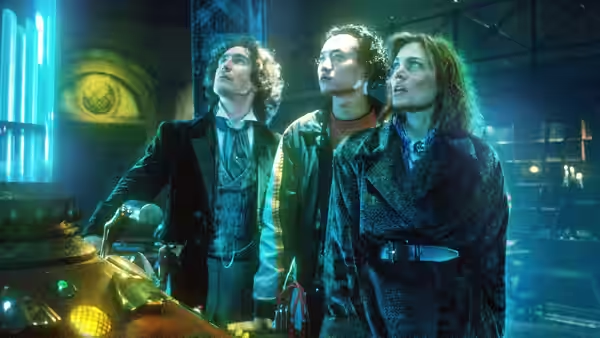
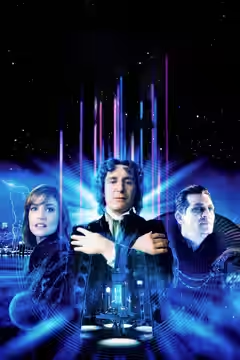
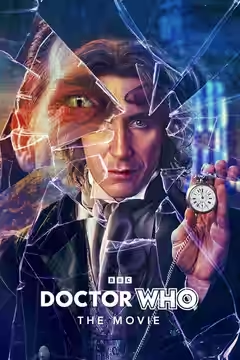
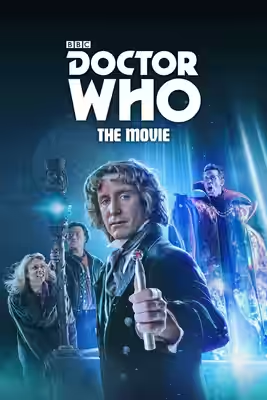
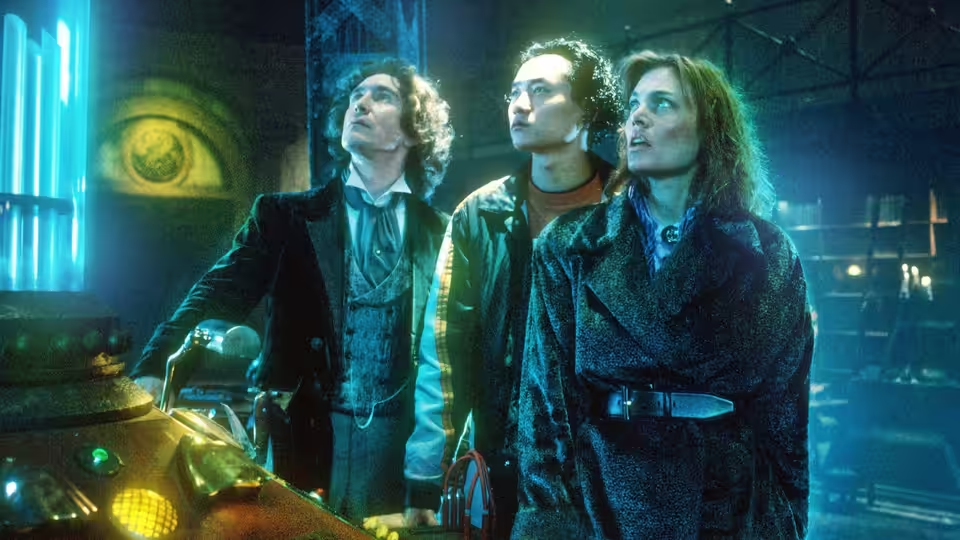
Chang Lee, the Doctor (Paul McGann), and Dr. Grace Holloway stand together inside the TARDIS
Film review

Doctor Who

1996 · Directed by Geoffrey Sax · 1h 26m

In a sentenceThe Doctor comes back as a Byronic poet; the Master comes back as Eric Roberts in sunglasses

San Francisco, the last days of 1999. The Doctor (Sylvester McCoy) is carrying the remains of his old enemy the Master home when the remains escape, the TARDIS is forced down into a back alley and he steps out into a gang shooting. At the hospital, the cardiologist Dr. Grace Holloway (Daphne Ashbrook) is pulled out of the opera to operate on a patient with two hearts, and loses him. In the morgue he becomes a new man (Paul McGann) who cannot remember his name. The Master takes over the body of a paramedic, Bruce (Eric Roberts), and recruits the street kid Chang Lee (Yee Jee Tso), who has the Doctor’s belongings and the key to the TARDIS. The clock is running towards midnight on New Year’s Eve.

Plays from YouTube when you press play; nothing loads from them until then.

Fi1m review

Paul McGann is a fine Doctor, warm and quick and glad to be alive, and the TARDIS is the grandest it has ever been. Around them sits a tired chase plot and Eric Roberts playing the Master in sunglasses as if from another channel.

The series had been off the air since 1989 when this was made, and it arrived as a one-off film with a job to do: reintroduce the character to a new audience, hand the part from Sylvester McCoy to Paul McGann, and persuade someone in America to pay for more. Geoffrey Sax directs from a script by Matthew Jacobs, and the result is a handsome muddle. McGann is the reason to watch it. Almost everything else is the reason it stayed a one-off.

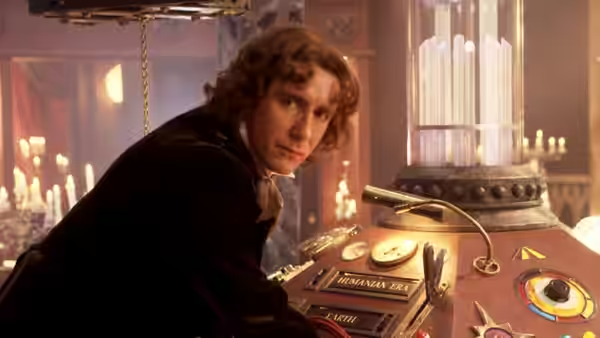
The handover is done gracefully. McCoy gets a quiet opening, pottering about the console, and then a death on an operating table that is harder to watch than anything we remember the series showing. McGann wakes in a morgue and spends his first scenes not knowing his own name, which lets him play the Doctor as a man astonished to be alive. He dresses from a hospital locker in a frock coat and cravat, finds a pair of shoes that fit and is thrilled by them, and tells strangers small true things about their futures. He is open, quick and kind, and he never winks at us. We did not expect a lump in the throat from a pilot, and we got one, around the moment he says the word TARDIS and remembers what it means.

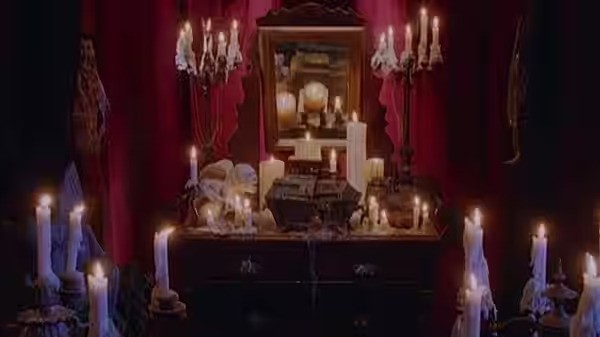
The TARDIS is the other success. Richard Hudolin has thrown out the white room of the old series and built a cathedral: a vaulted library lit by candles, a console of brass and polished wood, a great domed ceiling. Glen MacPherson lights it in amber and the hospital in cold blue, so that every return to the ship feels like coming in from the rain. John Debney gives the theme a full orchestra and treats the old tune with respect. When the police box doors first open onto that room we felt the old thing had come back grander than it had ever been allowed to be.

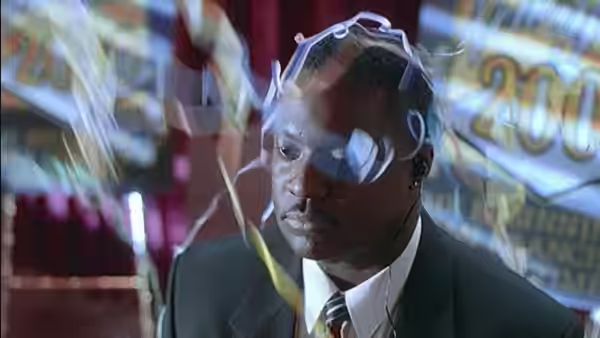
Then Eric Roberts arrives. Bruce the paramedic wakes with the Master inside him, puts on sunglasses and a floor-length leather coat and announces that he always dresses for the occasion, then spends the rest of the film hissing, spitting and staring into people’s eyes. The Master was always a ham, but he used to have manners and a plan; the script gives Roberts neither. His scheme involves a key and a deadline, and the film keeps restating it rather than building on it. Patrick Lussier cuts a motorcycle chase and an ambulance chase that could belong to any police show of the period, and the clock running down to midnight never once made us check it.

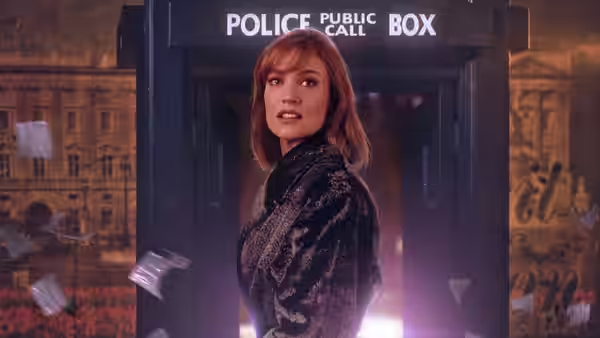
Daphne Ashbrook is better than her lines as Grace, a cardiologist who has lost a patient and found him again with a different face, and she plays the bafflement straight and the irritation dry. Yee Jee Tso is given little to do as Chang Lee beyond being told things. Jacobs wants Grace to be a companion, and the work of making her one is done in a hurry, between chases, as if someone were working from a list.

Against the series’ own standards this is the wrong way round. The old show got by on wit and cardboard. Here the sets are solid and the script is thin, and only McGann seems to remember what the programme used to sound like. It did not get its series. When the programme came back in 2005, the romantic Doctor and the companion with a job and a life of her own came back with it, so the thinking here was not wasted.

For the interested, then, which means anyone who has ever had a favourite Doctor and would like to try another. It carries a 12 certificate, and at 86 minutes it is over before the chases quite wear out their welcome.
Critical consensus AI synthesised

2 of 6
Positive
0
Mixed
2
Negative
0
The New York Times
14 May 1996 · Caryn James
64*

The page is identified as a television review, but its text is inaccessible. The critic’s verdict and any specific praise or complaint cannot be verified.

Read the full review →
Radio Times
6 November 2012 · ★★★ · Mark Braxton
60

The review calls the film an abortive attempt to reboot Doctor Who. It singles out Paul McGann’s performance for praise.

Read the full review →

Straight answers AI written, from our review

Is Doctor Who worth watching?
Doctor Who (1996) is worth watching for anyone who has ever had a favourite Doctor and would like to try another, and we scored it 60. Paul McGann is warm, quick and glad to be alive, and the TARDIS has never looked grander. Around him sit a tired chase plot and Eric Roberts hissing his way through the Master.
How long is Doctor Who, and what is it rated?
Doctor Who runs 1h 26m. It is a tv movie and adventure film.
Where can I watch Doctor Who in Romania?
Doctor Who is not on any streaming or rental service in Romania at the moment. It is available in 2 other countries; change your country at the top of the page to see where. Availability is checked daily.
How violent or frightening is Doctor Who, and is it suitable for children?
Doctor Who (1996) carries a 12 certificate, and most of what it contains is chases and a villain who hisses and stares. The one hard moment is the Doctor's death on an operating table, which we found harder to watch than anything the old series showed. Younger children may find that scene upsetting; teenagers will take it in their stride.
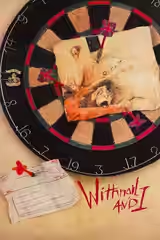
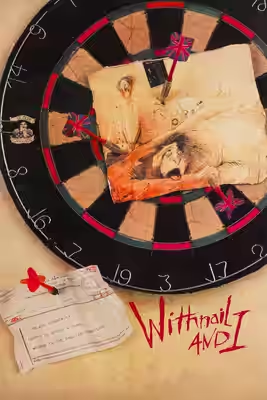
How does Doctor Who compare to Withnail & I?
Doctor Who (1996) and Withnail & I share Paul McGann and little else. The earlier film is much the better of the two: sharply written, beautifully acted and unexpectedly sad, with McGann as the quiet half of a drunken, rain-soaked holiday. The Doctor Who film gives him a thin script and a muddled plot, and he is the best thing in it.

Cast

If you liked this, try…

  1. Withnail & I (1987, Fi1m 88)McGann as the quiet one in the wettest, funniest holiday in British film.

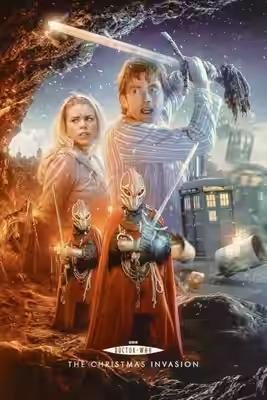
  2. Doctor Who (2005) · not reviewed yetThe revival that finished the job this pilot started, companion and all.

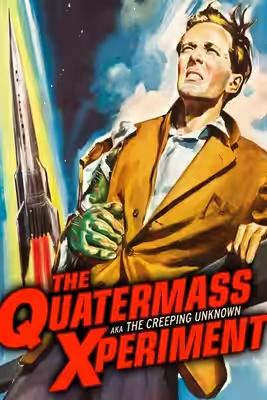
  3. The Quatermass Xperiment (1955) · not reviewed yetA British scientist, a thing from space, and hospital corridors done on nothing.

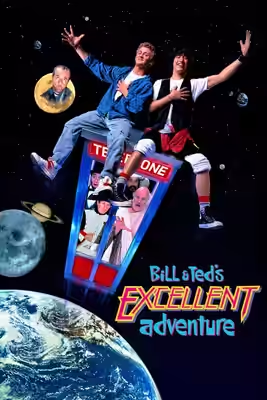
  4. Bill & Ted's Excellent Adventure (1989) · not reviewed yetA time-travelling phone box, a deadline and far more jokes than this.

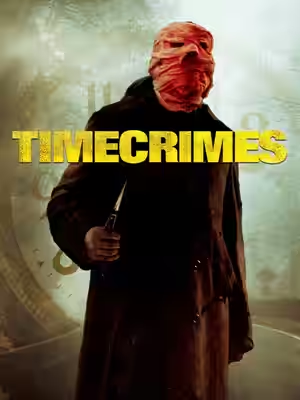
  5. Timecrimes (2007) · not reviewed yetSpanish time travel on one hillside, tight and nasty, with a plan that actually works.

Free account

Know what to watch tonight

Two lists that know where things are streaming, collections you can share, your own score beside ours, and Discover that remembers what you have seen.

  • Want to see, sorted by what is streaming now
  • Seen, with your score out of ten
  • No adverts, ever