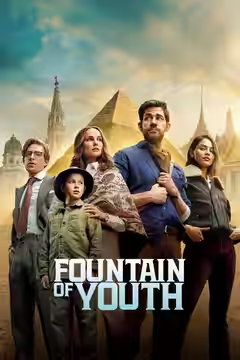
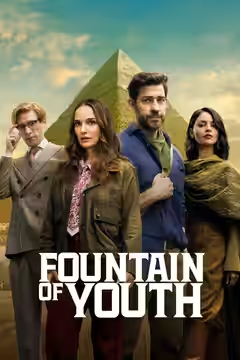
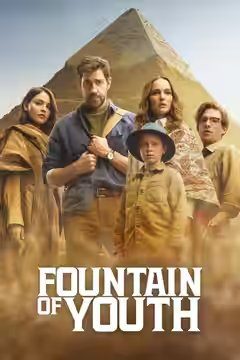
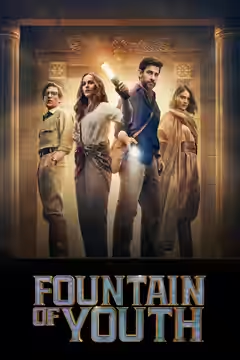
Guy Ritchie sends a bickering brother and sister round the world after immortality, stages two good chases, and then lets the map take over. Portman, Gleeson and Moayed do what they can; the film explains its treasure at length and never once makes us want it.
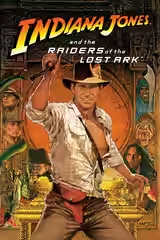
Guy Ritchie directs, from a script by James Vanderbilt, a 126-minute treasure hunt in which a thief and his sister follow clues hidden in paintings towards the Fountain of Youth. The model is plain from the first reel: a rogue in a jacket, a scholar who disapproves of him, a policeman in pursuit. There is nothing wrong with the model. Raiders of the Lost Ark has fed a great many films and most of them were better than their ingredients. This one is about as good as its ingredients and no better, and its ingredients are only fair.
The chases are the reason anyone will finish it. Ritchie opens in Thailand with a scrap that gets Luke Purdue (John Krasinski) out of a building the long way, and later runs a car chase through London that Ed Wild shoots low and close, the camera tucked in behind the wheel arches so that the streets go past as a blur of railings and wet stone. James Herbert cuts it fast but legibly; you always know which car is which, which is rarer than it should be. Christopher Benstead’s score does the Ritchie thing of drums under a loping bass and it suits the traffic. A moped sequence later on is smaller and funnier and over too soon.
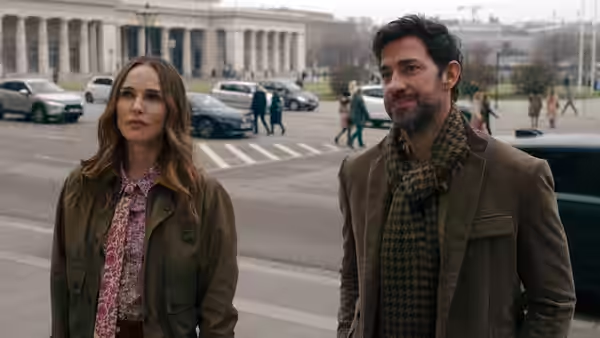
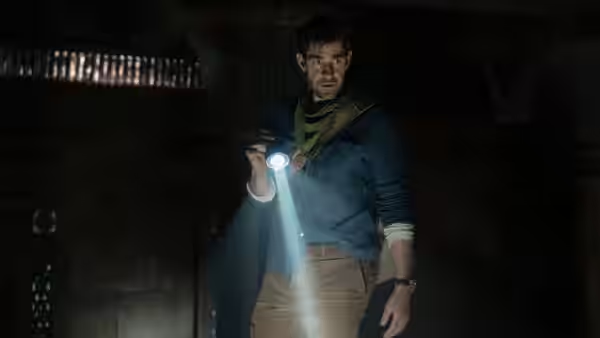
Krasinski is the problem, and it is not entirely his fault. Vanderbilt writes Luke as a man who is always right and always pleased about it, and Krasinski plays him at one speed, grinning through the exposition as if it were a joke he has told before. Natalie Portman’s Charlotte is written to be dragged along and object, and Portman does the objecting with real, tired conviction; she is the only person in the film who behaves as though a child were waiting for her at home. Their rows are meant to be the engine. They are more like the radio.
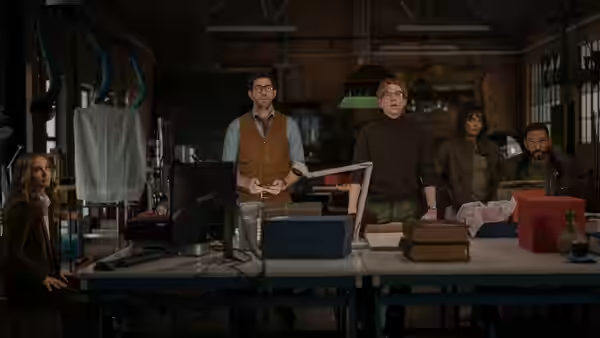
The supporting cast are better served. Domhnall Gleeson plays Owen Carver, the billionaire footing the bill, as a courteous man in a cardigan whose smile arrives a beat too late, and he gets more interesting the less the film needs him to. Arian Moayed’s Inspector Jamal Abbas has the best lines and the good sense to underplay them. Eiza Gonzalez, as Esme, is given a purpose we will not describe and a wardrobe by Loulou Bontemps that tells you her side of the argument before she does.
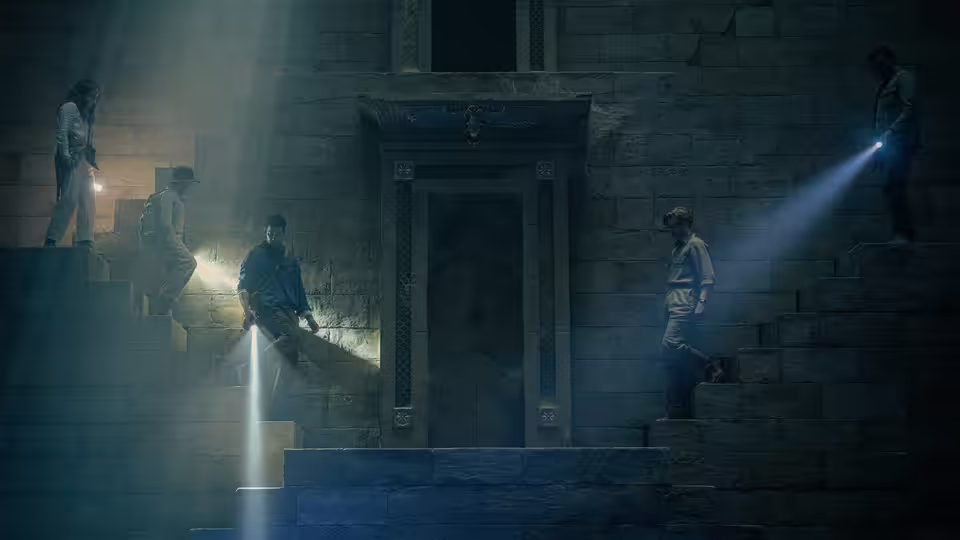
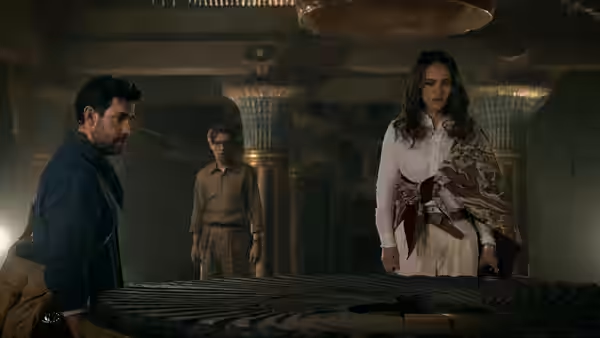
What does not work is the treasure. Vanderbilt’s clues are announced rather than solved: someone stands in front of a canvas, Martyn John’s handsome vaults and libraries fill the frame behind them, and a paragraph of history is read out. We understood every step and cared about none of them. By the time the film went underwater to a wreck we were checking how much was left, and then we were cross with ourselves for checking, because the dive is nicely lit and nobody on screen seems to think anything is at stake either. A hunt for eternal life ought to make you feel what it would be to lose it. This one makes you feel you have been shown a lecture with fights in it.
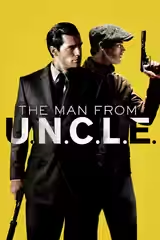
Ritchie has done this sort of thing well before. The Man from U.N.C.L.E. was also a pretty, glib caper about attractive people in good tailoring, and it had wit in its cutting and a pair of leads who seemed to enjoy each other’s company. Here the wit is in the chases and nowhere else, and the leads seem to be waiting for their sides of the scene to end. It is not lazy. Wild, Herbert and John have plainly worked at it. It is a film that mistook a checklist for a story.
Most critics have landed where we have, some warmer, a few much colder, and the split is easy to explain: if a well-shot car chase through London is enough for an evening, this has one. Watch it at home, where the exposition is easier to forgive because you can make tea through it. The 12 certificate is accurate and the runtime is generous to a film with this much to say and this little to feel.