Audrey Diwan’s abortion drama is frightening, compassionate and worth the difficult watch, led by Anamaria Vartolomei’s controlled performance. Its narrow focus occasionally leaves too little room for Anne beyond her ordeal.
Adapted by Audrey Diwan and Marcia Romano from Annie Ernaux’s book, Happening follows a student seeking an abortion in 1960s France, where it is illegal. It is a forceful, compassionate drama that we recommend, provided its physical distress is something you feel able to face. The director stays close to Anne Duchesne because each obstacle affects her directly: her health and the life she hopes to have. The film asks us to take that future as seriously as she does.
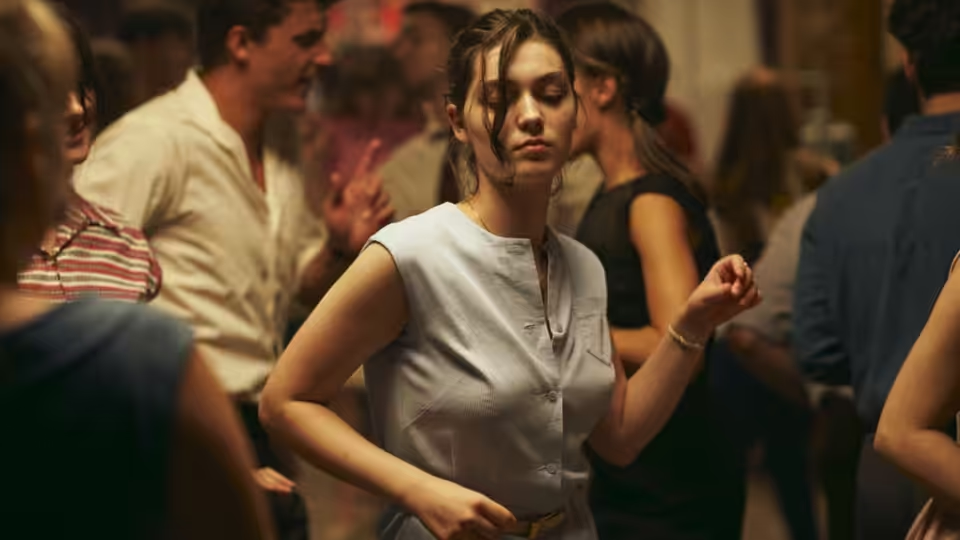
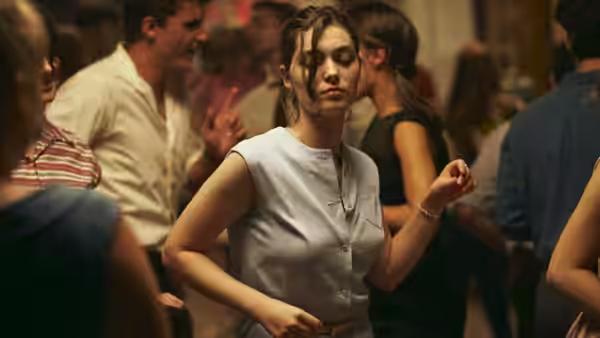
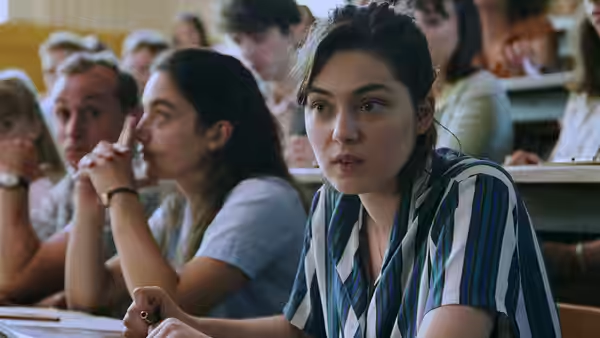
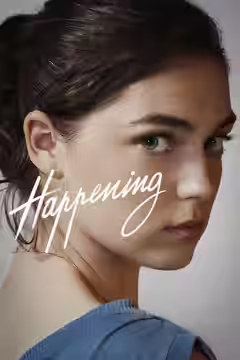
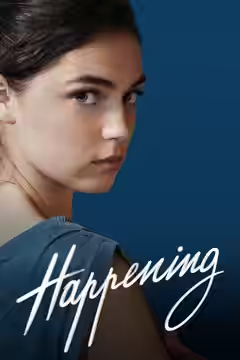
Anamaria Vartolomei gives Anne a guarded expression and searching eyes, letting fear show without making fear her only characteristic. There is determination here, and the effort of maintaining it when an answer matters so much. We were frightened for her when her face stayed composed and her eyes betrayed how alone she felt. The performance makes those small changes readable without turning them into appeals for sympathy. Anne remains someone trying to get something done, even when we want her to be allowed to stop.
Laurent Tangy’s close framing makes it difficult to look away from that effort. There is little opportunity to escape into the surroundings, and the long takes mean we cannot rely on a cut arriving when a moment becomes uncomfortable. Géraldine Mangenot’s editing preserves that duration rather than hurrying us towards the next development. We feel the time Anne spends enduring each obstacle. Audrey Diwan makes a request for help carry the suspense that a thriller might get from a pursuit.
Dièné Bérété’s production design helps establish the period without making the surroundings a distraction from Anne. The music by Evgueni Galperine and Sacha Galperine is restrained enough that it does not tell us how distressed to be. Neither contribution competes with the concentration on Anne’s face. There is already enough pressure in watching her try to secure help; the film does not need to add much.
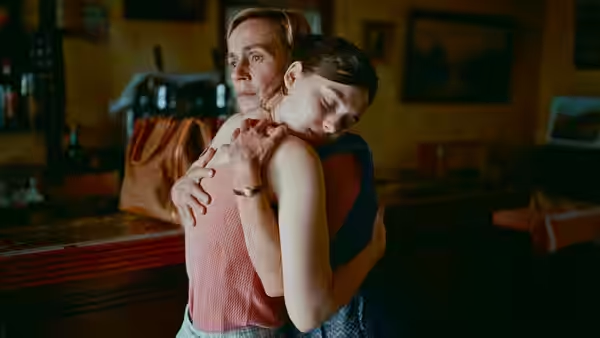
Sandrine Bonnaire, as Gabrielle Duchesne, supplies welcome warmth without softening the danger surrounding Anne. That matters because a film about an illegal abortion can become so intent on demonstrating cruelty that everyone starts to look like an example. The screenplay largely avoids that trap. It keeps returning to the practical problem of finding help, and to what it costs Anne to need it. The legal threat is frightening enough without anyone having to deliver our conclusions for us.
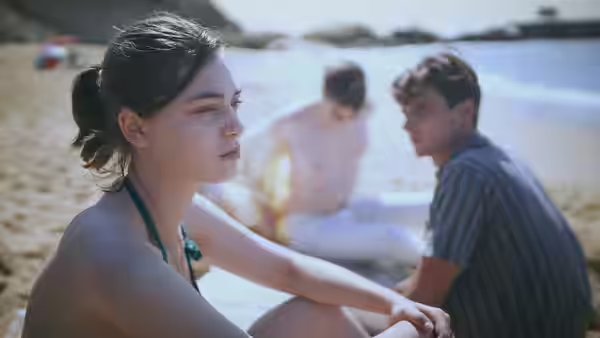
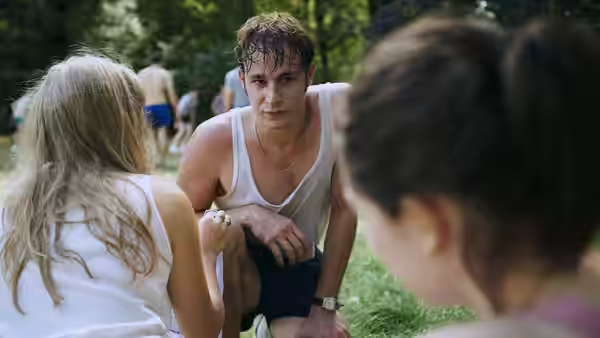
The limitation is that Anne’s determination occasionally becomes almost all we are allowed to know about her. Her distress occupies so much of the film that her life beyond the pregnancy can become hard to picture. Audrey Diwan’s close framing gives us little relief from that narrowing, and there are stretches where the insistence begins to feel punitive. We would have welcomed more room for an ordinary thought or an unburdened exchange. Anamaria Vartolomei remains compelling through those stretches.
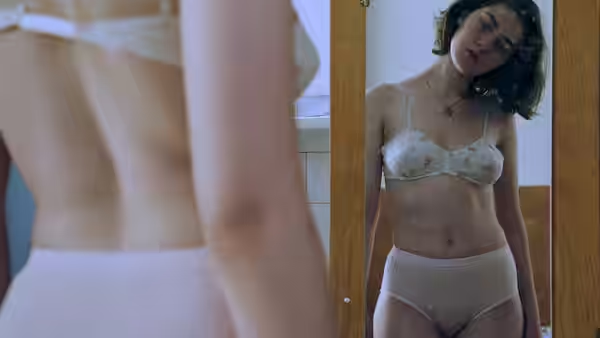
As social-realist drama, this is unusually effective at making a legal restriction feel like a threat to a particular body. It does not need a speech about why Anne’s future matters; the performance has already made us care about it. The 99-minute running time is short, but the sustained attention to her distress makes it demanding. Choose it when you can give it your full attention, and allow yourself something gentler afterwards.