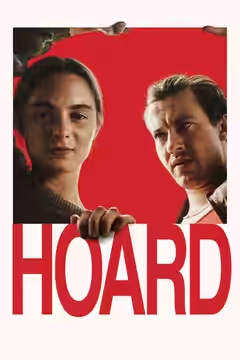
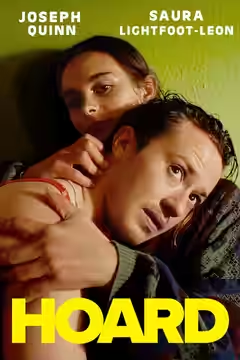
Luna Carmoon’s Hoard makes love and hoarding painfully difficult to separate. Saura Lightfoot-Leon holds this abrasive drama together, though repeated shocks and a wandering pace sometimes make its 126 minutes feel longer.
Luna Carmoon’s Hoard is a good, abrasive drama whose sympathy for its characters survives some unnecessary tests of our patience. Hoarding is bound up with affection here, which makes it difficult to regard the mess as something that could simply be cleared away. The film asks us to stay close to people whose behaviour can be distressing, without first making them agreeable company. That is a worthwhile demand, though the repeated provocations sometimes make it harder to answer.
Saura Lightfoot-Leon gives Maria enough force to hold our attention through the changes of tone. The performance is uninhibited, but its boldness never makes the character seem expendable: we still care what happens to her. Lily-Beau Leach, as Young Maria, is important to that sympathy too. Having two performers carry Maria could leave us attending to the join; instead, both make her worth following even when the film itself begins to wander.
We were moved more than we expected by the tenderness between Maria and Cynthia. Hayley Squires plays Cynthia, and the affection in their relationship makes the hoarding harder to watch: we cannot dismiss these lives as merely unpleasant. The film allows tenderness to exist alongside distress without suggesting that love is enough to resolve it. That feels honest, and it gives the discomfort a purpose beyond testing how much an audience will tolerate.
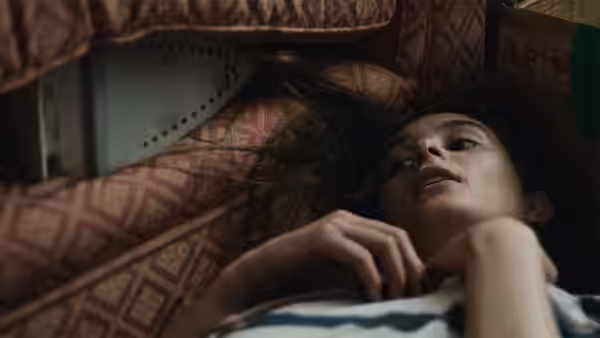
Bobbie Cousins’s production design makes the hoarding feel physically oppressive, with accumulated detail that is hard to take in at a glance. That matters because a merely picturesque mess would let us enjoy the strangeness and move on. Nanu Segal’s cinematography is similarly effective: the images have a beauty that does little to ease their discomfort. Together, these contributions give the performances surroundings that seem capable of wearing a person down.
The length is a more substantial problem. Rachel Durance’s editing does not always give the shifts in tone enough momentum, and at 126 minutes the film spends too long sustaining feelings it has already made clear. Jim Williams supplies the music, though we found the oppressive production design more effective at sustaining unease. A firmer rhythm would help: there are passages where we remain aware of the distress without learning anything further about the person experiencing it.
Luna Carmoon’s writing is least persuasive when a fresh provocation seems to be doing work that a developing relationship should do. We do not need Maria explained into submission, and we would not trade the strangeness for a convenient diagnosis. We do need a sense that spending more time with her is changing what we understand. The film achieves that often enough to remain absorbing, but its less disciplined stretches leave the actors doing too much.
As a drama about mental distress, Hoard makes a strong case for staying with people whose behaviour is hard to bear. Its willingness to let affection remain complicated is welcome in a genre often tempted to explain every hurt. It also trusts its performers to make us care without requiring us to approve of everything their characters do. Save it for an evening when being made uncomfortable is part of the attraction.