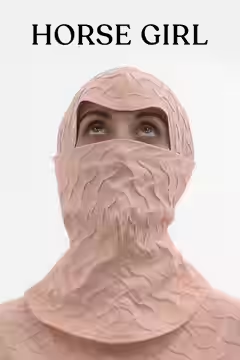
Alison Brie co-writes and carries Jeff Baena’s drama about a lonely craft-shop assistant who starts losing hours of her life. The first half is precise and frightening; the second insists on telling us what it means, and is smaller for it.
Jeff Baena and Alison Brie wrote Horse Girl together, and Brie plays the lead and produces, so it is her film in most of the ways that count. Sarah is a shop assistant at a craft store, a woman with one friend at work, a horse she no longer owns and a television programme she knows by heart. For about fifty minutes the film watches her with real care and no condescension, and we would gladly have watched her for another fifty. Then the plot arrives, Baena and Brie start to tell us what they have been showing us, and the film gets smaller as it gets louder.
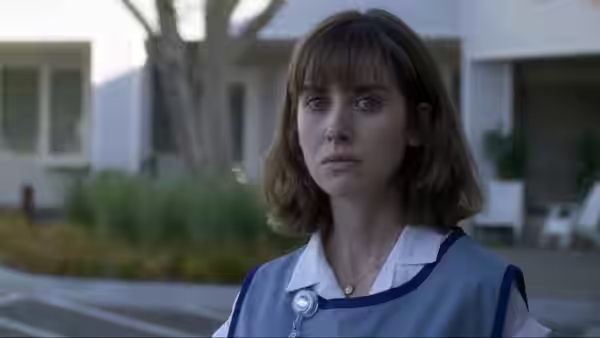
Brie holds it together even when the script is pulling two ways. Sarah is bright, polite, eager to please and slightly too quick to laugh, and Brie plays her as someone who has learned to apologise before anybody has complained. She is funny without the film ever laughing at her. The date with Darren (John Paul Reynolds) is the best scene in the film, two shy people over drinks discovering they like the same bad television, and Reynolds is decent enough to make Darren a real prospect rather than a device. Molly Shannon, as the colleague Joan, gives her the fond, worried looks of a woman who has noticed more than she says.
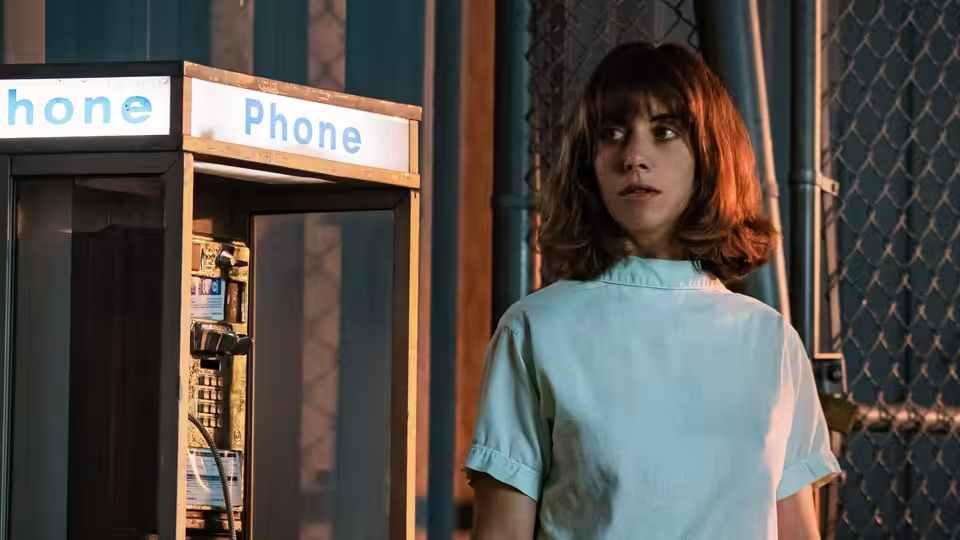
Sean McElwee shoots the craft shop and Sarah’s bedroom in soft, even light, aisles of pastel fabric and a bed piled with horse blankets, and it looks safe the way a child’s room looks safe. Ashley Fenton and Megan Fenton fill every surface with things Sarah has made or kept, so that when the film cuts to the bare white room of her dreams the emptiness registers at once. Jeremy Zuckerman and Josiah Steinbrick’s score is a low electronic hum that starts under the first scenes and never quite leaves, and it does more than the dialogue to tell us something is wrong. Beth Morgan dresses Sarah in fleeces and florals, clothes a mother might have chosen, which is part of the point.
In the first hour the strangeness arrives quietly. Sarah wakes with a nosebleed. There are scratches on her bedroom wall. She loses a few hours and comes to standing somewhere she has no memory of walking to, and that image, Brie in her nightclothes in a place she should not be, frightened us more than most films built for the purpose, because the film had made us like her and plainly was not going to protect her. We were frightened for her, and then, for a stretch, frightened of what the film was going to do with her.
What it does is explain. The second half takes a turn we will not describe, except to say that Sarah develops a theory about what is happening to her and the film goes a long way toward agreeing with her. That is a defensible choice; a film can take a character’s reading of her own life seriously without endorsing it. But Baena shoots the theory in the same even light and the same calm as the craft shop, and Ryan Brown’s editing stops distinguishing between what Sarah sees and what we are allowed to know. By the last twenty minutes we were not uncertain, which would have been interesting; we were simply unsure what the film wanted from us. The scenes in which other people try to tell Sarah what is happening are the clearest in the film, and there are too few of them.
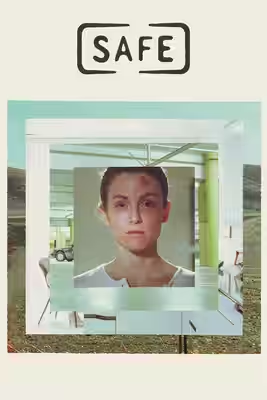
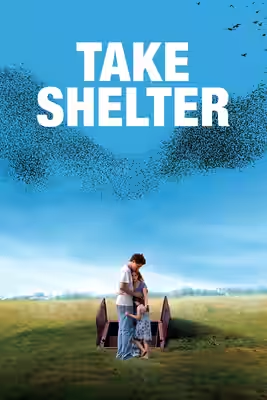
Baena’s earlier films, among them The Little Hours (2017), which Brie was also in, were loose comedies that let their actors wander. This is the first time he has tried something this grave, and the loose habits are still there: scenes run a beat long, and a Zumba class and a lost afternoon are given the same weight. Safe (1995) and Take Shelter (2011) both stay beside a person coming apart and never decide for her. Horse Girl wants to be a careful portrait of illness and a story in which the illness might be right, and it does not manage both.
See it for Brie, who is doing something sad and exact that the film around her does not quite earn. It runs 103 minutes and carries a 15. Watch it at home, where the last stretch is easier to forgive when you can get up and put the kettle on.