Garrone follows two Senegalese teenagers from Dakar towards the Libyan coast, and for long stretches this is as good as anything he has made, with a first performance from Seydou Sarr that never asks to be liked. It goes soft at the end.
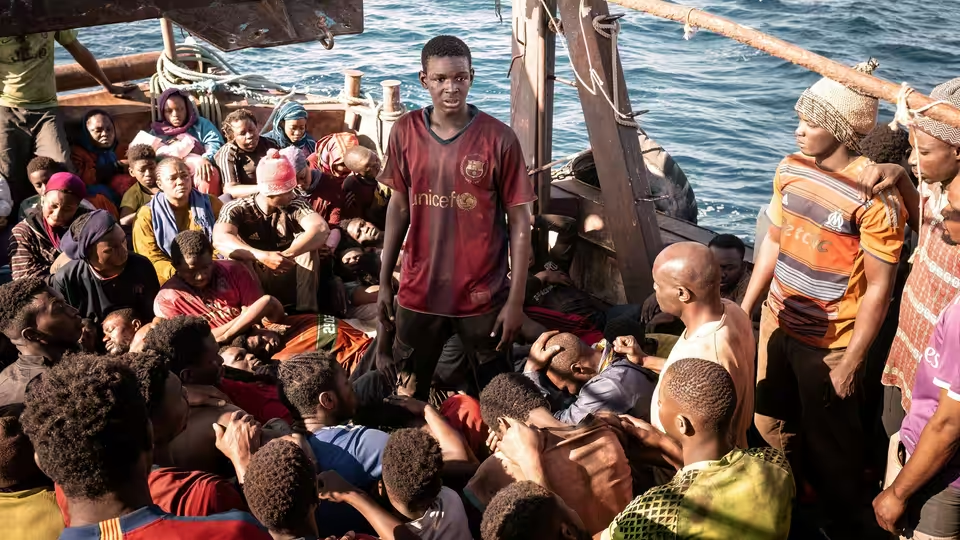
Seydou (Seydou Sarr) and his cousin Moussa (Moustapha Fall) are teenagers in Dakar who have been saving for months without telling anyone, because they mean to reach Europe. Seydou’s mother (Khady Sy) tells him plainly what happens to boys who leave, and he leaves anyway. Matteo Garrone, who made Gomorrah, has built the film from the accounts of people who made this journey, and he tells it from the boys’ side only: no European faces, no politicians, no boat seen from a beach. It is the plainest film he has made and one of his best, and where it goes wrong it goes wrong by being kind.
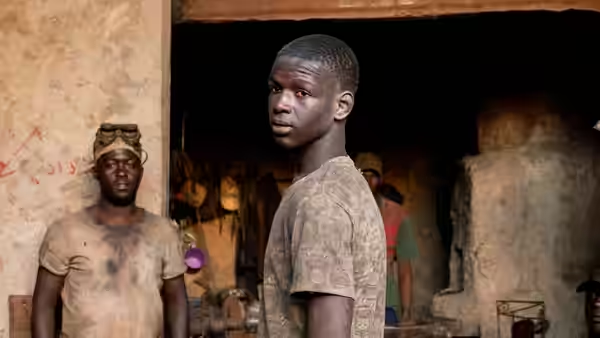
The Dakar section is short and well judged. Dimitri Capuani gives the family a courtyard house that is never empty, and the film opens on a party with drums, which Seydou plays. Before they go the cousins pay a man credited as Charlatan (Doodou Sagna), who pours out offerings and assures them the dead have no objection. Then a bus, a border where a police officer (Mamadou Sani) names his price, and a man (Joe Lassana) selling passports with other people’s names in them. Every stop costs money, and Garrone does not pause to explain what we can already see.
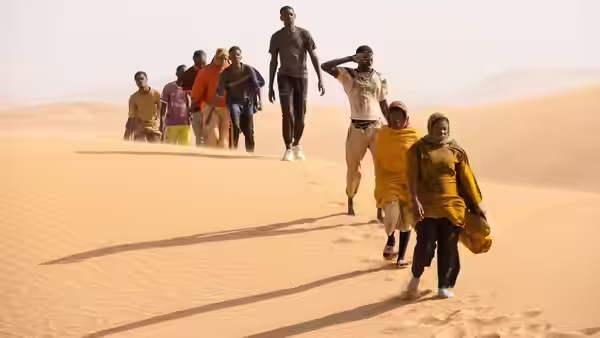
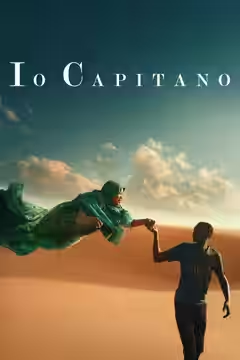
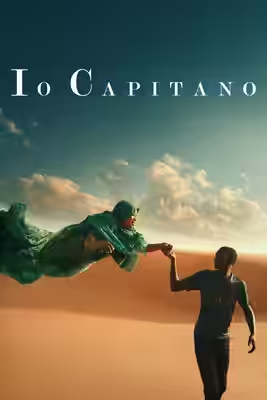
The desert is where Paolo Carnera earns his credit. He shoots it wide and flat: pickup trucks with twenty people standing in the back, then a line of walkers with the ones at the rear getting smaller. People fall and are left. Seydou goes back for a woman (Beatrice Gnonko) who cannot get up, and she rises and floats beside him, her dress trailing, while he walks on holding her hand. We were moved more than we were ready for, because Carnera lights it exactly like the rest, no glow and no slow motion, so it reads as what a frightened boy tells himself rather than as a trick. Marco Spoletini cuts straight back to the truck.
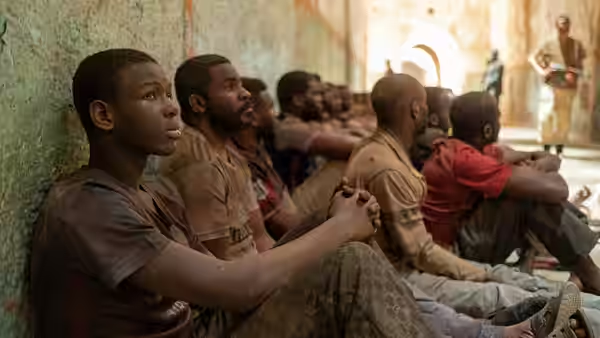
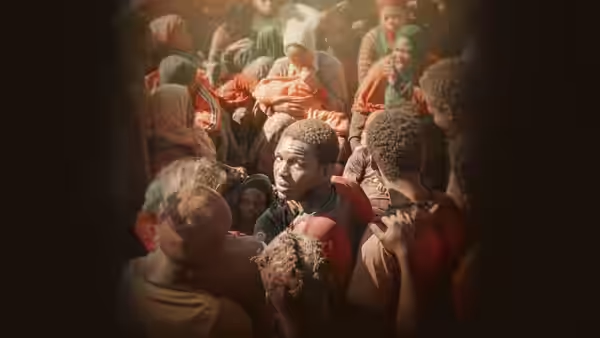
Then Libya, and there is a stretch here we will not describe, except that it involves locked rooms, men with mobile phones and a sum of money. We were horrified, and Garrone is careful about how he does it: the sound carries most of it and the camera stays on Seydou’s face while things happen off the edge of the frame. An older man, Martin (Issaka Sawadogo), teaches the boy how to be useful, and Hichem Yacoubi’s Ahmed is one of several men who look at a person and see labour. Stefano Ciammitti keeps the cousins in the clothes they left home in, and by Tripoli the colour has gone out of them.
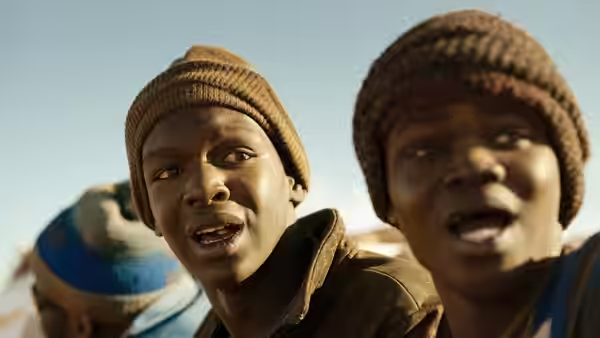
Sarr has not acted before and it does not show, which is the highest thing we can say about a first performance. He plays Seydou as a watcher: he listens, he does what he is told, and he keeps turning to check that Moussa is still there. Fall is the livelier one, the one with the plans and the jokes, and the affection between them carries the film through the passages where nothing else could. It is at its best whenever the two of them are in the same frame.
What does not work is the softening. Andrea Farri’s score swells at moments the pictures have already made, strings under the dunes, a choir over the sea, and each time the film seems worried we have not noticed. The Tripoli passages lean on two coincidences a documentary would not allow. The final minutes, which we will not give away beyond saying the title tells you where they happen, stop the story at the point where the hard part begins, and send us out feeling better than what we have just watched should allow.
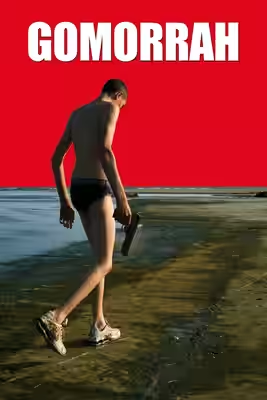
Against Garrone’s own work it sits in an interesting place. Gomorrah (2008) was cold and ran five stories at once; Tale of Tales (2015) and Pinocchio (2019) were fairy tales told straight. This has the single story of the first and the fantasy of the others, and the join mostly holds. At 121 minutes it does not feel padded.
See it in a cinema if you can, for the desert and the water, both of which shrink on a television. It is a 12A, and a teenager of about Seydou’s age will understand it faster than the certificate suggests. Watch the boys’ hands, which are always counting.